





A Ghost in the Archives
In a remarkable piece of cosmic detective work, astronomers have uncovered evidence for a new and exotic type of planet. The subject of their investigation is a white dwarf star known as HS 0209+0832. The crucial clues, however, were not found during
a new observation but were lying dormant in data collected by the Hubble Space Telescope back in 1999. At the time, scientists were unable to identify roughly 100 chemical signatures in the light from the star. Now, thanks to updated databases and a fresh look by a team led by researchers from the University of Warwick, those mysterious signals have a potential explanation: a planet formed after its star had already died.
What is a White Dwarf?
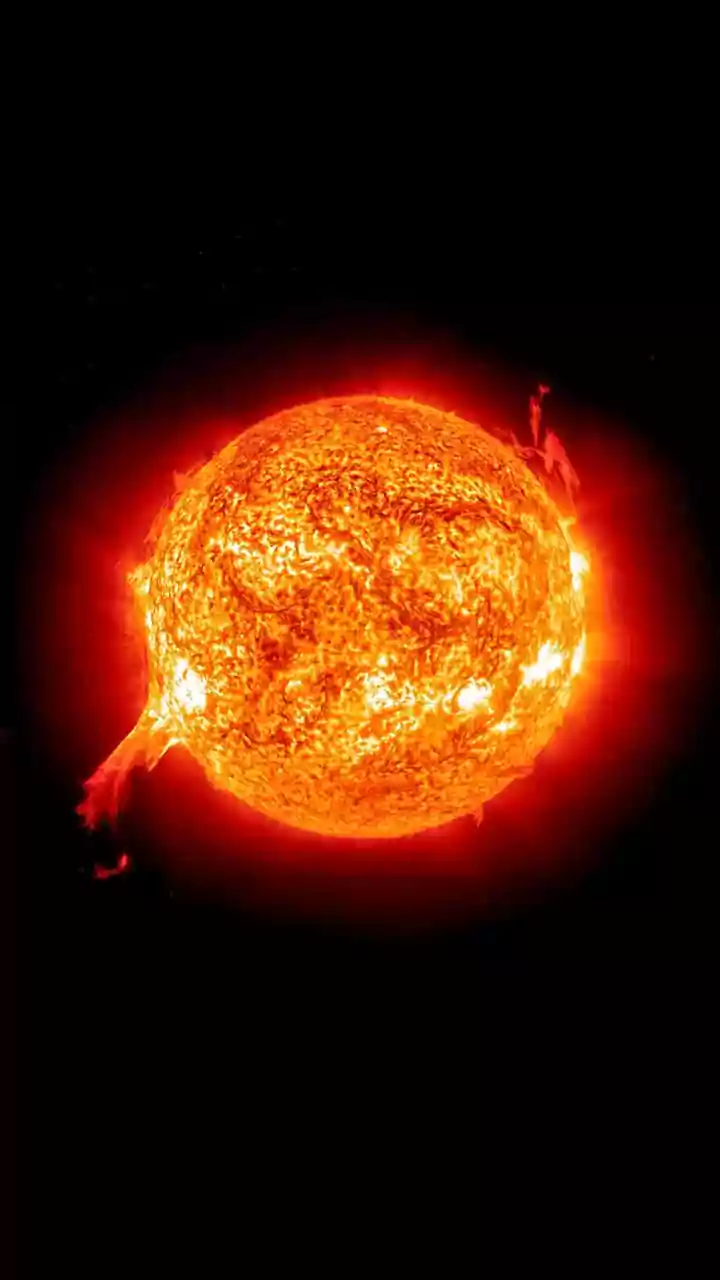
To understand why this discovery is so significant, it helps to know what a white dwarf is. When a star like our Sun runs out of nuclear fuel, it doesn't just switch off. It first swells into a massive red giant, a phase that would destroy any inner planets like Earth. Afterwards, it sheds its outer layers of gas and dust, leaving behind a small, incredibly dense, and hot core—the white dwarf. This stellar remnant is essentially the 'corpse' of a star, slowly cooling over billions of years. Because of the violent red giant phase, finding a planet orbiting a white dwarf is already unusual. Finding one that appears to have formed after this cataclysmic event is extraordinary.
The 'Second-Generation' Puzzle
Planets like those in our solar system are known as 'first-generation' planets. They formed from the disk of gas and dust left over from their star's birth. A 'second-generation' planet, by contrast, is one that forms much later, from the material a star expels as it dies. The theory suggests that the debris from the dead star can, under the right conditions, coalesce into a new disk and eventually form new worlds. While this idea has been theorized, finding concrete evidence has been elusive. This potential planet around HS 0209+0832 could be the first strong candidate ever identified, opening a new chapter in our understanding of planetary formation.
The Niobium Clue
The key that unlocked this cosmic mystery was a specific element: niobium. When researchers re-examined the old Hubble data with modern tools, they found that many of the previously unidentified spectral lines perfectly matched this heavy element. Niobium is special because, unlike lighter elements, it is primarily formed through processes at work inside dying stars. Its high abundance in the atmosphere of the white dwarf was a major red flag. The most plausible explanation is that the white dwarf is currently 'polluted' by material falling onto it from a nearby object—an object that is rich in the very elements created by the star's death. This points strongly toward a planet forged from the star's own ashes.
Is It Really a Planet?
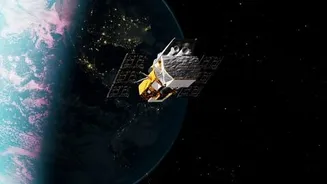
While the evidence is compelling, scientists are careful to call it a planet 'candidate'. The niobium signature is an indirect clue. However, it is supported by other data. Observations from NASA's Transiting Exoplanet Survey Satellite (TESS) detected periodic dips in the star's brightness, suggesting a Jupiter-sized gas giant may be orbiting the white dwarf every 4.4 days. The team estimates this giant planet orbits extremely close to the white dwarf, at a distance of only about 6 million kilometres. At this range, the intense radiation from the hot white dwarf would be stripping atmosphere from the planet, creating a stream of material that then falls onto the star—which is exactly what the Hubble data appears to show. Confirmation will require further observation, potentially with the James Webb Space Telescope, to verify the planet's existence and study its properties in greater detail.