







What Exactly Is Zone 2 Cardio?
In the world of fitness, training intensity is often broken down into five heart rate zones. Zone 1 is a very light recovery pace, while Zone 5 is an all-out sprint. Zone 2 cardio refers to exercising at a low-to-moderate intensity, typically around 60%
to 70% of your maximum heart rate. The simplest way to know you're in Zone 2 is the 'talk test': you should be able to hold a full conversation without gasping for breath. If you can sing, you're likely going too easy (Zone 1). If you can only manage short phrases, you've pushed too hard into Zone 3. It’s the sweet spot where your effort is noticeable but feels sustainable for a long period, like a brisk walk, a steady bike ride, or a light jog.
Fueling Your Metabolic Engine
The magic of Zone 2 lies in how it trains your body's energy systems. At this specific intensity, your body primarily uses fat for fuel instead of relying on more easily accessible carbohydrates (glycogen). This process does two crucial things for your metabolism. First, it improves your body's ability to burn fat, a concept known as metabolic flexibility. This makes you a more efficient energy-using machine, both during exercise and at rest. Second, Zone 2 training stimulates the growth and improves the efficiency of your mitochondria. Often called the 'powerhouses' of our cells, mitochondria are responsible for converting fuel into usable energy. More efficient mitochondria mean your body can produce more energy with less effort, which is fundamental to long-term metabolic health and endurance.
Fighting Fatigue, Not Causing It
Unlike high-intensity interval training (HIIT), which can leave you feeling drained for a day or two, Zone 2 cardio is known for its low impact on the central nervous system and muscles. Because you're not pushing into anaerobic territory, your body doesn't accumulate high levels of lactate, the byproduct that causes that familiar muscle burn and subsequent fatigue. This allows you to exercise for longer durations and recover much faster. In fact, many athletes use Zone 2 sessions for active recovery, as the increased blood flow helps deliver nutrients to tired muscles without causing further stress. By training your body to be more efficient and avoiding the deep fatigue of intense workouts, you can build a strong aerobic base sustainably, making you less likely to hit a wall or burn out.
How to Find and Train in Your Zone
The easiest, no-tech way to ensure you're in Zone 2 is the talk test. However, if you prefer a more data-driven approach, you can estimate your heart rate range. A common method is the age-based formula: subtract your age from 220 to get your estimated maximum heart rate (MHR). Then, calculate 60% and 70% of that number to find your Zone 2 range. For example, a 40-year-old would have an estimated MHR of 180, making their Zone 2 approximately 108–126 beats per minute. For best results, aim for 3-4 sessions per week, with each session lasting at least 30-45 minutes. Consistency is more important than intensity here; the benefits accumulate over time with steady effort.
The Best Low-Impact Exercises
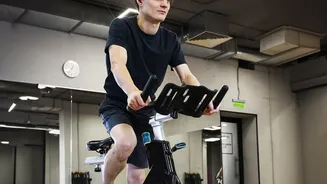
The beauty of Zone 2 is that it can be done with a variety of accessible, low-impact activities. Cycling, whether on a stationary bike or outdoors on flat terrain, is excellent for controlling your heart rate. Other great options include swimming at a steady tempo, using an elliptical or rowing machine, or even just brisk walking, especially on an incline. For many people, a regular flat walk is Zone 1, but adding a slight hill or increasing the pace can be enough to elevate the heart rate into the target zone. The key is choosing an activity you can sustain comfortably for an extended period without sharp spikes in effort.