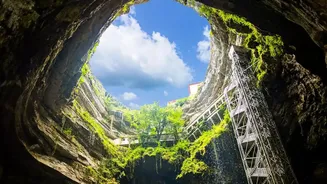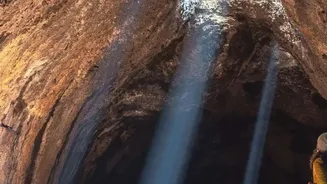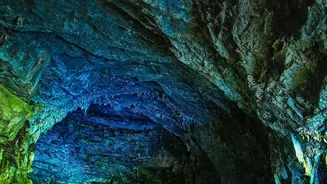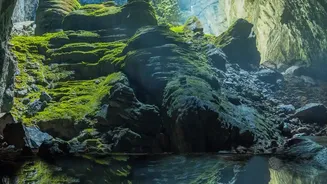





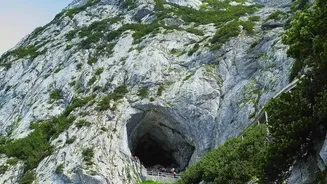
Imagine journeying deep into the Earth, not by foot, but on a train. This isn't science fiction; it's the start of the adventure at Postojna Cave in Slovenia, a subterranean world of geological wonders that has enchanted visitors for centuries.
A Journey by Underground Railway
The experience
at Postojna Cave is unique from the very beginning. It is the only cave in the world with a double-track railway, a feature that has been part of its tourist history for over 150 years. The tour begins with a remarkable 3.7-kilometre electric train ride that whisks you through vast, illuminated caverns and narrow, winding tunnels. This railway, first opened in 1872 with guides pushing the carts by hand, has evolved into a sophisticated electric system that makes the immense scale of the 24-kilometre cave system accessible to all. The journey itself is a spectacle, offering glimpses of magnificent halls and otherworldly formations before you even set foot on the walking path. This practical and thrilling introduction sets the stage for the wonders that lie deeper within.
A Subterranean Wonderland
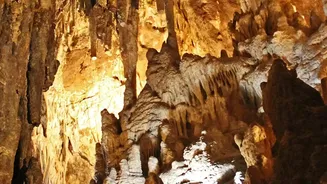
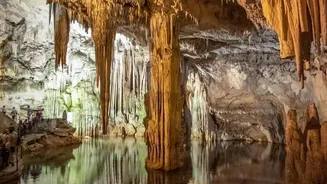
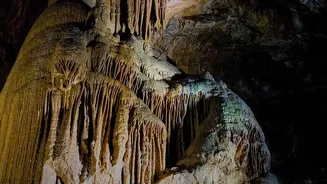
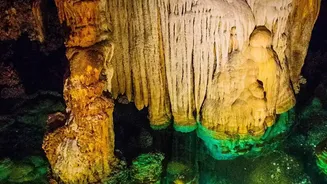
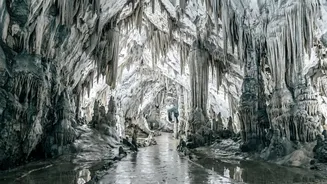
Once you disembark the train, a guided walk of about 1.5 kilometres begins on well-maintained paths. Here, the cave reveals its most breathtaking treasures. You'll wander through a series of chambers, each with its own distinct character. Formations created over millions of years by the patient drip of water greet you at every turn. Highlights include the 'Spaghetti Hall', with its ceiling covered in countless, fine, noodle-like stalactites, and the 'Red Hall', coloured by iron minerals. The 'White Hall' showcases the purity of calcium carbonate in its brilliant white formations. Perhaps the most famous formation is the 'Brilliant', a stunning 5-metre-tall, glistening white stalagmite that has become a symbol of the cave. Towering above it is the 'Skyscraper', a massive 16-metre stalagmite. The sheer scale culminates in the Concert Hall, an enormous cavern with remarkable acoustics that can hold up to 10,000 people and has hosted musical performances.
Meet the Legendary 'Human Fish'
Postojna Cave is not just a geological marvel; it is a cradle of speleobiology, the study of cave life. Its most famous resident is the olm (Proteus anguinus), an aquatic salamander affectionately known as the 'human fish' due to its pale, fleshy skin. These blind creatures are perfectly adapted to a life in complete darkness. Growing up to 30 cm long, they can live for 100 years and survive for more than eight years without food. For centuries, they were thought to be baby dragons washed out of the cave by high waters. Today, visitors can see these fascinating amphibians in a large aquarium near the end of the tour, offering a rare glimpse into the life that thrives in this underground ecosystem. The cave's commitment to protecting these creatures is serious, and a successful breeding program in 2016 and 2022 saw dozens of 'baby dragons' hatch in the cave's laboratory, a major conservation achievement.
A Legacy of Global Tourism
Tourism at Postojna Cave is not a new phenomenon. It has a rich history dating back over 200 years, with official tours beginning in 1819 after a local guide discovered its most beautiful sections. It quickly became a must_see destination, attracting royalty and pioneering modern tourism. Electric lights were installed in 1884, even before they were in Slovenia's capital, Ljubljana. The world's first underground post office opened here in 1899. To date, over 40 million visitors from around the globe have ridden the cave train and walked its hallowed halls. This long tradition of welcoming the world has turned Postojna into one of Europe's most visited show caves, seamlessly blending natural wonder with a well_organised and accessible visitor experience.
Planning Your Underground Adventure
If you're planning a visit, a few practical tips can help make your experience seamless. The temperature inside the cave is a constant $10^oC$ (50$^o$F) year round, so it's essential to wear warm layers and comfortable, sturdy shoes, as the paths can be damp. The entire tour lasts about $90$ minutes, combining the train ride and the guided walk. Booking tickets online in advance is highly recommended, especially during the busy summer months, to secure your preferred time slot and avoid long queues. The cave is accessible for visitors with mobility impairments and is considered family friendly, with the train ride being a particular highlight for children. For a fuller experience, many visitors combine their trip with a visit to the nearby Predjama Castle, a dramatic medieval castle built into a cliff face just a few kilometres away.