







The Freedom of Two Wheels
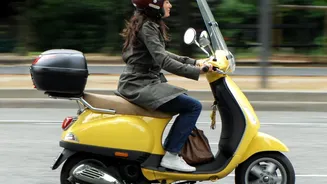
The key to unlocking an authentic, budget-friendly Balinese adventure is renting a scooter. It’s more than just transport; it’s a ticket to freedom. While cars get stuck in the traffic of Canggu or Ubud, a scooter allows you to weave through congestion,
explore narrow village lanes, and discover hidden beaches inaccessible to larger vehicles. Rental costs are incredibly low, typically ranging from about $4 to $15 per day, with significant discounts for weekly or monthly rentals. A standard scooter like a Honda Scoopy or Vario is perfect for navigating most areas and is very fuel-efficient. A full tank of petrol costs only a couple of dollars. This mobility allows you to stay in cheaper guesthouses slightly outside the main tourist hubs and still be minutes from the action, saving you a significant amount on accommodation.
Eating Like a Local at a Warung
Your other essential tool for a cheap and cultural trip is the 'warung'. A warung is a small, family-owned eatery that serves traditional Indonesian food. This is where locals eat, and it’s the heart of Balinese cuisine. Forget fancy menus and tourist prices; here, a delicious and filling meal like Nasi Goreng (fried rice) or Mie Goreng (fried noodles) can cost as little as $1.25 to $2.50. The best and most common type is the Nasi Campur warung, where you get a plate of rice and point to a variety of pre-cooked dishes in a glass case. You can load your plate with chicken, vegetables, tempeh, and spicy sambal for under $3. Eating at warungs means you can easily keep your daily food budget under $10 while experiencing the authentic tastes of the island.
Crafting Your Scooter Itinerary
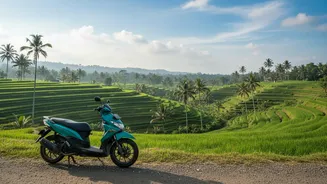
With a scooter, the island is your oyster. In the south, you can cruise the dramatic cliffside roads of Uluwatu, discovering hidden surf breaks like Padang Padang and Bingin Beach. Head inland to the cultural heart of Ubud, where you can ride through lush Tegallalang Rice Terraces and find serene waterfalls without a tour group in sight. For a quieter experience, the coastal roads of Amed in East Bali offer stunning views of Mount Agung and a more relaxed pace. The key is to embrace spontaneity. See a small path leading to a temple or a sign for a waterfall? Follow it. This is how you find the places that don’t make it into the guidebooks.
Staying Safe and Smart
While the freedom is exhilarating, safety is paramount. Bali traffic can be chaotic, so it is not an ideal place to learn to ride for the first time. Always wear a helmet—it’s non-negotiable for your safety and often required by law. To be fully legal, you’ll need an International Driving Permit (IDP) with a motorcycle endorsement from your home country; without it, your travel insurance may be invalid in case of an accident. Before renting, check the scooter’s basics: brakes, lights, and tyre condition. When on the road, be hyper-aware of your surroundings, watch for potholes, and don't expect the rules of the road to be the same as back home. Also, be mindful of your belongings; store valuables in the scooter's compartment rather than in a bag slung over your shoulder to avoid bag-snatching.
A Daily Budget That Works
So, what does a day of cheap, culturally rich travel look like? You can rent a scooter for around $7. Three hearty meals at local warungs might cost you a total of $8. Add in a few dollars for petrol, parking fees, and a large bottle of water, and you can have a full day of exploration and delicious food for around $20. Compare that to a single taxi ride or a meal at a tourist-facing restaurant in Seminyak, which could cost more than your entire day's budget. This style of travel isn't just about saving money; it's about trading the curated, passive experience of a resort for an active, engaged, and ultimately more memorable adventure. It connects you directly with the local economy and the daily rhythm of Balinese life.