
Earth as the Ultimate Blueprint
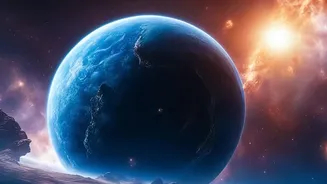
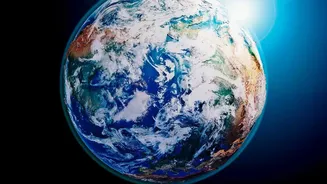
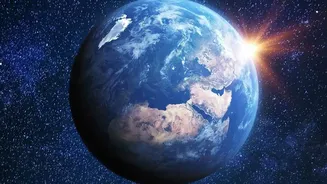
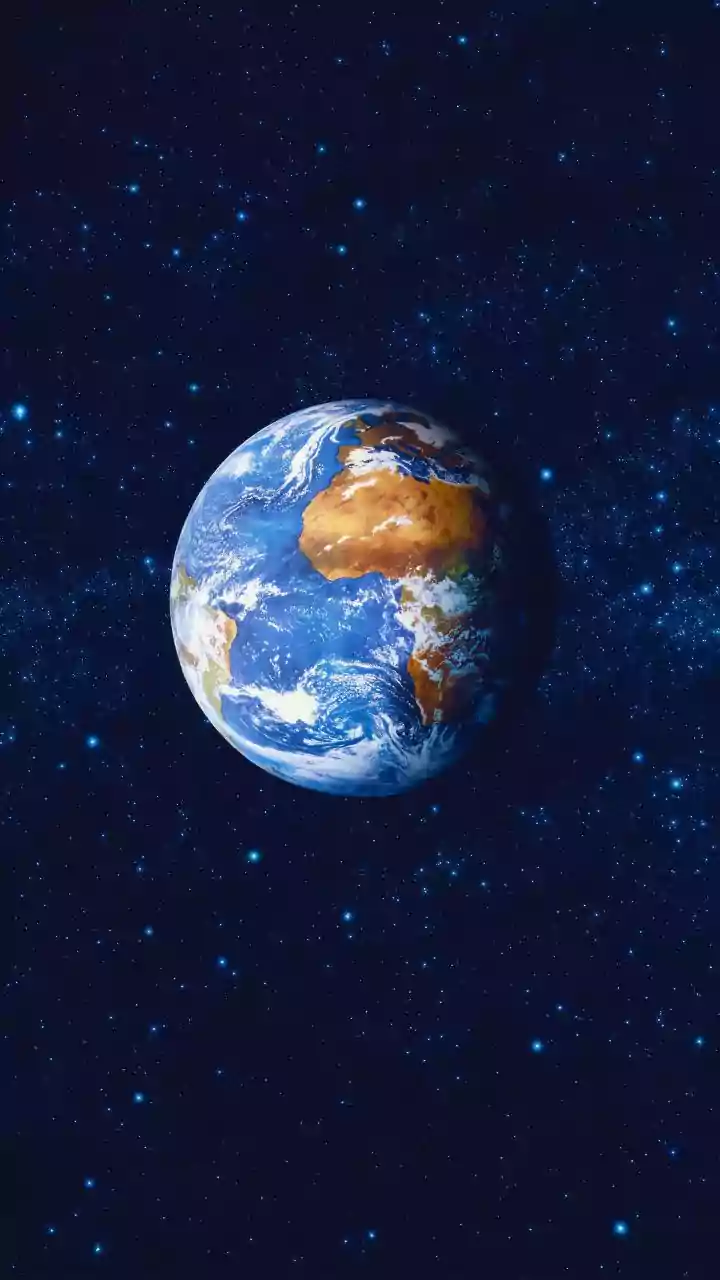
In the vast cosmic expanse, with thousands of confirmed exoplanets and likely billions more waiting to be discovered, scientists face a monumental challenge: where to begin the search for life?. The answer lies right beneath our feet. Earth is, so far,
the only planet we know of that harbours life. This makes it our single, invaluable data point—a scientific blueprint for what a life-sustaining world looks like. This comparison isn't about finding an exact replica, but about using Earth's known characteristics as a filter to sift through the countless other worlds. By looking for planets that share some of Earth's fundamental properties, astronomers can narrow their focus to the most promising candidates for further study. It’s a process of elimination on a galactic scale, guided by the one example of success we have.
The 'Goldilocks' Habitable Zone
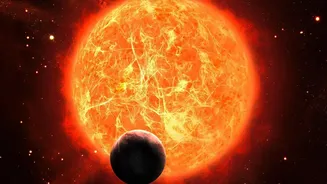
One of the first and most critical filters is the “habitable zone,” often called the “Goldilocks zone.” This refers to the orbital region around a star where conditions are not too hot and not too cold for liquid water to exist on a planet's surface. Liquid water is considered by most scientists to be an essential ingredient for life as we know it. If a planet is too close to its star, its water will boil away; too far, and it will freeze into solid ice. Finding a planet within this temperate zone is a crucial first step. However, the habitable zone's location varies depending on the star. A small, cool red dwarf star will have a much closer habitable zone than a large, hot star like our Sun.
Searching for the Right Ingredients
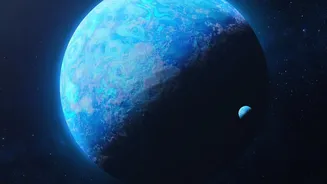
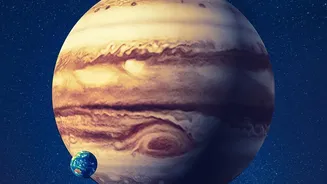
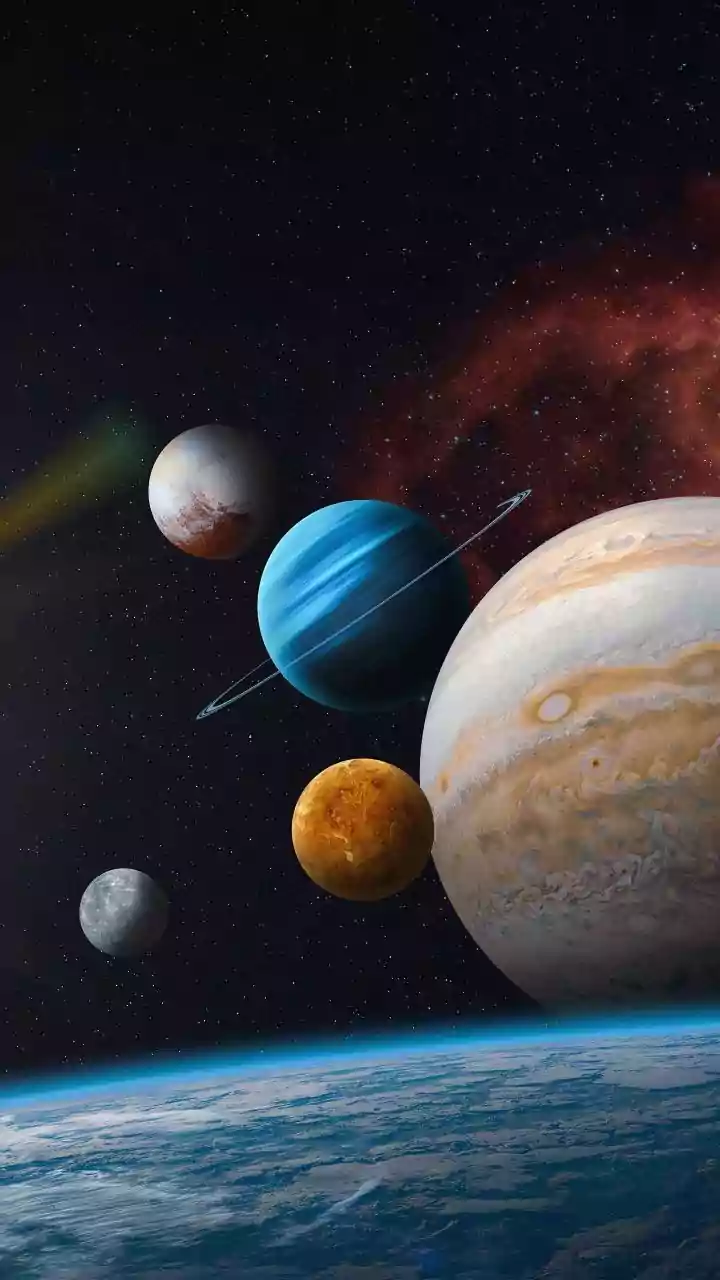
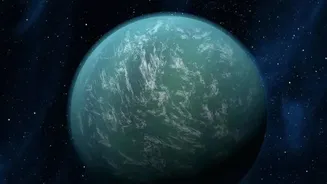
Location is just the start. To be truly Earth-like, a planet needs a few more key features. First, it must be rocky, or terrestrial, like Earth, Mars, and Venus. A gas giant like Jupiter, while massive, has no solid surface to support life as we understand it. Scientists estimate a planet's potential composition by measuring its size and mass. A certain density suggests a rocky world rather than a gaseous one. Size is also important. A planet that is too small cannot hold onto a significant atmosphere, while a “Super-Earth”—a rocky world significantly larger than our own—might have crushing surface gravity. Therefore, planets roughly 0.5 to 1.5 times the size of Earth are often prioritized.
How They Know from So Far Away
Astronomers use several ingenious indirect methods to gather this information from light-years away. The most common is the transit method, used by telescopes like Kepler and the Transiting Exoplanet Survey Satellite (TESS). When a planet passes in front of its star from our perspective, it causes a tiny, periodic dip in the star's brightness. The amount of dimming reveals the planet’s size, and how often it occurs tells us its orbital period. Another technique is the radial velocity or “wobble” method. An orbiting planet exerts a gravitational tug on its star, causing it to wobble slightly. By measuring this subtle movement, scientists can calculate the planet’s mass. Combining these methods gives a clear picture of a planet's basic properties.
Reading an Alien Atmosphere
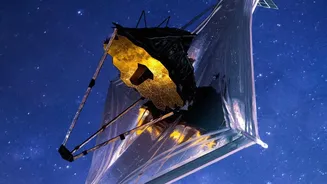
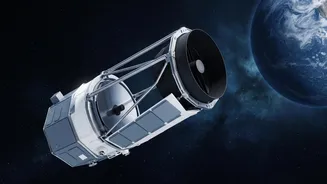
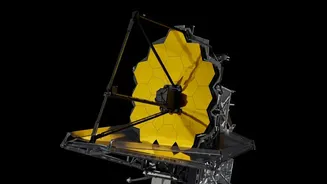
The final and most exciting step is to analyze an exoplanet’s atmosphere. This is where advanced observatories like the James Webb Space Telescope (JWST) come in. Using a technique called transit spectroscopy, JWST analyzes the starlight that passes through a planet’s atmosphere during a transit. Different gas molecules absorb light at specific wavelengths, leaving a unique chemical “fingerprint” or barcode in the light spectrum that reaches the telescope. Scientists search these fingerprints for biosignatures—gases like oxygen, methane, and water vapour that could indicate the presence of biological processes. The detection of these gases doesn't guarantee life, but it points to a world with complex chemistry worth investigating further.