






Decoding Your Body's Inner Clock
At the heart of our daily energy patterns is the circadian rhythm, a 24-hour internal cycle that regulates when we feel awake and when we feel sleepy. This master clock, located in the brain, responds primarily to light and darkness, telling our bodies
when to release hormones that either energise us for the day or prepare us for rest. Think of it as the operating system for your body, managing everything from your body temperature and metabolism to your mood and alertness. When this rhythm is stable and aligned with the natural day-night cycle, we tend to feel focused, energetic, and sleep well. However, the demands of modern life can easily throw this delicate system out of sync.
How Office Life Disrupts Your Rhythm
A demanding office schedule often creates the perfect storm for circadian disruption. We spend long hours indoors, seated under consistent artificial lighting, which deprives our internal clock of the strong light-dark signals it needs to function optimally. A sedentary state for eight to ten hours a day sends a powerful message to our body: 'It is time to conserve energy'. This directly contradicts the mental demands of a workday, creating a mismatch between what our brain needs to do (focus) and what our body is being told to do (power down). The result is the classic afternoon slump, where mental fatigue and physical lethargy peak, making productivity a struggle. This prolonged inactivity can flatten our natural energy curve, leading to feeling 'just okay' all day rather than truly alert.
Activity as a 'Reset' Signal
This is where brief activity breaks come in. Moving your body, even for just five minutes, acts as a powerful corrective signal to your circadian system. When you stand up, walk around, or do a few simple stretches, you are essentially telling your body, 'It is daytime, we are active, and we need energy now'. This short burst of physical exertion increases blood flow and oxygen to the brain, providing an immediate boost in alertness and cognitive function. It also activates muscles and stimulates metabolic processes that have slowed down during prolonged sitting. These breaks serve as mini 'resets', reinforcing the 'awake' and 'active' phase of your circadian cycle and helping to counteract the sluggish signals sent by a sedentary posture.
Simple Breaks for a Big Impact
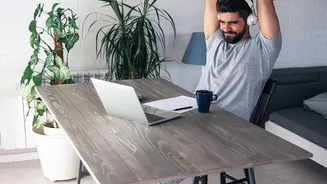
Incorporating these breaks does not require a gym membership or a significant time commitment. The key is consistency. Try setting a reminder to get up from your desk once every hour. A brisk five-minute walk to the pantry and back is enough to make a difference. If you cannot leave your workspace, try simple desk-based exercises like shoulder rolls, neck stretches, or standing up and sitting down ten times. Taking the stairs instead of the lift is another classic but effective strategy. You could even use the time you are on a non-video call to pace around your office or cabin. The goal is not to break a sweat, but simply to break the cycle of being static.
The Long-Term Wellness Advantage
The benefits of these micro-breaks extend far beyond conquering the afternoon slump. By consistently supporting your natural circadian rhythm, you contribute to better overall health. A well-regulated internal clock is linked to improved sleep quality, as your body becomes more efficient at preparing for rest when the day is done. This, in turn, boosts mood and emotional regulation. Furthermore, regularly breaking up long periods of sitting helps mitigate some of the long-term health risks associated with a sedentary lifestyle, including metabolic issues and musculoskeletal strain. It is a small investment of time that pays significant dividends for both your immediate productivity and your future well-being.