



A High-Stakes Repair Job
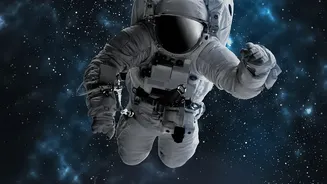
On Tuesday, August 25, 2026, NASA astronaut Anil Menon and European Space Agency (ESA) astronaut Sophie Adenot ventured outside the International Space Station for a demanding six-and-a-half-hour mission. Their goal was to install a replacement Space-to-Ground
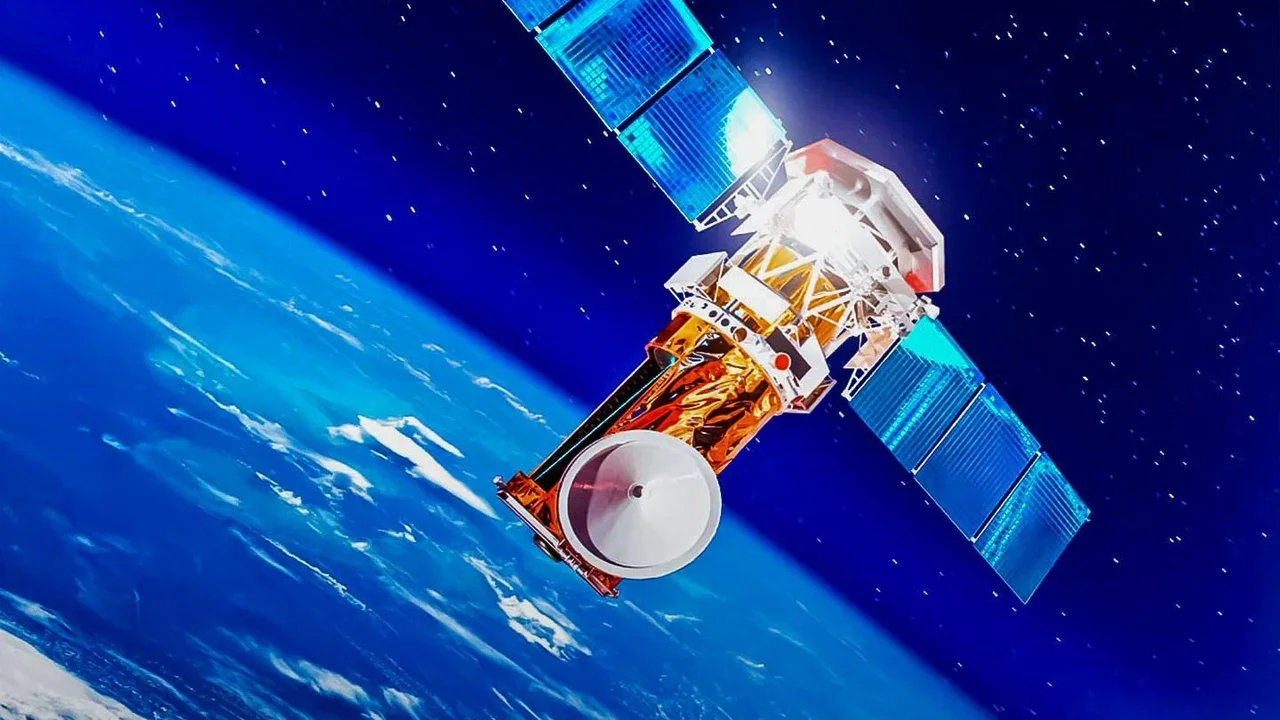
antenna, a piece of hardware essential for sending high-speed data between the orbiting laboratory and Mission Control in Houston. The operation was the second part of a complex repair, as the duo had previously performed a spacewalk on August 18 to remove the faulty antenna after it stopped functioning. That initial outing took longer than planned due to stubborn bolts and electrical connectors, forcing the team to postpone the installation of the new unit.
Why This Data Link Is So Important
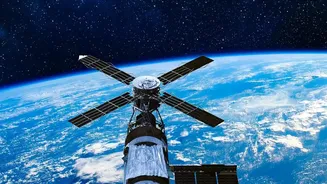
The ISS isn't just a home for astronauts; it is a world-class science laboratory orbiting 400 kilometres above our planet. Researchers conduct thousands of experiments in fields like human biology, materials science, and Earth observation. The high-speed data link is the umbilical cord that connects this research to scientists on the ground, transmitting everything from high-definition video to vast streams of experimental results. Without a fully functional communications system, the station’s ability to perform its primary mission as a research outpost would be significantly hampered. NASA has steadily upgraded the station's connection over the years, which now supports rates up to 600 Mbps, enabling more complex experiments than ever before.
What Made the Spacewalk Historic?
This mission was significant for several reasons. The successful installation restored crucial redundancy to the station's communication systems, ensuring there is a backup if one antenna fails. For the astronauts themselves, it was a milestone. The mission marked the third career spacewalk for Anil Menon and the second for Sophie Adenot. Notably, during her first spacewalk on August 18, Adenot became the first woman from France to perform an extravehicular activity (EVA). This successful two-part repair, the 283rd spacewalk in support of the ISS, underscored the international collaboration and individual skill required to maintain humanity's outpost in space.
The Challenge of Working in a Vacuum
Spacewalks, or EVAs, are among the most dangerous tasks an astronaut can undertake. Working in the vacuum of space, astronauts face extreme temperatures and the constant threat of micrometeoroids. Every movement is deliberate, performed in a bulky, pressurized suit while tethered to the station. Replacing a sensitive piece of equipment like a communications antenna requires immense precision. As seen in the first part of their mission, even something as simple as a stuck bolt can cause major delays and force mission planners to adapt on the fly. The successful completion of this complex, multi-stage repair highlights the intensive training and real-time problem-solving skills of both the astronauts in orbit and the control teams on the ground. Initial tests of the new antenna showed good power and data transmission, a welcome sign after the challenging work.