






Your Senses Under Pressure
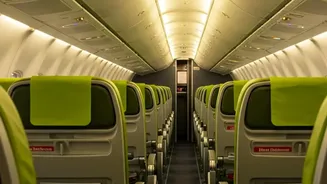
The moment you step onto a plane, your body begins to adapt to a new environment. While commercial aircraft cabins are pressurised for safety and comfort, they aren't pressurised to sea-level conditions. Instead, the cabin altitude is typically maintained
at the equivalent of 6,000 to 8,000 feet. This lower air pressure slightly reduces your blood oxygen levels, which in turn numbs the sensitivity of your taste buds and olfactory receptors. Studies, including a notable one commissioned by German airline Lufthansa, found that our ability to perceive salty and sweet tastes drops by as much as 30 percent in these conditions. It's a similar sensation to trying to enjoy food when you have a bad cold; everything just seems a little duller.
The Desert-Dry Atmosphere
Alongside low pressure, the air inside a plane cabin is incredibly dry. Humidity levels can plummet to below 12-20%, which is drier than you'd find in the Sahara Desert. This has a significant impact on your sense of smell, which is responsible for up to 80% of what we perceive as flavour. The dry air parches your nasal passages, making it much harder for aroma molecules from your food to reach your olfactory receptors. Without a strong sense of smell to provide context, the nuances of a dish are lost, and flavours become muted. This combination of dulled taste buds and a weakened sense of smell is the primary reason why food that was perfectly seasoned on the ground can seem underwhelming in the air.
The Unexpected Role of Noise
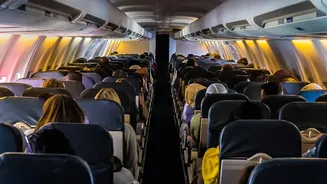
Perhaps the most surprising factor is the constant drone of the jet engines. The background noise in a cabin, which often hovers around 85 decibels, does more than just make it hard to hear a conversation—it actively interferes with your palate. Research from Cornell University and the University of Oxford found that loud noise suppresses our ability to taste sweetness. However, the same noise has the opposite effect on another taste: umami. This savoury, rich flavour, found in ingredients like tomatoes, mushrooms, and parmesan cheese, is actually enhanced by the loud cabin environment. This phenomenon helps explain why so many people find themselves craving tomato juice or a Bloody Mary on a flight, even if they rarely drink it on the ground.
The Caterer's High-Altitude Toolkit
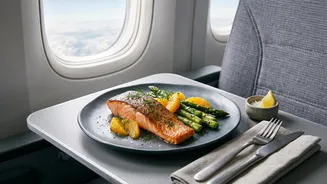
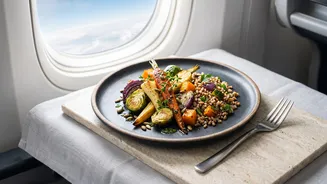
Airline caterers are well aware of this sensory sabotage. To combat the dulling effects of altitude, their chefs intentionally reformulate recipes. They often increase the salt and sugar content significantly—sometimes by up to 30%—just so the meal tastes 'normal' to the passenger. However, simply adding more salt isn't the only solution, as it can be dehydrating. Chefs have become smarter, leaning heavily on ingredients that are naturally robust or even enhanced by the cabin environment. This means a greater focus on umami-rich foods like tomato sauces, mushrooms, and aged cheeses. Spices that hold their own, such as cardamom, lemongrass, and curry, are also used liberally to ensure dishes have a distinct and powerful flavour profile that can cut through the sensory fog. So, the next time you find your in-flight curry particularly flavourful, it’s by careful design.