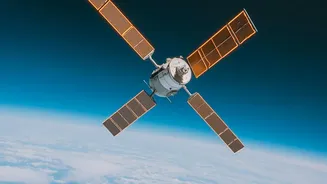




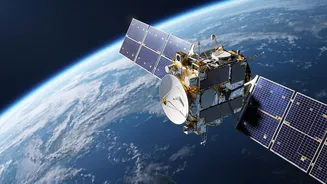


What is GISAT-1A?
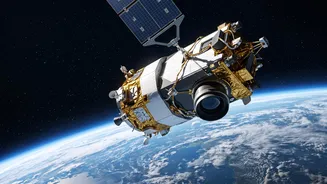
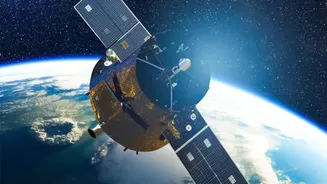
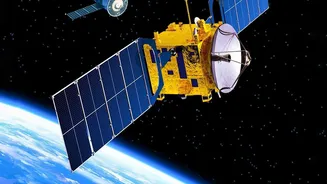
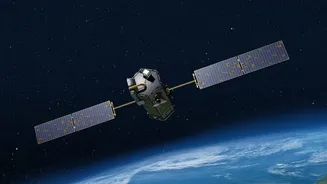
GISAT-1A, also known as EOS-05, is a state-of-the-art Earth observation satellite developed by the Indian Space Research Organisation (ISRO). It is designed to be a significant upgrade to India’s remote sensing capabilities. Unlike most Earth-watching
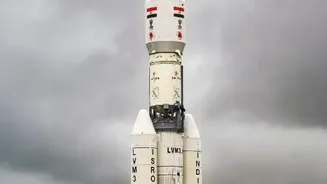
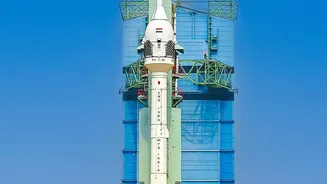
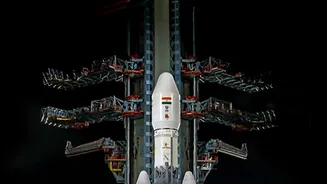
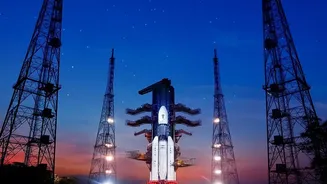
satellites that circle the planet in low orbits, GISAT-1A is built for a geostationary orbit. This mission is essentially a do-over of the original GISAT-1 (also called EOS-03), which was lost during a launch failure in August 2021. Now, ISRO is ready to launch its replacement, GISAT-1A, aboard a GSLV Mk-II rocket, aiming to finally achieve the goals set out for its predecessor.
The Unique 'Fixed' Orbit
The defining feature of the GISAT-1A mission is its orbit. The satellite will be placed in a geostationary orbit approximately 36,000 kilometres above the Earth's equator. At this specific altitude, the satellite's orbital speed matches the Earth's rotation. The result? From the ground, the satellite appears to be stationary, or 'fixed', over a single point. This is a game-changer. Most Earth observation satellites are in polar orbits, meaning they can only view a specific location for a few minutes at a time as they pass overhead. GISAT-1A’s constant presence over the Indian subcontinent will allow for continuous, near real-time monitoring, like having a dedicated camera on a very tall, unmoving pole.
A Mission of Constant Watch
The primary mission of GISAT-1A is to provide rapid, high-resolution imaging of the Indian subcontinent. Thanks to its unique orbit, the satellite can capture an image of the entire Indian landmass every 30 minutes and can be steered to focus on a high-priority area of interest every five minutes. This high temporal resolution is its key advantage. The satellite is equipped with advanced imaging payloads, including multi-spectral and hyperspectral sensors, which can see across various light bands to gather detailed information about the Earth's surface. This constant stream of data will be invaluable for tracking fast-moving and evolving events in a way that was not previously possible.
Powerful Uses for India
The applications for GISAT-1A's capabilities are vast and vital for national interests. For disaster management, it will be a powerful tool, enabling the continuous tracking of cyclones, floods, forest fires, and landslides. This allows for more effective early warning systems and better-coordinated response efforts. In agriculture, the satellite can monitor crop health, vegetation, and water bodies, helping to assess damage and manage resources. Furthermore, there are significant strategic applications. The ability to maintain a constant watch over border areas and maritime regions provides a major boost to national security and surveillance efforts, allowing for persistent monitoring of sensitive locations.
Healing an Old Wound
The GISAT-1A mission carries the weight of past failure. Its predecessor, GISAT-1 (EOS-03), was launched on August 12, 2021. While the first two stages of the GSLV-F10 rocket performed perfectly, the crucial third cryogenic upper stage failed to ignite due to a technical anomaly. A failure analysis later pointed to a leaking valve that caused a loss of pressure in the fuel tank, preventing the rocket from delivering the satellite into its intended orbit and leading to the mission's failure. The upcoming launch of GISAT-1A is therefore a redemption mission for ISRO, aiming to prove the reliability of its GSLV rocket and its critical cryogenic stage technology.
Why This Mission Matters
GISAT-1A is more than just a replacement satellite; it represents the recovery of a crucial capability. For five years, the gap left by the original GISAT-1's failure has been felt, particularly in the domain of real-time disaster monitoring where events unfold in hours, not days. A successful launch will not only place a powerful strategic asset in orbit for India but also restore momentum to ISRO's launch program. It validates the complex cryogenic engine technology and reinforces India's position as a major space power. Successfully deploying this 'eye in the sky' will significantly enhance the country’s ability to protect its citizens, manage its resources, and secure its interests from a unique vantage point in space.