




Kanda Bhaji from Maharashtra
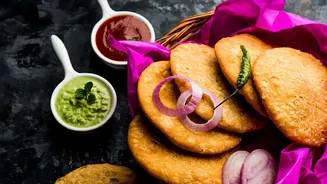
No monsoon in Mumbai is complete without Kanda Bhaji. These are crispy onion fritters, and they represent the quintessential rainy-day snack for many. The magic lies in their simplicity and texture. Thinly sliced onions are mixed with a spiced gram flour
(besan) batter, often with additions like coriander and chilli, and then deep-fried until golden and crunchy. Unlike round pakoras, Kanda Bhaji is often irregularly shaped, which maximizes its crispiness. The key is to use the moisture from the onions to bind the batter, rather than adding too much water. This creates a light, airy fritter where the sweet, slightly sharp taste of the onion shines through. Served hot, often straight from a street-side stall, these fritters are the perfect companion to the rhythm of the falling rain.
Pazham Pori from Kerala
Travel south to Kerala, and you'll find a different kind of monsoon treat: Pazham Pori, or sweet banana fritters. This beloved tea-time snack, also known as Ethakka Appam, uses a specific type of plantain called Nendran Pazham, which is ripe and sweet. The plantains are sliced lengthwise, dipped in a simple batter of flour (maida or a mix with rice flour for crispiness), a pinch of turmeric for that vibrant yellow colour, and a little sugar, then deep-fried until the outside is crisp and the banana inside is warm, soft, and almost custardy. The phrase "Rain, kattan chai, and pazham pori" captures the deep emotional connection Malayalis have with this snack. It offers a beautiful contrast of a crunchy exterior with a sweet, comforting interior, traditionally fried in coconut oil for an authentic flavour.
Mirchi Bajji from Andhra and Rajasthan
For those who like their snacks with a bit of a kick, the Mirchi Bajji is a monsoon must-have. Popular in states like Andhra Pradesh, Telangana, and Rajasthan, these are whole green chilli fritters. Cooks use a larger, paler green variety of chilli, which is flavourful but milder than its smaller counterparts. The chillies are slit open and deseeded to reduce the heat, and sometimes filled with a tangy stuffing of tamarind, potato, or spices before being dipped in a gram flour batter and fried. The result is a wonderfully spicy and savoury snack. The crispy, seasoned coating gives way to the soft, slightly pungent chilli inside. It's often served with a sprinkling of chaat masala and finely chopped onions, providing a burst of flavour that wonderfully complements a gloomy, rainy day.
Beguni from West Bengal
In West Bengal, the arrival of rain often means it's time for Beguni. This is a simple yet elegant fritter made from eggplant (brinjal). Thin, long slices of eggplant are dipped into a seasoned gram flour batter, which is sometimes spiced with nigella seeds (kalonji), and then fried until puffy and golden brown. The outside becomes light and crisp, while the eggplant inside turns soft, tender, and creamy, creating a delightful textural contrast. Beguni is a staple 'telebhaja' (fried snack) and is a perfect accompaniment to an evening cup of tea. During the monsoons, it is also traditionally served alongside a warm plate of Khichuri, making for a soulful and comforting meal that is deeply woven into Bengali food culture.
Bhutta (Roasted Corn) from North India
Perhaps the most iconic and widespread monsoon snack of all is Bhutta, or roasted corn on the cob. The smoky aroma of corn being roasted over hot coals is a smell that defines the rainy season on streets across North India and beyond. Street vendors roast fresh corn over a small charcoal grill until the kernels are tender and slightly charred. It’s then rubbed generously with a mixture of lemon juice, salt, and red chilli powder or chaat masala. This simple seasoning combination of tangy, salty, and spicy flavours perfectly enhances the natural sweetness of the corn. It’s not a complicated dish, but holding a warm, smoky Bhutta while walking in the cool monsoon air is a simple, visceral pleasure that connects to a shared national experience of the season.