


The Challenge of Fixed Furniture
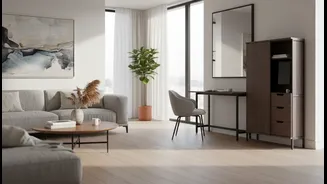
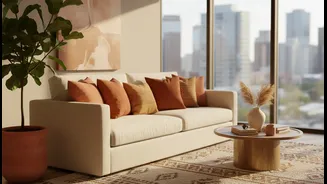
In many urban Indian homes, the living room is dominated by a large, stationary sofa, a heavy coffee table, and perhaps an armchair or two. While perfect for daily life, this arrangement can feel rigid and restrictive when guests arrive. It creates fixed
conversation zones and awkward traffic flow, forcing people to squeeze past each other. The result? A space that feels smaller and less inviting. Successful hosting in a compact apartment requires a shift in mindset: from static arrangements to dynamic, flexible layouts that can adapt to the number of guests and the energy of the occasion. The key is to clear the floor and create a sense of openness.
Embrace the Power of Movable Pieces
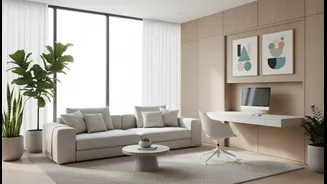
The solution lies in furniture that serves multiple purposes and can be easily moved, reconfigured, or stored away. This doesn’t mean getting rid of your comfortable sofa, but complementing it with a collection of lightweight, versatile seating options. Think of your furniture not as permanent fixtures, but as a toolkit for creating different social environments. Before a party, you can push larger pieces against the walls to maximize central floor space, ensuring guests can mingle freely without navigating an obstacle course. This simple act transforms the room from a static living area into an open, welcoming venue.
Your Flexible Seating Toolkit
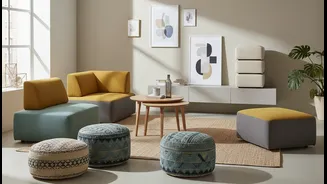
Building a collection of movable seating is easier and more stylish than you might think. Start with a few of these key pieces: Ottomans and Poufs: These are the ultimate multitasking heroes. Use them as footrests, extra seats, or even as makeshift coffee tables by placing a tray on top. Ottomans with built-in storage are even better, helping you quickly hide away clutter before guests arrive. Poufs, which are typically soft and lightweight, are easy for guests to grab and move wherever a conversation is happening. Stacking Stools: An elegant and practical solution, stacking stools can live in a corner as a small side table and then be deployed as individual seats when needed. They take up minimal vertical space and are far more stylish than folding chairs. Benches: A sleek bench can be a game-changer. Placed against a dining table, it can seat more people than individual chairs. In the living room, it offers a versatile seating option that can be tucked against a wall or moved to create a new conversation zone. Floor Cushions: For a more casual, bohemian vibe, a collection of large, comfortable floor cushions can provide relaxed seating without adding bulky furniture. They are easy to stack and store when not in use.
Creating Zones for Better Flow
With movable seating, you can strategically design different 'zones' within your small space. Create a main conversation hub around your sofa, but then place a pair of poufs in a corner to encourage a quieter chat. Use a bench near a balcony or window to create an inviting spot for people to get some fresh air. By breaking up the space into smaller, purposeful areas, you prevent guests from clustering in one spot—like the doorway or kitchen—and encourage natural movement and mingling throughout the home. Ensure pathways to the washroom and kitchen remain clear at all times.
Putting It All into Practice
Before your next get-together, take a moment to look at your living area. Remove any unnecessary decor to reduce visual clutter. Push your main sofa against the longest wall to open up the room. Swap your bulky coffee table for a cluster of nesting tables or a storage ottoman. Arrange your new flexible seating options—stools, poufs, and cushions—in small, inviting groups. This 'party mode' layout not only accommodates more people comfortably but also signals to your guests that the space is designed for interaction and enjoyment, making them feel instantly more at ease.