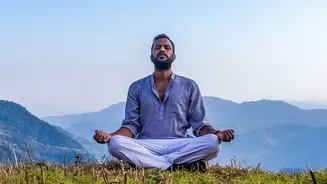








Beyond the Buzzword: What is Mindful Travel?
Mindful travel is more than just a popular hashtag; it's a conscious shift in intention. Instead of treating a trip like a checklist of sights to be ticked off, it prioritises being present and fully experiencing a destination. This approach encourages
slowing down, connecting with local culture, respecting the environment, and making a positive impact. For many Indian millennials, this means swapping a frantic week in a packed tourist trap for a more deliberate and immersive journey. The focus is on the quality of the experience, not just the quantity of photos taken. It’s about creating meaningful memories rather than just collecting passport stamps.
The Great Escape from 'Overtourism'
Popular destinations during holidays and summer breaks often suffer from 'overtourism'—a phenomenon where an excessive number of visitors strains local infrastructure, damages the environment, and diminishes the authentic character of a place. Urban millennials, hyper-aware of their environmental and social footprint, are actively choosing to avoid this. A 2018 study found that 74% of young Indians would consider skipping a destination to avoid contributing to overtourism. Travelling during the off-season—like visiting Goa during the monsoon or Rajasthan in the summer—is a direct response. The benefits are twofold: travellers get to experience popular places without the overwhelming crowds, and the destination gets a more evenly distributed flow of income throughout the year, easing the pressure on its resources.
The 'Workation' and the End of the Office
The rise of remote work has been a game-changer for travel patterns. The pandemic normalised a flexibility that many urban professionals now leverage to blend their work and travel lives. India is now the 11th largest digital nomad hub globally, with many Indians driving this trend. This has given birth to the 'workation' or 'work-from-anywhere' stay, where professionals relocate to scenic destinations for extended periods. Instead of a short, week-long vacation, they can spend weeks or even months in the hills or by the coast, working during the day and exploring in their free time. This model naturally favours the off-season, when longer stays are more affordable and the environment is quieter and more conducive to both work and relaxation. This flexibility flattens the traditional tourism calendar, as demand is no longer concentrated in a few peak months.
Sustainability as a Status Symbol
For a growing number of millennials, sustainability is not just a preference but a core value. A recent report revealed that 88% of Indian millennials want to travel more sustainably. This generation is acutely aware of its carbon footprint and seeks to make responsible choices. They are more likely to choose 'green' hotels, support local businesses, and opt for experiences that contribute positively to the community. Off-season travel aligns perfectly with this mindset. It inherently reduces the environmental strain associated with peak-season travel. Furthermore, it often provides a more authentic connection to the local economy, as money is spent at a time when businesses need it most, rather than during the saturated peak season.
A Hunger for Authentic Connection
Ultimately, this shift is driven by a desire for more authentic experiences. When a destination is not overwhelmed by tourists, it's easier to connect with the local culture and people on a deeper level. Whether it’s enjoying monsoon-drenched landscapes in Kerala, exploring serene monasteries in off-season Leh, or having a quiet beach to oneself, these experiences offer a sense of discovery that is often lost in a crowd. This trend sees travel not as an escape from life, but as an investment in it—a way to recharge, learn, and connect with the world and oneself in a more meaningful way. The travel itself becomes a journey of personal growth, not just a physical one.