






The Hidden Cost of Sitting Still
The human body is designed for regular movement, but modern work life often forces it into a static, seated position for eight hours a day. This prolonged inactivity is a primary cause of musculoskeletal issues for office workers. When you sit for long periods,
pressure on the intervertebral discs in your spine can increase significantly compared to standing or walking. This constant load can compress the spine, while key supportive muscles in your core, back, and glutes become inactive and weaken over time. This creates a harmful imbalance: some muscles, like your hip flexors, become tight and short, while others, like your back extensors, become weak and strained, leading to fatigue and discomfort.
Your Spine on a Chair
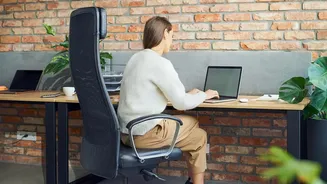
Slouching is an almost inevitable consequence of long hours in a chair, and it's a direct route to poor spinal alignment. Leaning forward or hunching over your keyboard creates a forward-head posture that strains your neck and upper back muscles. Over time, this can lead to rounded shoulders and an exaggerated curve in your lower back, disrupting the spine's natural S-shape. This misalignment isn't just about looks; it puts uneven pressure on your vertebrae, weakens ligaments, and can contribute to chronic conditions like lower back pain, neck strain, and even sciatica if a compressed disc irritates a nerve.
The Power of the Hourly Reset
The most effective way to combat the damage of sitting is surprisingly simple: break the cycle of stillness. Experts strongly recommend taking short, frequent movement breaks—ideally every 30 to 60 minutes. These brief interludes of activity, even for just a minute or two, are crucial. Standing up allows your spinal discs to decompress, while light stretching improves circulation, reduces muscle stiffness, and reactivates the postural muscles that have been dormant. This regular resetting prevents the cumulative strain that leads to fatigue and pain, and it does so more effectively than a single workout at the end of the day.
Simple Moves for Big Impact
You don't need a gym to protect your spine. Discreet exercises can be done right at your desk to release tension and activate muscles. Try incorporating these into your hourly breaks: Seated Spinal Twist: Sit tall and gently twist your torso to one side, using the armrest for a light stretch. Hold for 15-20 seconds and repeat on the other side. This mobilizes your spine. Shoulder Rolls and Squeezes: Roll your shoulders backward and down 10 times to release neck and shoulder tension. Then, squeeze your shoulder blades together to activate upper-back muscles weakened by hunching. Neck Stretches: Gently tilt your ear toward your shoulder, holding for 15 seconds to stretch the side of your neck. Repeat on the other side. Avoid rolling your neck in full circles, which can strain it. Glute Squeezes: While seated, simply contract your gluteal muscles, hold for 10-15 seconds, and release. Repeat 10 times. This helps reactivate muscles that switch off when you sit.
Build a Habit, Not a Task
The key to consistency is making movement an automatic part of your day. Try "habit stacking" by linking a movement to an existing routine. For example, do a set of calf raises every time you get up to grab a document from the printer. Or perform a standing hip flexor stretch after every phone call. Set a timer on your computer or phone to remind you to stand and stretch every hour. The goal isn't an intense workout; it's to make small, frequent movements an effortless and non-negotiable part of your workday. Over time, these micro-habits add up to significant protection for your back and body.
Create a Supportive Workspace
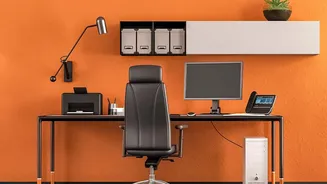
While movement is key, a proper ergonomic setup provides the foundation for good posture. Adjust your chair so your feet are flat on the floor, your knees are at a 90-degree angle, and your lower back is supported. Your monitor should be at eye level to prevent you from hunching, and your keyboard should be positioned so your elbows are at a 90-degree angle with your wrists straight. Using a standing desk, even for short periods, can also help by allowing you to alternate between sitting and standing, which reduces pressure on your lower back.