






The Core Question: Seated vs. Standing
The fundamental difference in balance comes down to your center of gravity. In a kayak, you are seated, often below the waterline. This creates a very low center of gravity, making the craft feel inherently stable right from the start. For most newcomers,
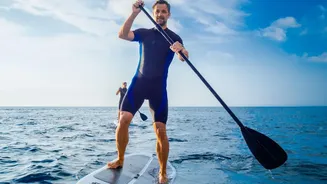
this seated position provides immediate confidence. Stand-up paddleboarding, as the name implies, requires you to stand on the board. This raises your center of gravity significantly, creating a dynamic balance challenge that engages your core and leg muscles constantly. While modern boards are surprisingly stable, the initial feeling is less secure than sitting in a kayak.
Kayaking: Stability by Design
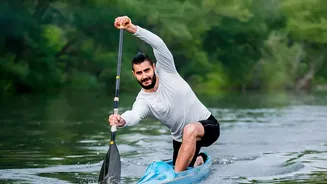
Not all kayaks are created equal, but recreational models are built with beginners in mind. These kayaks are typically wider and have flat or multi-chine hulls, which prioritize what's known as 'primary stability'—the feeling of steadiness on calm water. A wider recreational kayak, often over 28 inches, is exceptionally forgiving and very difficult to tip over accidentally. This makes kayaking a more intuitive choice for anyone worried about falling in, especially in wind or slightly choppy water. The double-bladed paddle also helps with balance and steering, as the symmetrical motion helps you maintain a straight course with less effort. Because you are sitting, kayaking is less physically demanding on your lower body and core for balance, focusing the workout primarily on your upper body and torso rotation.
Paddleboarding: A Learnable Skill
While paddleboarding demands more balance initially, the learning curve is often quick. Most beginners can get the hang of it within an hour on calm water. The key is selecting the right board. A wide, thick board provides more volume and a more stable platform. For beginners, a board that is 32 inches or wider is a great starting point. The challenge of paddleboarding is also its greatest reward. It delivers an excellent full-body workout, strengthening your core, back, and legs as they work together to keep you stable. Once you find your 'sea legs', you gain incredible freedom. You can stand, kneel, or even sit on the board, offering more versatility than a kayak. Plus, getting back on a paddleboard after falling off is generally much easier than trying to re-enter a capsized kayak.
Factors Beyond the Boat
Your balance is only one part of the equation. Water conditions play a huge role. Calm, flat water is the ideal classroom for both sports. Trying to learn on a windy day with choppy waves will make either activity significantly harder. For paddleboarding, technique is also crucial. Keeping your knees slightly bent, your feet shoulder-width apart, and your core engaged will act as a natural suspension system, helping you absorb movement from the water. Looking toward the horizon instead of down at your feet also dramatically improves stability.
The Verdict for Beginners
If your primary concern is avoiding a swim and feeling stable from the very first minute, kayaking is the clear winner. The low center of gravity and seated position make it easier for most people to pick up. However, if you are looking for a better full-body workout, enjoy the idea of a versatile craft you can stand or sit on, and are willing to embrace a small learning curve, paddleboarding is an incredibly rewarding choice. The balance it requires is a skill that can be developed, not just an innate talent. Many people who worry they have 'bad balance' are surprised at how quickly they adapt on a properly sized board in calm conditions.