

The Monsoon's Culinary Adventure
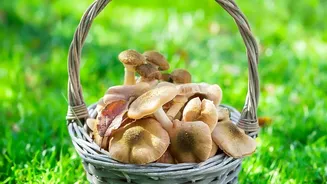
Across India, from the Himalayan foothills to the Western Ghats, a fascinating trend is taking root. More people are venturing into rain-drenched landscapes, not just for a trek, but to forage for fungi. This age-old practice, traditionally the domain
of Indigenous communities, is finding a new, curious audience among city dwellers and nature lovers. Fuelled by a desire to reconnect with nature and the origins of food, this movement sees enthusiasts joining guided walks and workshops to learn the art of identifying the season’s fleeting bounty. The appeal lies in discovering ingredients that can't be found in a supermarket—flavours that are hyper-local and deeply tied to the season.
From Mountain Gold to Termite Treasures
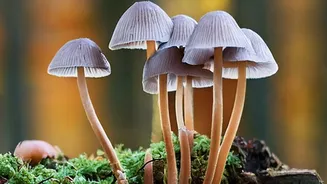
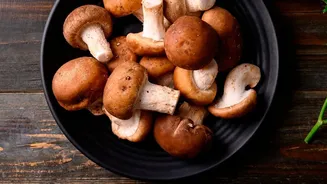
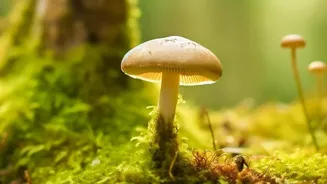
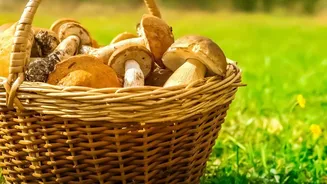
India is home to an incredible diversity of wild mushrooms. In the mountains of Kashmir, Himachal, and Uttarakhand, foragers seek the legendary Gucchi, or Morel mushroom. With its spongy, honeycomb-like cap, it grows only in the wild after the snow melts and can fetch prices upwards of ₹30,000 per kilogram, earning it the nickname "mountain gold". Further south, in the forests of Goa, Karnataka, and Maharashtra, the monsoon brings forth Olmi or Alami mushrooms. These are a species of Termitomyces, which grow in a symbiotic relationship with termite mounds. Goan homes consider a monsoon incomplete without a meal of these meaty fungi, often cooked in rich, coconut-based curries. Other regional delicacies include the Rugra mushroom in Jharkhand, often called 'vegetarian mutton' for its texture.
A Community of Curious Foragers
This growing interest is being nurtured by a community of citizen scientists, expert guides, and even wellness startups. Across the country, mushroom walks are being organised in both dense forests and city parks, helping people realise that nature thrives everywhere if you know where to look. Enthusiasts run Instagram pages cataloguing their finds, while organisations host workshops and festivals celebrating fungi. These gatherings are crucial, as they provide a safe and structured way to learn. They transform a potentially dangerous hobby into an educational experience, guided by experts who can share generations of knowledge on how to spot, identify, and appreciate these wild edibles.
The Deliciously Dangerous Downside
While the romance of foraging is undeniable, the risks are very real and potentially fatal. India has around 100 known poisonous mushroom species, and many delicious edibles have deadly lookalikes. The most infamous is the Death Cap (Amanita phalloides), which grows in India and is responsible for about 90% of the world's fatal mushroom poisonings. Consuming even a small amount can cause catastrophic liver and kidney failure. Other poisonous varieties like Chlorophyllum molybdites, which can cause severe gastrointestinal distress, are also common. Traditional knowledge isn't foolproof, and many poisoning cases occur due to misidentification. The golden rule of foraging is simple and absolute: if you are not 100% certain of a mushroom's identity, do not eat it.
How to Start Your Foraging Journey Safely
The only safe way for a beginner to enter the world of foraging is with an expert. Never rely solely on a book, app, or internet search to identify a wild mushroom for consumption. Start by finding a local foraging group or a guided walk led by an experienced mycologist or a local expert. These guides can teach you how to identify a few common, easily recognisable species and, more importantly, which ones to avoid. Listen, learn, and observe. Take photos and notes. Consider starting with mushroom cultivation at home through a course, which can give you a deeper appreciation for the fungal life cycle in a controlled environment. The thrill of the hunt is only rewarding when it is done with respect for nature's power and a deep commitment to safety.