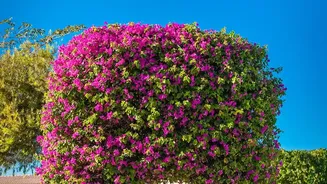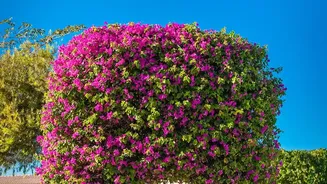





Imagine a cascade of vibrant pink, orange, or purple draping over a sun-drenched wall. That's the magic of bougainvillea, a tropical favourite in Indian gardens. This guide will walk you through transforming a plain wall or fence into a living masterpiece.
Choose the Right Location and Plant
Success with bougainvillea starts with sunshine. These plants are true sun-worshippers and need at least six to eight hours of direct sunlight daily to produce their spectacular bracts—the colourful leaves often mistaken for flowers. A south-facing wall is often ideal. When selecting a plant, look for climbing varieties like 'Barbara Karst' (red), 'San Diego Red', or 'Purple Queen', which are known for their vigorous growth. While many varieties climb, some are bushier, so check the plant's natural habit. A healthy starter plant will have lush green foliage and no signs of pests. Remember that bougainvillea has a sensitive root system that dislikes being disturbed, so handle it with care from the nursery to your garden.
Provide a Sturdy Support Structure
Bougainvillea is not a true vine with tendrils; it's a scrambler with long, thorny canes that need to be physically guided and supported. It cannot climb a smooth wall on its own. Before you even plant, install a strong support system. This could be a wooden or metal trellis, a grid of strong wires, or heavy-duty mesh secured to the wall or fence. Ensure there is a small gap of a few inches between the support and the wall to allow for air circulation. A mature bougainvillea can become very heavy, so the structure must be robust enough to handle its weight over many years.
Prepare the Soil and Plant Correctly
Bougainvillea thrives in well-draining soil and will not perform well if its roots are constantly wet. In fact, slightly dry conditions often encourage better blooming. If you have heavy clay soil, amend it with sand or compost to improve drainage. When planting, dig a hole that is twice as wide as the root ball. Gently remove the plant from its nursery pot, being extremely careful not to disturb the roots. Place it in the hole at the same depth it was in the container. If it's a vining variety, you can angle the plant slightly towards its support structure. Backfill the hole, gently firm the soil, and water thoroughly to settle everything in.
The Art of Training Your Bougainvillea
Training is essential to guide the plant up your wall or fence. As the young, flexible canes grow, gently weave them into the trellis or tie them to the support using soft plant ties or garden twine. Do not tie them too tightly, as the stems will thicken over time. Spread the branches both vertically and horizontally to create an even fan shape. This regular guidance during the growing season is crucial for establishing good coverage. Always wear thick gloves and long sleeves when handling the plant, as the thorns can be quite sharp.
Watering, Feeding, and Ongoing Care
While establishing, water your bougainvillea regularly. Once mature, it is quite drought-tolerant. Water deeply but allow the soil to dry out between waterings. Overwatering can lead to more leaves and fewer flowers. When it comes to fertiliser, avoid high-nitrogen formulas, which promote leafy growth at the expense of blooms. A balanced fertiliser or one specifically for flowering plants, rich in potassium and phosphorus, is a better choice during the growing season. Many gardeners find that a little neglect is better than too much pampering.
Pruning for Abundant Blooms
Pruning is the secret to a full, flower-covered bougainvillea. The plant blooms on new growth, so strategic trimming encourages more branches and, therefore, more colourful bracts. The best time for a major structural prune is in late winter or early spring, just before the new growth cycle begins. During the flowering season, you can perform light trimming or 'pinching' by snipping off the tips of branches that have finished blooming. This encourages the plant to branch out and produce another flush of flowers. Regularly remove any dead or weak branches to keep the plant healthy and direct its energy toward producing vibrant new growth.