






A Glimpse into a Golden Empire
To understand Hampi, you must first picture Vijayanagara, the capital of the powerful Vijayanagara Empire. [17] Established in 1336, this city was once one of the largest and richest in the world, attracting traders from as far as Persia. [2, 13] Chronicles
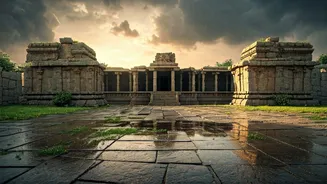
left by European travellers describe a city of immense wealth and grandeur. [2, 15] For over 200 years, it was the heart of the last great Hindu kingdom in South India. [5, 14] However, in 1565, the empire was defeated by a coalition of sultanates, and the magnificent city was pillaged for six months and left in ruins. [2, 17] What remains today is a sprawling open-air museum spread over 4,100 hectares, an incredible collection of over 1,600 monuments that whisper tales of a glorious past. [4]
The Sacred Centre: Temples and Deities
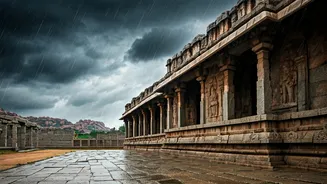
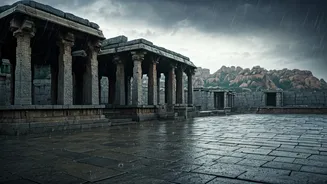
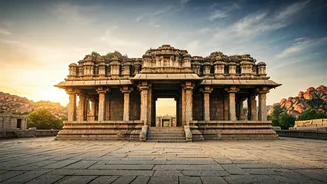
Hampi is, above all, a spiritual place, with its history predating even the Vijayanagara Empire and finding mention in the Ramayana. [2, 5] The heart of Hampi is the Virupaksha Temple, dedicated to Lord Shiva. [3] Remarkably, it is one of the oldest functioning temples in India, with its origins tracing back to the 7th century, and worship continues there to this day. [4, 6] Another architectural marvel is the Vittala Temple, renowned for its iconic Stone Chariot and musical pillars. [6] This stone chariot is so significant it's featured on the Indian ₹50 currency note. [7] The temple complex itself is a masterpiece of Dravidian architecture, with intricate carvings that leave visitors in awe. [8]
The Royal Enclosure: A World of Palaces and Pageantry
Step away from the sacred sites and into the world of kings and queens at the Royal Centre. [3] This is where the Vijayanagara rulers lived and governed. Here you’ll find the elegant Lotus Mahal, a palace for the royal women, which showcases a beautiful blend of Indo-Islamic architecture. [4, 12] Nearby are the impressive Elephant Stables, with their grand domed chambers that once housed the royal elephants. [21] Another key structure is the Mahanavami Dibba, a massive platform from where the king would watch festival processions and military parades. [21] The Hazara Rama Temple, once the private place of worship for the royal family, is famous for its walls intricately carved with stories from the Ramayana. [19]
Beyond the Monuments: The Hampi Vibe
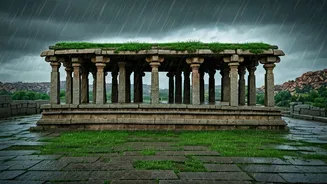
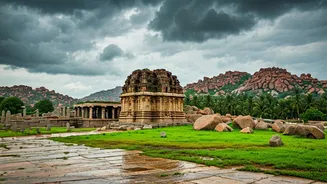
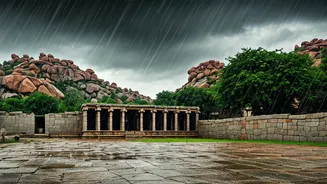
While the ruins are the main attraction, the unique landscape of Hampi is just as captivating. The entire area is strewn with giant granite boulders that balance precariously, creating a surreal, otherworldly environment. [3] A great way to experience this is to climb Matanga Hill for a panoramic sunrise or sunset view, which bathes the entire valley in a golden light. [12, 21] You can also take a coracle ride—a traditional round boat—on the serene Tungabhadra River, which flows gently through the ruins. [7] The other side of the river, often called 'Hippie Island', offers a more laid-back vibe with quiet guesthouses and cafes, popular among backpackers. [9, 13]
Planning Your Cultural Pilgrimage
Hampi is located in the state of Karnataka, and the nearest major town with railway and bus connectivity is Hosapete (or Hospet), about 13 kilometres away. [2, 9] The best time to visit is during the cooler, drier months from October to March. [9, 22] The summer months from April to June can be extremely hot, while the monsoon season from July to September can make exploring the rocky terrain slippery. [12, 22] Two to three days are ideal to explore the main sites without rushing. [12] You can get around on foot, by renting a bicycle or a scooter, or by hiring an auto-rickshaw for the day. [13] For a special cultural experience, try to visit during the Hampi Utsav, an annual festival usually held in November, which brings the ruins to life with music, dance, and vibrant celebrations. [12]