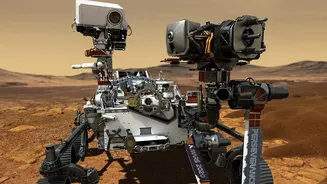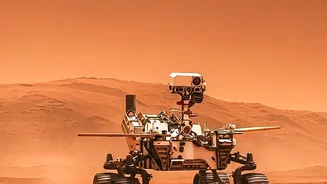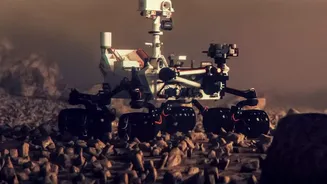







NASA is hitting the reset button on one of its most ambitious goals: bringing pieces of Mars back to Earth. A new initiative, the Perseverance Sample Retrieval Architecture (PSRA), aims to create a new blueprint for this historic mission.
What is the PSRA?
The Perseverance
Sample Retrieval Architecture, or PSRA, is a new NASA initiative designed to develop a fresh, impartial strategy for retrieving the precious rock and soil samples currently being collected by the Perseverance rover on Mars. Announced on November 9, 2026, by Tiffany Morgan, director of NASA's Mars Exploration Program, this move signals a major reassessment of the Mars Sample Return (MSR) campaign. The goal is to create a more feasible and efficient plan after previous concepts faced significant challenges. An independent review had previously estimated the cost of the MSR program at a staggering $11 billion, with a return date stretching to 2040, a timeline and budget NASA deemed unacceptable. The PSRA team is tasked with reviewing past lessons, evaluating current technologies, and proposing a streamlined approach to finally bring these invaluable Martian specimens home.
A Mission Reset
For years, NASA and the European Space Agency (ESA) have collaborated on a complex, multi-part plan to retrieve the samples. The original architecture involved sending a separate lander and a 'fetch rover' to collect the sample tubes cached by Perseverance. This fetch rover would then deliver them to a Mars Ascent Vehicle (MAV), which would launch the samples into orbit to be captured by an ESA-built orbiter for the journey back to Earth. However, the complexity, cost, and schedule of this multi-launch plan led to a strategic pause and the formation of the PSRA. NASA is now looking for a simpler, more robust, and faster alternative. The health and longevity of the Perseverance rover, which has been successfully operating on Mars since February 2021, opens up new possibilities, including having Perseverance itself play a more direct role in the delivery process.
The Ultimate Scientific Prize
The reason for this herculean effort lies in the samples themselves. Perseverance has been diligently drilling and sealing core samples in Jezero Crater, the site of an ancient lakebed and river delta that may hold preserved evidence of past microbial life. Bringing these samples back would allow scientists to analyze them with state-of-the-art laboratory equipment on Earth, technology far too advanced and bulky to send to Mars. These first-ever returned samples from another planet could revolutionize our understanding of Martian geology, its climate history, and whether life ever existed beyond Earth. The analysis could also provide crucial information for planning future human missions, such as how to use Martian resources—a process called in-situ resource utilization.
A New Space Race?
The push to redefine the Mars Sample Return mission is also unfolding against a backdrop of international progress in space exploration. China has announced its own ambitious Mars sample return mission, Tianwen-3, which aims to launch around 2028 and return samples to Earth as early as 2031. While NASA officials focus on the scientific and engineering challenges, the timeline of China's mission adds a sense of urgency to the American effort. This competitive dynamic is seen by some as a modern 'Sputnik moment', potentially spurring innovation and renewed focus. The PSRA's findings, expected in the winter of 2027–2028, will be critical in charting NASA's course forward in this new era of planetary exploration.