








Why The Wrong Form Is a Big Deal
Choosing an incorrect Income Tax Return (ITR) form is not a minor slip-up. The Income Tax Department’s automated systems are designed to detect mismatches between the form you’ve used and the financial data linked to your PAN, such as your Annual Information
Statement (AIS). If you file the wrong form, your return may be flagged as 'defective' under Section 139(9) of the Income Tax Act. This triggers a notice requiring you to rectify the error, typically within 15 days. Failure to do so can lead to your return being treated as invalid, as if you never filed it at all. This can cause significant delays in receiving refunds, prevent you from carrying forward losses, and attract late filing fees and interest.
ITR-1 (Sahaj): The Go-To for Simple Incomes
ITR-1, also known as Sahaj, is the simplest form, designed for resident individuals with a straightforward income profile. You are eligible to file ITR-1 if your total income does not exceed ₹50 lakh during the financial year 2025-26. Your income must come from specific sources: salary or pension, income from up to two house properties, and 'income from other sources' like savings account interest. For AY 2026-27, its scope has been slightly expanded to include long-term capital gains from listed equities or mutual funds under Section 112A, but only up to ₹1.25 lakh. If your financial life fits neatly into these boxes, ITR-1 is the form for you.
Red Flags: When You CANNOT Use ITR-1
Many salaried individuals mistakenly believe ITR-1 is always the right choice. However, several common scenarios make you ineligible. You cannot use ITR-1 if your total income is over ₹50 lakh. If you have any income from capital gains (other than the limited exception for Section 112A), such as from selling property, debt mutual funds, or other shares, you must look beyond ITR-1. Other disqualifiers include having income from a business or profession, being a director in any company, holding unlisted equity shares, or having any foreign income or owning foreign assets. If any of these apply to you, filing ITR-1 will result in a defective return.
Enter ITR-2: The Form for Complex Salaried Profiles
If you are a salaried individual who is not eligible for ITR-1, your correct form is likely ITR-2. This form is designed for individuals and Hindu Undivided Families (HUFs) who do not have income from a business or profession but have more complex financial affairs. ITR-2 is the correct choice if you have capital gains of any kind, income from more than two house properties, or foreign income/assets. It is also the mandatory form if your total income exceeds ₹50 lakh or if you are a director in a company. While it is more detailed than ITR-1, it provides the necessary schedules to accurately report these complex income sources and avoid compliance issues.
What About Side Hustles? A Look at ITR-3 and ITR-4
For salaried individuals who also have income from a business or profession (like freelancing or consulting), neither ITR-1 nor ITR-2 is appropriate. In this case, you must file ITR-3, which is designed to handle profits and gains from business or profession. If your side business qualifies for the presumptive taxation scheme under sections like 44AD or 44ADA, you can opt for the simpler ITR-4 (Sugam), provided you meet the specified criteria. It's crucial to distinguish between investment income (which goes in ITR-2) and active business income (which requires ITR-3 or ITR-4).
Your Final Checklist Before Filing
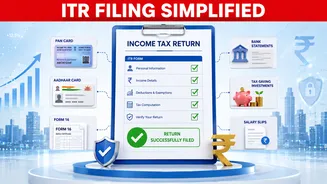
With the deadline of July 31, 2026, for the Assessment Year 2026-27 approaching fast for most salaried individuals, don't leave this to the last minute. Before you begin, download your Form 16 from your employer, and your Annual Information Statement (AIS) from the e-filing portal. Cross-check all income and TDS details thoroughly. The mantra should be: review your income sources first, then select the form. A few minutes spent choosing the correct ITR form can save you from weeks of stress and potential financial penalties down the line.