







India is making a significant play in the global semiconductor race with a reported $23 billion push. But instead of jumping straight into complex chip fabrication, the strategy has a deliberate focus: assembly and testing. Here’s what that means.
The Plan: India's Semiconductor Mission
At the
heart of this initiative is the India Semiconductor Mission (ISM), a government program with a massive financial commitment to build a robust domestic chip ecosystem. Reports indicate the government has earmarked around $23 billion in incentives to attract global and domestic players. This isn't just about offering funds; it's a comprehensive strategy to create capabilities across the entire value chain, from design to manufacturing and packaging. The goal is to reduce India's heavy reliance on imported chips, create high-skilled jobs, and position the country as a reliable alternative in the global supply chain, which is currently dominated by a few East Asian nations.
Assembly vs. Fabrication: A Crucial Distinction
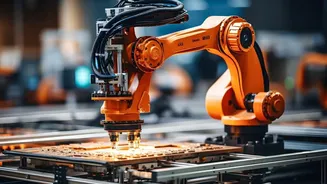
To understand India's strategy, it's vital to know the difference between two key stages. Chip fabrication (fabs) is the incredibly complex and capital-intensive process of creating integrated circuits on silicon wafers. It requires pristine cleanrooms, billions in investment, and decades of accumulated expertise. On the other hand, Assembly, Testing, Marking, and Packaging (ATMP), or Outsourced Semiconductor Assembly and Test (OSAT), is the final stage. This is where the processed wafers are cut into individual chips, assembled into protective packages, tested for quality, and prepared for integration into electronic devices like phones and cars. While less glamorous than fabrication, ATMP is a critical and high-volume part of the supply chain.
Why Start with Assembly and Testing?
India's focus on ATMP is a pragmatic and strategic choice, not a sign of lesser ambition. This 'walk before you run' approach offers several advantages. Firstly, ATMP facilities are less expensive and quicker to build than cutting-edge fabs, allowing the country to establish a foothold in the industry faster. Secondly, this phase is more labor-intensive, which plays to India's strength of having a large workforce and can generate significant employment. Finally, by mastering assembly and testing, India can build foundational skills, develop a domestic supply chain for necessary materials and equipment, and prove its reliability to global partners. This builds a strong base from which to move into more complex fabrication in the future.
The Key Players Making It Happen
This ambitious plan is already in motion with major investments from both global and Indian giants. US-based Micron Technology inaugurated its large_scale assembly and test facility in Sanand, Gujarat, earlier in 2026, marking a significant milestone with a combined investment of around $2.75 billion with government partners. The Tata Group is also making a huge entry. Tata Electronics is setting up an OSAT plant in Assam, which has already started pilot production and is expected to produce up to 48 million chips per day once fully operational. The same conglomerate is also investing in a full_scale fabrication plant in Dholera, Gujarat, in partnership with Taiwan's PSMC, though this is a longer_term project.
Challenges on the Road Ahead
Despite the momentum, the path is not without obstacles. India's previous attempts at building a chip industry have faced hurdles. Success will depend on overcoming persistent challenges, including developing ultra_reliable infrastructure like uninterrupted power and pure water supply, which is critical for semiconductor manufacturing. There is also a significant need to develop a highly skilled workforce specifically trained for manufacturing and testing operations, as the country's strength has traditionally been in chip design. Furthermore, India is heavily dependent on imported manufacturing equipment, specialty chemicals, and other raw materials, which exposes the venture to global supply chain shocks.