







Asia's Demographic Dilemma
For decades, a growing, youthful workforce powered Asia's economic miracle. But the tide is turning. Countries like Japan, South Korea, and China are at the forefront of a major demographic shift, facing rapidly ageing societies and declining birth rates.
The consequences are stark: a smaller pool of workers to drive industry, support a growing number of retirees, and fuel economic growth. According to a recent IMF report presented at its annual meetings in Bangkok, these nations could see their working-age populations shrink by nearly 25% by 2050. This isn't just a future problem; it's a challenge that threatens to slow down some of the world's most dynamic economies today, putting pressure on everything from pension systems to productivity.
The IMF's AI Prescription
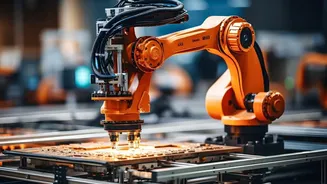
Faced with this challenge, the IMF has identified technology, specifically artificial intelligence, as a powerful countermeasure. During the report's launch, IMF Managing Director Kristalina Georgieva explained that AI-driven productivity gains could more than offset the economic drag from a shrinking workforce. The fund's modelling projects that widespread AI adoption could lift annual growth by 0.5 to 1 percentage point in advanced Asian economies. The idea is simple: if fewer people are working, each worker must become significantly more productive. AI promises to achieve this by augmenting human capabilities, automating repetitive tasks, and enhancing efficiency across entire industries, effectively doing more with less.
Productivity Over Population
The core of the IMF's argument rests on shifting the economic engine from population growth to productivity growth. Instead of relying on more workers, economies can rely on smarter, more efficient work. AI can accelerate the productivity of less experienced staff, allowing younger workers to contribute at a higher level much faster. For advanced economies, where many high-skilled jobs exist, AI can act as a powerful collaborator, handling data analysis and routine processes while freeing up human experts to focus on innovation and strategy. The IMF estimates that in these economies, about 60% of jobs could be impacted by AI, with half of those potentially benefiting from its integration. The productivity boom from this technological shift, the IMF argues, could be enough to completely cancel out the negative pressure from demographic decline.
The Risk of a New Divide
However, the IMF's optimism comes with a major warning. Krishna Srinivasan, director of the IMF's Asia and Pacific Department, cautioned that the benefits of AI are not guaranteed to be shared equally. There's a significant risk that AI could widen the gap between advanced and emerging economies in Asia. Nations like Japan and South Korea, with their strong digital infrastructure and skilled workforces, are well-positioned to benefit. In contrast, emerging markets may lack the capital, infrastructure, and trained workers needed to harness AI, causing them to fall further behind. Within countries, AI could also deepen inequality, displacing low- and middle-skilled workers while primarily benefiting highly skilled professionals whose jobs are complemented, not replaced, by technology.
A Call for Strategic Action
The key question, as Srinivasan puts it, is whether 'AI augments workers or automates jobs'. To steer toward the former, the IMF stresses the need for proactive government policy. This isn't about letting technology run its course; it's about strategic intervention. For emerging economies, the priority must be investing in digital infrastructure and upskilling their workforces to prepare for the AI revolution. For all nations, building robust social safety nets and investing in worker retraining programs will be crucial to manage the transition and support those whose jobs are disrupted. The IMF notes that the right reforms could bring forward the benefits of AI adoption by a decade or more, turning a potential crisis into a growth opportunity.