
Start with a Focal Point
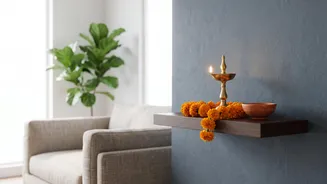
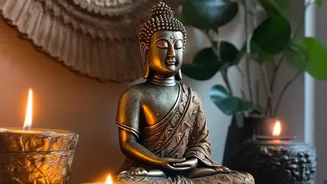
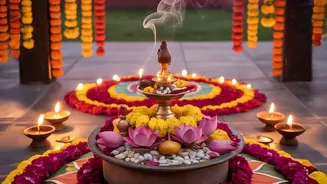
Instead of filling every inch of space, select one central element to be the star of your puja corner. This could be a beautifully crafted idol of Goddess Durga, an ornate brass lamp, or a traditional Kalash. By building the decor around this single focal
point, you create a clear visual hierarchy. Everything else should serve to complement this main element, not compete with it. A common mistake is to have too many idols or decorative items of equal visual weight, which leads to a chaotic look. A raised seat or a small, carved chowki can elevate your chosen deity, immediately drawing the eye and establishing a sense of importance.
Choose a Cohesive Colour Palette
A riot of clashing colours can make a small space feel messy. To create a simple yet festive look, limit your palette to two or three complementary colours. Traditional Navratri colours like red, yellow, and gold are potent and auspicious. You could pair a deep red cloth with accents of gold from brass diyas and bells. Alternatively, a palette of white and marigold orange can feel fresh and serene. Using a turmeric-dyed cotton cloth as a base is a simple, authentic touch that provides a beautiful, warm backdrop for your other decorative items.
Priorise Natural and Handcrafted Materials
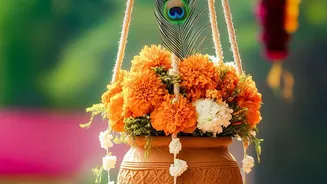
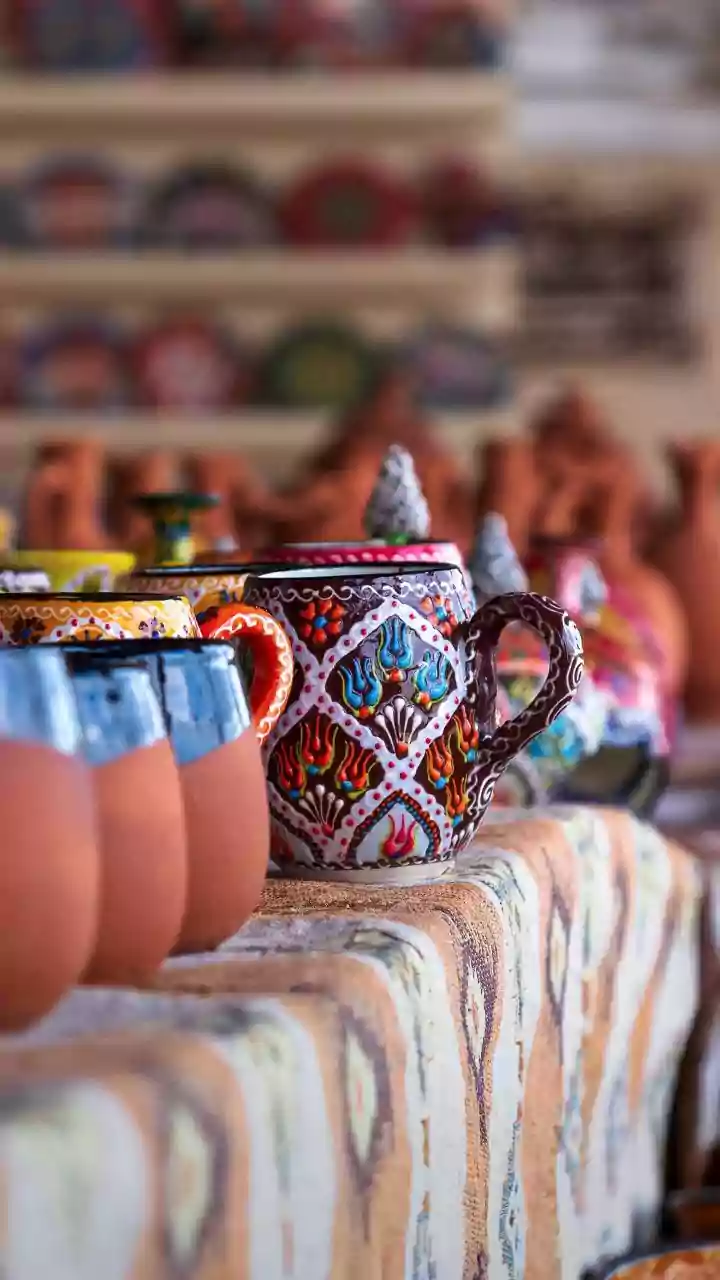
Simplicity doesn't mean sterile; it means choosing materials with inherent warmth and texture. Opt for natural elements like fresh flowers, mango leaves, and terracotta diyas. These materials connect the celebration to nature and add an authentic, humble charm. Swapping out synthetic fabrics for handloom textiles like cotton or khadi can also make a significant difference. The textures of brass, copper, wood, and clay feel more substantial and intentional than plastic or glitter, creating a space that is both visually pleasing and grounded in tradition.
Use Light with Intention
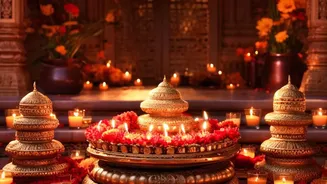
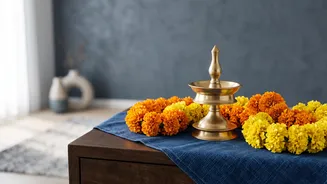
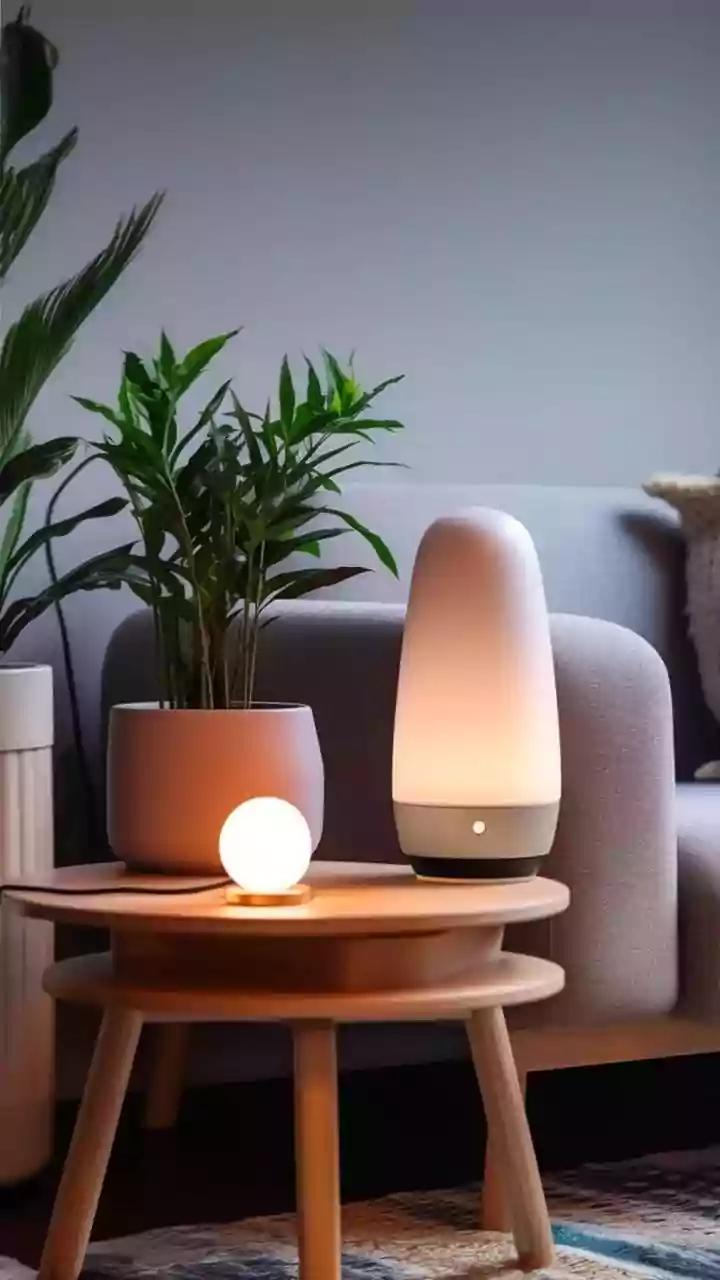
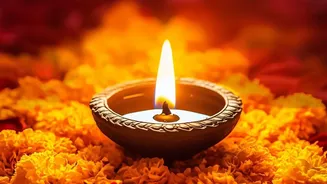
Lighting is one of the most powerful tools for setting a spiritual mood. Rather than scattering fairy lights everywhere, focus on creating pools of warm, gentle light. A single, large brass diya or two symmetrical lamps flanking the deity can create a more dramatic and reverent effect than a dozen smaller lights. The warm glow from oil lamps provides an ambience that LED lights often struggle to replicate. If you do use string lights, consider layering them behind a sheer fabric drape to diffuse the light and create a soft, ethereal glow.
Declutter the Surrounding Space
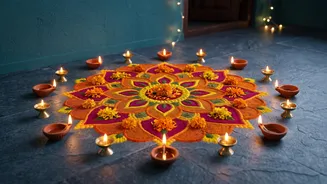
An uncluttered puja corner extends to the area around it. Keeping the space clean and organised is a fundamental principle in creating a positive and pure environment for worship. Ensure there is enough clear floor space for sitting comfortably during prayers. Use a decorative box or a drawer to neatly store puja essentials like incense, camphor, and matchboxes. A clean threshold, perhaps marked with a small, neat rangoli, defines the sacred area and signals a transition from the everyday to the spiritual. The goal is to remove any visual noise that could distract from your devotion.
Balance Tradition with Minimalism
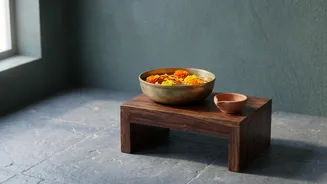
For many families, Navratri decor involves treasured, multi-generational items, particularly for Golu displays. A minimalist approach doesn't require discarding these traditions. Instead, it’s about thoughtful curation. If you have an elaborate Golu, keep the surrounding decor minimal to let the dolls be the centerpiece. You can group smaller items on a single carved wooden tray or thali to make them feel like a cohesive collection rather than scattered objects. The key is to find the balance where every item has room to breathe and its significance can be appreciated, ensuring your sacred corner feels both personal and peacefully composed.