

The High Cost of a Single Trip
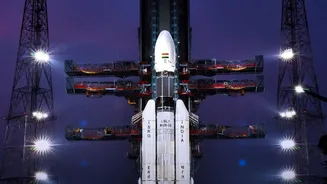
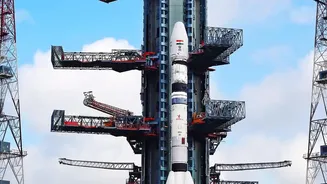
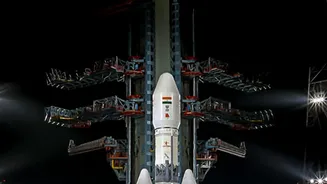
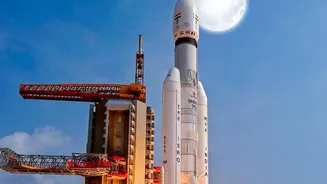
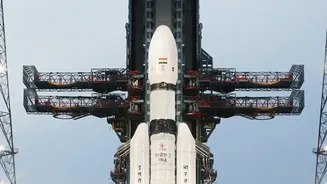
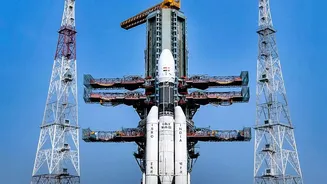
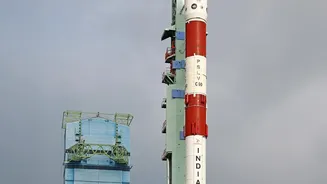
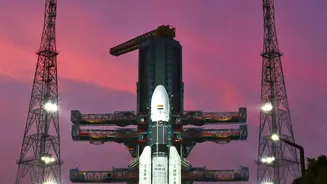
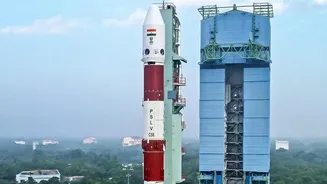
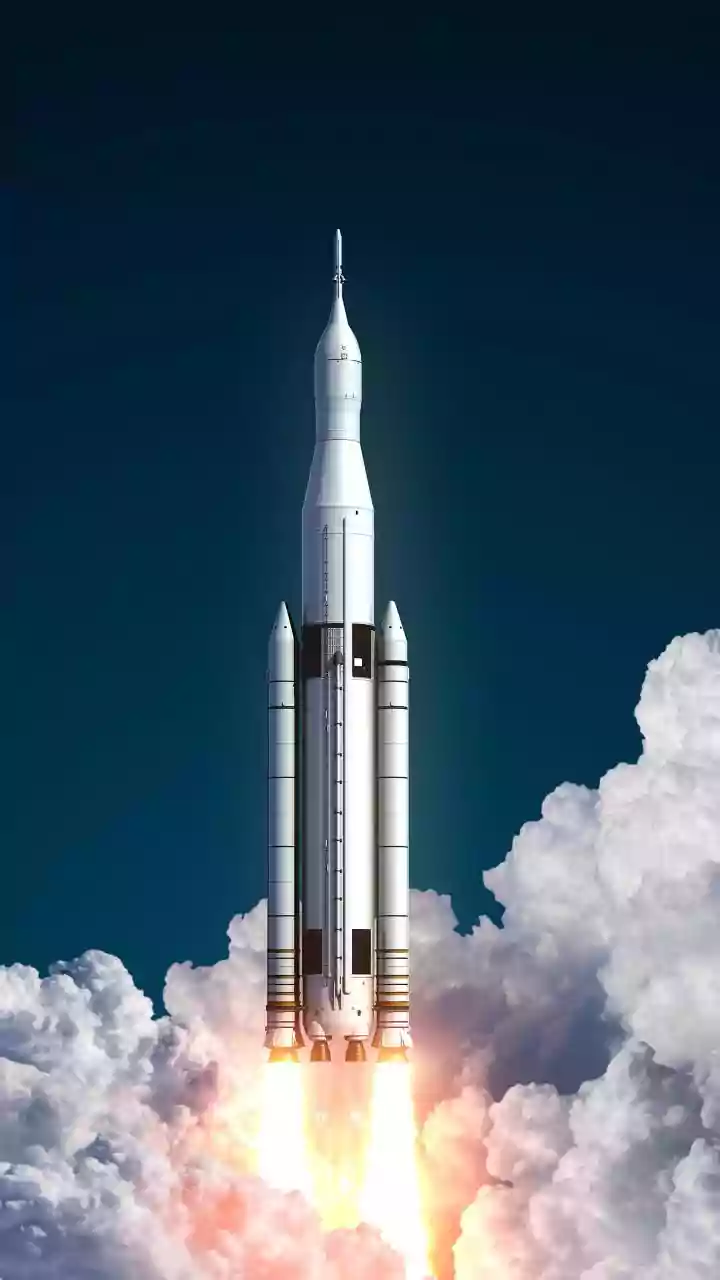
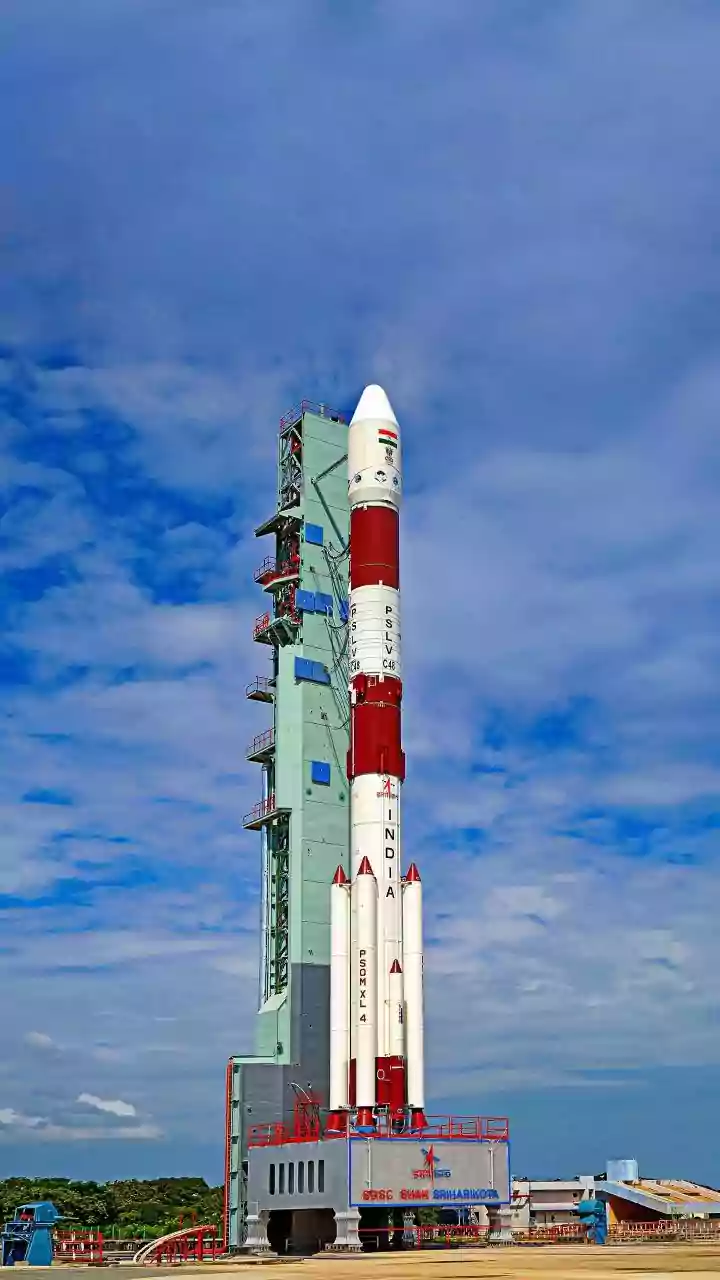
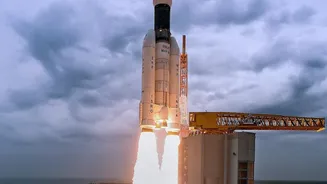
Traditionally, space launches have followed a costly, disposable model. Massive, powerful rockets are built to push a satellite into orbit, after which their expensive stages either burn up on re-entry or fall into the ocean. This single-use approach
is the primary reason why launching payloads is so expensive, with some estimates suggesting that the rocket hardware itself accounts for up to 80% of the total mission cost. For a nation with burgeoning space ambitions, from satellite constellations to human spaceflight, relying on disposable rockets creates a significant financial barrier and limits the frequency of launches. Solving this problem isn't just about saving money; it's about unlocking a new era of space accessibility and commercial viability.
Meet Pushpak: India’s Answer to Reusability
Enter ISRO's game-changing solution: the Reusable Launch Vehicle-Technology Demonstrator (RLV-TD), affectionately nicknamed 'Pushpak' after the mythical flying palace from the Ramayana. Unlike conventional rockets that launch vertically and are discarded, Pushpak is a winged vehicle designed to function like a spaceplane. The ultimate vision is for a vehicle that can launch into space, deploy its payload, fly back to Earth, and land horizontally on a runway just like an airplane. By recovering and reusing the most complex and costly components of the launch system, ISRO aims to dramatically slash the cost of accessing space. The ambitious goal is to bring down launch costs by a factor of ten, a move that would revolutionise India’s position in the global launch market.
Nailing the Autonomous Landing
Before it can re-enter from orbit, Pushpak must first prove it can land on its own. To validate this critical technology, ISRO conducted a series of three Landing Experiments (LEX). The final and most challenging of these tests was successfully completed in June 2024. In these missions, the uncrewed Pushpak vehicle was carried to an altitude of 4.5 kilometres by an Indian Air Force Chinook helicopter and released. From there, it was on its own. The vehicle had to autonomously navigate its way to a runway at the Aeronautical Test Range in Chitradurga, Karnataka, manage its speed, and execute a perfect, high-speed horizontal landing. The final test saw Pushpak landing at speeds exceeding 320 km/h under challenging wind conditions, proving the system's robustness.
The Brains Behind the Flight
The magic of Pushpak's autonomous landing lies in its sophisticated on-board systems. This is not remote-controlled flying; the vehicle makes all its own decisions. It uses an advanced guidance system that fuses data from a suite of indigenous sensors. This includes ISRO's own NavIC satellite navigation system for precise positioning, a radar altimeter for exact height measurements, and other control systems. During the descent, the vehicle's brain autonomously calculated its trajectory, made cross-range corrections to align with the runway, and managed its energy to ensure it didn't overshoot or undershoot its target. Mastering this autonomous terminal-phase maneuvering is a critical step towards the eventual goal of returning a vehicle safely from orbital velocity.
A More Affordable Final Frontier
The success of the Pushpak programme has profound implications. By proving the viability of its reusable technology, ISRO is paving the way for significantly cheaper access to space. Lowering launch costs from the current tens of thousands of dollars per kilogram to just a few thousand would make India an even more competitive player in the multi-billion-dollar global satellite launch industry. This would be a major boost for ISRO's commercial arm, NewSpace India Limited, attracting more international customers. Domestically, it makes deploying large satellite constellations for communication, earth observation, and national security more feasible. It also frees up valuable resources that can be directed towards more ambitious scientific missions, including the Gaganyaan human spaceflight programme and the Bharatiya Antariksh Station planned for 2035.
From Landing Tests to Orbit
The successful landing experiments are just the beginning. Having mastered the autonomous landing, ISRO's next major milestone is the Orbital Re-entry Experiment (ORE). In this future mission, a scaled-up version of Pushpak will be launched into orbit on top of a conventional rocket. After spending some time in space, it will fire its engines to de-orbit, endure the fiery re-entry into Earth's atmosphere, and glide back to perform an autonomous runway landing. This will be the true test of the entire system, from thermal protection to hypersonic aerodynamics. The ORE mission will be the final step before developing a fully operational Two-Stage-To-Orbit (TSTO) launch vehicle, where both stages are reusable, making spaceflight a truly routine and economical endeavour for India.