




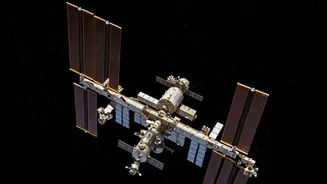
The End of a Monumental Era
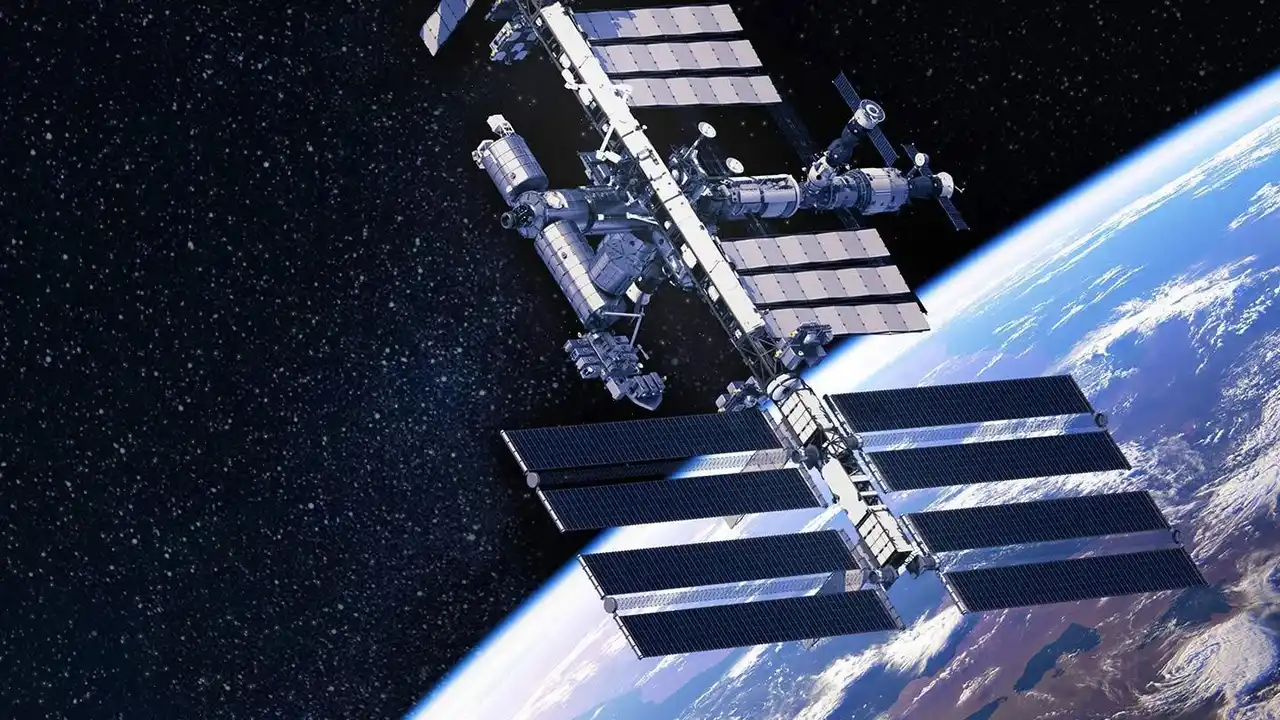
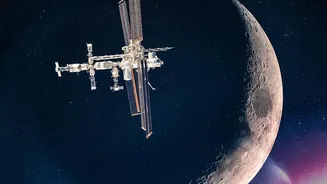
The International Space Station stands as a testament to global cooperation and scientific achievement, having been continuously occupied since November 2000. However, the orbital laboratory is aging. Originally designed for a 15-year lifespan, its mission
has been repeatedly extended. Now, facing structural fatigue and rising maintenance costs of nearly $3 billion per year for NASA, the plan is to deorbit the 420-tonne structure into a remote part of the Pacific Ocean around 2030. This looming retirement has created an urgent need to ensure the United States and its partners do not lose their foothold in low-Earth orbit (LEO), a region critical for research and future exploration.
NASA's New Role: From Landlord to Tenant
Instead of building a government-owned successor, NASA is pivoting its strategy. Through its Commercial Low-Earth Orbit Destinations (CLD) program, the agency is acting as a catalyst and anchor customer for a new commercial space economy. By awarding funding to several private companies, NASA aims to stimulate a competitive market of commercially owned and operated space stations. The goal is for NASA to become one of many customers, buying services like research time and astronaut accommodation as needed. This frees up agency resources to focus on deep-space missions, like the Artemis program to the Moon and Mars, while ensuring a seamless transition and a continued American presence in LEO.
The Contenders: A Field of New Habitats
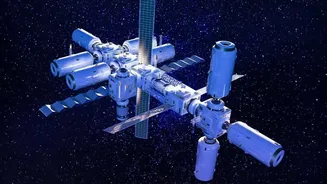
Several companies are now in a race to build the first private outposts. The key players, each with a unique approach, include Axiom Space, the joint venture of Voyager Space and Airbus with Starlab, and Blue Origin's partnership with Sierra Space for Orbital Reef. Northrop Grumman, initially a competitor, has since joined the Starlab team. These companies have received hundreds of millions in NASA funding to mature their designs and prove their concepts can meet the agency's safety and operational standards.
Axiom Station: Building on the ISS
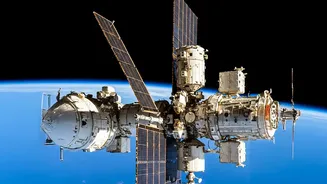
Axiom Space has a distinct strategy. The company is already building the first modules for its Axiom Station, with plans to launch the first one no earlier than 2027. Initially, these modules will attach to the ISS, allowing Axiom to test its hardware in orbit while leveraging the station's existing power and life support. Once enough modules are connected to form a self-sufficient station, the entire segment will detach and fly independently before the ISS is retired. This approach minimizes risk and provides a clear pathway to becoming a fully operational commercial successor. Axiom has already flown multiple private astronaut missions to the ISS, demonstrating its operational capabilities.
Starlab and Orbital Reef: Free-Flying Business Parks
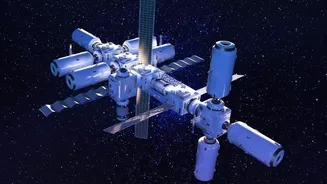
Other major players are designing free-flying stations from the start. Starlab, a joint venture between Voyager Space and Airbus, is developing a station that could launch in a single flight on a SpaceX Starship as early as 2029. It's designed to be operational almost immediately, serving a global customer base.Meanwhile, the Orbital Reef project, led by Blue Origin and Sierra Space, is envisioned as a "mixed-use business park in space." The concept is a modular habitat designed to support a diverse clientele, including researchers, manufacturers, and space tourists. With partners like Boeing and Redwire Space, Orbital Reef aims to create a thriving ecosystem for commerce and science in orbit.
A New Economy in Orbit
The transition from a single, government-run station to multiple commercial platforms is more than just an infrastructure upgrade; it represents a fundamental shift in the economics of space. These new stations promise to drive down costs and broaden access. A vibrant marketplace in LEO could open doors for countries, universities, and companies that could never afford their own space programs. Potential applications are vast, from in-space manufacturing of unique materials like ultra-pure crystals and advanced alloys to new frontiers in medical research, technology development, and even tourism. This new era will transform low-Earth orbit from a government outpost into a bustling neighborhood of commercial activity.