





The Cardiovascular Challenge
Both aerobics and trampolining provide an excellent cardiovascular workout, meaning they get your heart rate up and improve circulation. Aerobics involves rhythmic, continuous movement of large muscle groups, which strengthens the heart over time and can
help lower blood pressure. It offers a structured routine that elevates your heart rate in a sustained way. Trampolining, or rebounding, achieves this through high-intensity bursts of activity. The bouncing motion engages multiple muscles at once, quickly elevating your heart rate and improving blood flow. A famous NASA study even found that rebounding can be significantly more efficient for cardiovascular conditioning than jogging.
Calorie Burn and Weight Management
When it comes to burning calories, the best exercise is the one you do consistently. Aerobics often burns more calories in a single session because it involves sustained movement over a longer period. Trampolining, however, can burn a similar number of calories in a shorter time through high-intensity bursts. A 30-minute session of moderate rebounding can burn between 200 and 400 calories, depending on intensity and body weight. While high-intensity running on a treadmill might burn more calories overall, the fun factor of trampolining often means people are willing to do it for longer and more consistently, which is key for successful weight management.
Impact on Your Joints
This is where the two forms of exercise diverge significantly. Traditional high-impact aerobics can put considerable stress on your joints, particularly the knees, hips, and ankles. Trampolining is a low-impact exercise because the elastic surface absorbs most of the shock. Studies suggest that rebounding can reduce the force exerted on joints by up to 80% compared to running on a hard surface. This makes trampolining an ideal choice for people with joint concerns, those recovering from injuries, or anyone looking for a gentler way to stay active without sacrificing intensity.
Muscle Engagement and Toning
Aerobics provides a fantastic full-body workout, with moves like V-steps, lunges, and grapevines targeting the glutes, thighs, hamstrings, and core. Trampolining also engages a wide array of muscles. Every bounce forces your legs, glutes, and core to work hard. The unstable surface of the trampoline continuously recruits smaller stabiliser muscles around your joints and in your deep core to maintain balance, engaging over 400 muscles in a session.
Beyond the Basics: Unique Benefits of Rebounding
One of the most unique benefits of trampolining is its effect on the lymphatic system. This system, which is crucial for removing toxins and waste from your body, doesn't have its own pump like the heart. The vertical motion of bouncing can increase lymph flow by 15 to 30 times, helping to flush the system, reduce inflammation, and support immune function. This 'internal massage' is a benefit that ground-based exercises like aerobics do not offer to the same degree.
Accessibility, Cost, and Fun
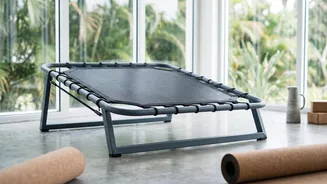
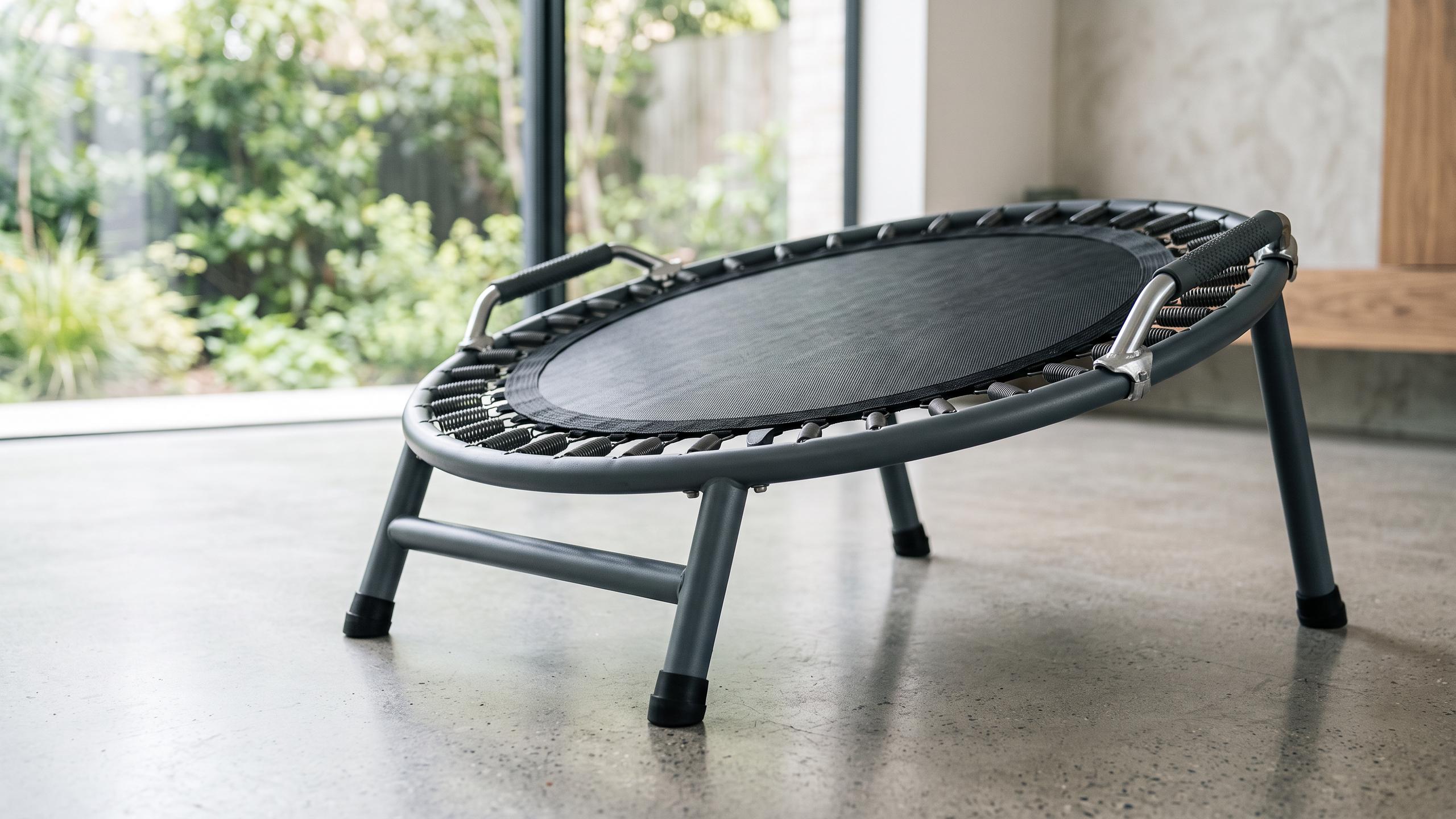
Aerobics is highly accessible, with classes available at most gyms and community centres, and countless free videos online that require no equipment. To start trampolining, you need to purchase a mini-trampoline, also known as a rebounder, for home use or find a specialised studio. Ultimately, the 'fun factor' can be the deciding one. Many find the playful, joyful nature of bouncing on a trampoline more motivating than a structured aerobics class, making it easier to stick with long-term.