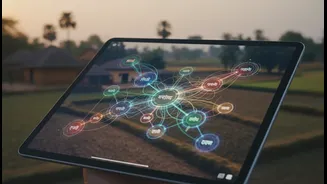









The Dialect Dilemma in Digital Commerce
India's e-commerce boom has opened up incredible opportunities for creators in Tier-II, Tier-III cities, and rural areas. An artisan in Rajasthan can now sell their craft to a customer in Kerala with a few clicks. However, this national reach comes with a significant
hurdle: communication. India is home to hundreds of languages and thousands of dialects that can change every few kilometres. For a small business owner, a customer query in an unfamiliar dialect can lead to slow responses, misunderstandings, and lost sales. Studies show that a vast majority of Indian internet users prefer to interact in their native language, and providing this familiarity builds immense trust and boosts conversion rates. The inability to communicate effectively and instantly is a major friction point that can limit the growth of otherwise thriving rural enterprises.
AI as a Real-Time Conversation Bridge
This is where AI-powered tools like Google's Gemini Live are becoming a game-changer. Unlike traditional text translation apps, Gemini Live is designed for fluid, real-time voice conversations. It acts as a live interpreter on a creator's smartphone. The technology is built on a multimodal model, meaning it understands not just words but also the context, pace, and intonation of speech, making the translated output sound more natural. For a rural creator, this means they can have a seamless voice conversation with a customer without awkward pauses or robotic-sounding intermediaries. Google has been actively expanding its language support in India, with Gemini Live now supporting Hindi and on its way to supporting at least eight other major Indian languages like Bengali, Tamil, Telugu, and Marathi. As of mid-2026, support has grown to include 25 Indian languages, including dialects like Bhojpuri.
From Spoken Query to Quick Resolution
Imagine a customer from a village in Maharashtra calling a creator in West Bengal. The customer asks a question about a product in their local Marathi dialect. On the creator's phone, the Gemini app listens. Instead of just transcribing, it translates the spoken query in real-time, displaying the question in Bengali or English for the creator. The creator can then speak their answer in their own language. Gemini Live instantly translates their response back into a natural-sounding Marathi voice for the customer. This entire process happens in a continuous flow, allowing for interruptions and follow-up questions just like a normal conversation. This capability, which turns a phone into a universal translator, drastically cuts down resolution time. A query that might have taken hours of back-and-forth typing with a clunky translation tool can now be resolved in minutes.
Building Trust Beyond Translation
The impact of this technology extends far beyond simple efficiency. When a customer is addressed in their own dialect, it creates an immediate sense of familiarity and trust. It shows that the business values their comfort and is making an effort to connect on a personal level. This is crucial for small, unknown brands trying to compete with larger players. Faster, clearer communication reduces misunderstandings about product details, leading to fewer returns and higher customer satisfaction. For rural entrepreneurs, who often rely on word-of-mouth and positive reviews, building this layer of trust is essential for sustainable growth. It professionalises their operation, making them appear more accessible and customer-centric, regardless of their location or size.
Empowering the Grassroots Economy
The development of these powerful AI translation tools is fueled by massive data collection efforts like Project Vaani, a collaboration between Google and the Indian Institute of Science. This project aims to collect speech data from every district in India to help AI models understand the country's true linguistic diversity. By training on this data, AI like Gemini can better handle the nuances of real-world speech. For rural creators, this means the technology is constantly improving and becoming more reliable. Ultimately, AI-powered dialect translation is a powerful democratising force. It levels the playing field, allowing talent and craftsmanship to transcend linguistic boundaries and participate more fully in the digital economy, fueling growth from the ground up.