





An Early-Month Treat: The Moon Meets Jupiter
October kicks off with a spectacular celestial event perfect for early risers. Before sunrise on October 6th, look to the eastern sky to see a beautiful thin crescent Moon positioned incredibly close to the planet Jupiter. This close approach, known as a conjunction,
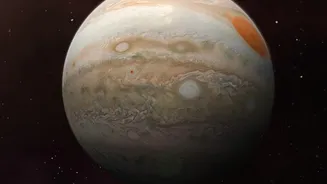
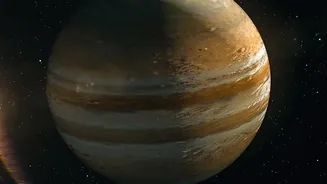
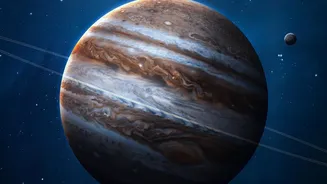
will be a stunning sight for the naked eye. Jupiter, the largest planet in our solar system, will appear as a brilliant, steady star-like point of light right next to the Moon. For observers in some parts of the world, including North America, the Moon will actually pass in front of Jupiter, an event called a lunar occultation. While this rare occultation won't be visible from India, the exceptionally close pairing of these two bright objects in the pre-dawn sky is a must-see event.
How to Best View Jupiter
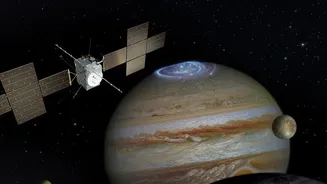
Jupiter is one of the easiest and most rewarding planets to observe. It shines more brightly than any star and doesn't twinkle as much, providing a constant, powerful light. It rises in the east in the early morning hours throughout October. You don’t need any special equipment to see Jupiter itself, but even a basic pair of binoculars can dramatically enhance your view. With binoculars, you might be able to spot up to four of Jupiter's largest moons, known as the Galilean moons. They will look like tiny pinpricks of light in a nearly straight line on either side of the planet. Watching them change position from one night to the next is a classic observing activity that showcases the motion of our solar system in real time.
Following the Moon's Phases
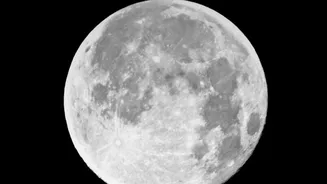
The Moon is a constant and captivating presence in our night sky. October 2026 offers a full cycle of its phases to enjoy. The month begins with a waning Moon, leading to the New Moon on October 10th, when the sky will be at its darkest and best for spotting fainter stars. Following that, the Moon will begin its waxing phase, growing from a slim crescent to the First Quarter on October 18th. One of the best times to observe the Moon with binoculars or a small telescope is during these waxing or waning phases, especially along the terminator—the line separating the sunlit and dark parts of the Moon. The low-angle sunlight here casts dramatic shadows, making craters and mountains stand out in sharp detail.
The Full Hunter's Moon
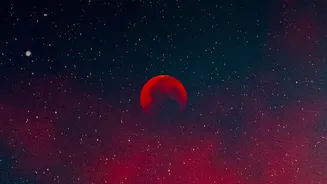
The main lunar event this month is the full Hunter's Moon, which will reach its peak illumination on Monday, October 26th. This full moon follows the Harvest Moon and is traditionally named for the time of year when hunting was done to prepare for the coming winter. While the Moon is technically full at a specific moment, it will appear full to the naked eye on the nights of both October 25th and 26th. For the most dramatic view, try to watch the full moonrise on the evening of the 25th or 26th. As it climbs above the eastern horizon around sunset, it can appear enormous and take on a beautiful orange or reddish hue.
NASA's General Stargazing Tips
To make the most of your October stargazing, follow these simple tips. First, find a viewing spot away from bright city lights. Light pollution can wash out all but the brightest objects in the sky. Second, give your eyes time to adjust. It can take up to 30 minutes for your eyes to become fully adapted to the dark, so avoid looking at your bright phone screen. Using a red-light torch can help preserve your night vision. Finally, be patient. Whether you're using just your eyes, binoculars, or a telescope, taking the time to simply look and absorb the view is the most important part of the experience.