







A New Breed of Academic Tool
In the high-pressure world of university academics, submitting original work is paramount. For decades, tools like Turnitin have been the gatekeepers, used by institutions to scan for plagiarism. Now, with generative AI capable of writing entire essays,
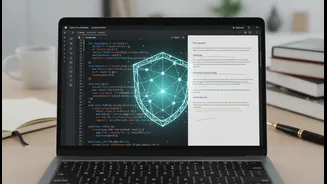
the landscape has become more complex. In response, a tech-savvy generation of students is taking matters into their own hands. They are turning to a specific category of software: local, open-source AI checkers. Unlike cloud-based services where you upload your document to a company's server, these tools run directly on a student's own computer. The 'open-source' label means their underlying code is publicly available, fostering transparency and trust.
The Drive for Privacy and Cost-Effectiveness
The primary motivation for this shift is privacy. When a student uploads a research draft to a free or commercial online AI checker, there's often a hidden cost. The terms of service may allow the company to use that data to train its own AI models. This means sensitive, unpublished research could be absorbed into a third-party system. There is also the risk of a draft being stored and later incorrectly flagged as plagiarism when the final version is submitted. By using a local tool, a student ensures their work never leaves their personal device. Cost is another significant factor. While many commercial checkers offer free tiers, they often come with strict word limits, making them impractical for reviewing a full thesis or dissertation. Open-source alternatives, by their nature, are free to use without such limitations.
How Local AI Checkers Work
The concept behind a local AI checker is surprisingly simple. Instead of sending your text to a massive data centre for analysis, the analysis engine—the AI model—is downloaded and run on your machine. These models are often smaller and more specialized than their commercial counterparts, designed specifically to detect patterns common in AI-generated text. They analyse characteristics like 'perplexity' (how predictable the text is) and 'burstiness' (variations in sentence structure) to estimate the probability of AI authorship. This process allows for unlimited checks without an internet connection, offering complete data sovereignty. For a computer science student, setting up such a tool might be straightforward; for others, it represents a new form of digital literacy, downloading a program and learning its simple interface to safeguard their academic work.
A Tool for Integrity, Not Cheating
It is crucial to distinguish this practice from academic dishonesty. Students using these tools are not trying to 'beat the system'. Rather, they are using them for self-auditing. After using generative AI for legitimate tasks—like brainstorming ideas, summarising dense articles, or refining grammar—they want to ensure their final draft reflects their own voice and thinking. An AI checker can help identify sentences that sound too generic or robotic, prompting the student to revise and assert their own authorship. This is a proactive step towards academic integrity, using technology to hold themselves accountable before their work is ever submitted to a professor or an institutional checker like Turnitin.
Limitations and the Road Ahead
These local, open-source tools are not a silver bullet. Their databases and detection models can be less comprehensive than paid, enterprise-grade services like Copyleaks or the official Turnitin detector. The accuracy can vary, and no detector is 100% foolproof; they can sometimes produce false positives or miss cleverly edited AI content. However, the trend highlights a sophisticated understanding among students about the new realities of digital writing. They recognise that AI is here to stay, but they also value privacy and want to maintain control over their intellectual property. This move toward local, open-source auditing tools signals a shift from a reactive 'gotcha' model of plagiarism detection to a more mature, proactive ecosystem of responsible writing in the age of AI.