



The Rise of the Singular Statement
The move toward single, oversized artworks reflects a broader shift in our design sensibilities. For years, the prevailing trend was the eclectic gallery wall, a mosaic of small prints, photos, and mementos. While charming, these collections can often
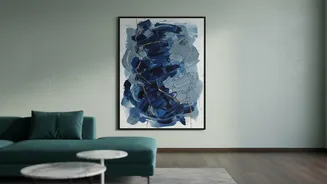
create visual noise. Today, homeowners are gravitating towards a calmer, more curated aesthetic. A single, powerful piece of art can anchor a room, creating a clear focal point and a sense of intentionality. This approach isn't about minimalism in the sparse sense; it's about maximizing impact. Instead of distracting the eye with a dozen small things, a large artwork invites you to pause and engage, transforming a wall from a decorated surface into a compelling destination.
It's Scale, Not Just Size
It’s easy to confuse these two terms, but they represent a crucial distinction in design. Size is simply the physical dimension of an object. Scale, however, refers to how an object's size relates to the space it occupies and the other objects around it. Think of it this way: a massive sofa in a tiny room has a poor sense of scale, making the space feel cramped. Conversely, a small armchair can get lost in a cavernous living room. The magic of a statement artwork lies in getting the scale right. A large piece in a small room can paradoxically make the space feel bigger by creating a dramatic focal point and drawing the eye upward and outward, giving an illusion of depth.
The Psychology of Large Art
Our brains are wired to associate scale with importance and status. A large piece of art communicates confidence and deliberation. It tells a story that the room isn't just a collection of items, but a thoughtfully designed environment. From a psychological perspective, a single large canvas reduces visual fragmentation, which our eyes and minds perceive as calming and orderly. It can evoke specific emotions more powerfully than smaller works; a vast, serene landscape can turn a bedroom into a retreat, while a vibrant, oversized abstract can fill a living area with energy and serve as a natural conversation starter.
Making the Right Choice
Choosing a large-scale piece can feel intimidating, but a few guidelines can help. A good rule of thumb is to select art that fills approximately two-thirds of the wall space above a major piece of furniture, like a sofa or a headboard. Most people make the mistake of choosing art that is too small and hanging it too high, which visually shrinks the room. When selecting a piece, consider the room's function and the mood you want to create. Don't just think about color; consider texture and subject matter. An artwork with visible texture can add warmth and dimension, a key trend for 2026. Ultimately, the piece should resonate with you personally. A statement artwork is a reflection of your identity, not just a decor item.
Thinking Beyond the Sofa
The living room wall isn't the only place for a statement piece. Using large-scale art in unexpected areas can have a transformative effect. An oversized vertical piece in an entryway immediately sets a dramatic and welcoming tone for the entire home. A long, narrow hallway can be visually widened with a substantial horizontal artwork. Even kitchens and dining areas can benefit from a bold piece that adds personality and soul to a functional space. Another stylish approach is to lean a large, unframed canvas against a wall. This creates a relaxed, effortlessly chic vibe that feels less formal than a precisely hung piece, adding a layer of architectural interest to the room.