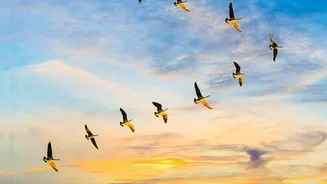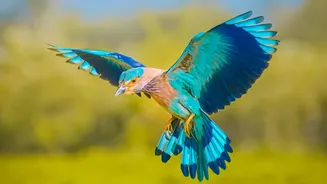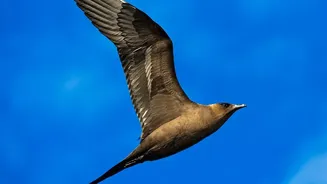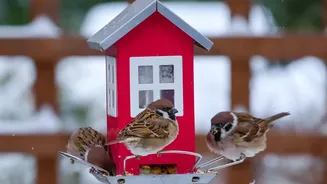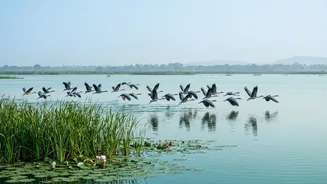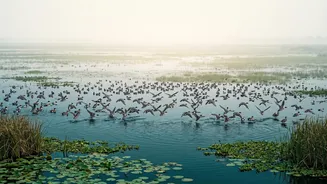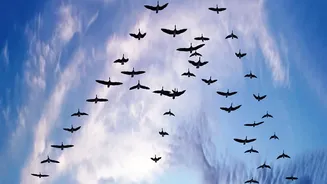



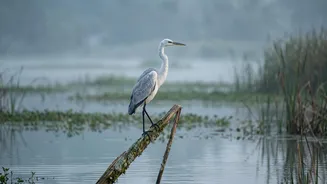
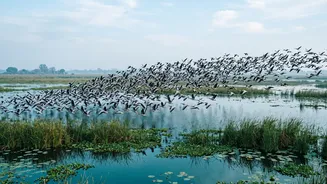
The Indian skies are once again alive with the flutter of wings. As winter approaches, millions of avian travellers have begun to arrive, completing an epic journey from distant lands to seek refuge in the country's vast and vibrant wetlands.
An Incredible Journey Across Continents
Every year,
as temperatures plummet across Siberia, Central Asia, and Europe, countless birds embark on an arduous migration south. This instinct-driven journey, covering thousands of kilometres, brings them to the relatively warmer climes of the Indian subcontinent. India falls along the crucial Central Asian Flyway, a major migratory route for waterfowl and other birds. For these species, the country's diverse network of lakes, rivers, marshes, and coastal lagoons provides essential feeding and resting grounds for the winter months, typically from October through March. The migration is a testament to endurance, with some species, like the iconic bar-headed goose, famously flying at extreme altitudes over the Himalayan mountain range to reach their destination.
India's Premier Wintering Hotspots
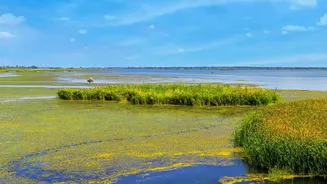
Several key wetlands across India transform into bustling avian hubs during this period. Chilika Lake in Odisha, Asia's largest brackish water lagoon, is one of the most significant sites, annually hosting nearly a million birds of over 200 species. Reports from October 2026 already show early arrivals of Northern Pintails, Eurasian Wigeons, and Gadwalls at Chilika. Similarly, Keoladeo National Park in Rajasthan, a UNESCO World Heritage Site, becomes a sanctuary for ducks, geese, pelicans, and eagles. In the north, the Pong Dam Lake in Himachal Pradesh is another critical habitat, renowned for hosting one of the world's largest congregations of bar-headed geese. Other important destinations include Nalsarovar in Gujarat, Sultanpur in Haryana, and various wetlands in southern India, each supporting a unique mix of species.
The Stars of the Show
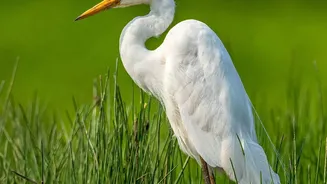
The diversity of species arriving is staggering. Among the earliest and most common visitors are ducks like the Northern Shoveler, identified by its large, spatula-like bill, and the graceful Northern Pintail. Flamboyant Greater Flamingos bring a splash of pink to the salt pans and mudflats of Gujarat and the coastal wetlands near Mumbai and Chennai. The athletic bar-headed geese are a major attraction in the northern wetlands. Birdwatchers also eagerly await the arrival of various waders, sandpipers, gulls, and raptors. While once a famous visitor to Keoladeo, the critically endangered Siberian Crane has not been reliably seen in India for many years, a sobering reminder of the fragility of these migrations.
A Barometer of Ecological Health
The arrival of migratory birds is more than just a seasonal spectacle; it is a vital indicator of environmental health. The presence and number of these birds reflect the condition of the wetlands they depend on. Healthy water bodies, rich with fish, insects, and aquatic plants, are necessary for their survival after an exhausting journey. Their annual return signals that these ecosystems are still functioning. This spectacle also provides a significant boost to local economies through ecotourism, with birdwatchers and photographers flocking to these sites. In places like Mangalajodi in Odisha, community-led conservation efforts have successfully transformed former poaching hubs into thriving bird sanctuaries, demonstrating that human intervention can be positive.
Growing Threats on the Flyway
Despite the beauty of the migration, these birds face mounting challenges. Habitat loss due to urbanisation and agriculture is shrinking the wetlands they rely on. Pollution from industrial waste and pesticides contaminates their food and water sources, while climate change is causing unpredictable shifts in weather patterns and food availability. Stronger storms can make their long journey even more perilous. Conservationists stress that protecting these birds requires a multi-pronged approach: preserving wetland habitats, controlling pollution, and enforcing antipoaching laws. These efforts are crucial not just for the birds but for maintaining the health of ecosystems that also provide essential services to human communities such as flood control and water purification.