





A Sudden and Shocking Decline
For a long time, Antarctica was the Arctic's stable counterpart. While sea ice at the North Pole was vanishing at an alarming rate, the ice around the southern continent was holding steady, even expanding slightly. But that pattern abruptly shattered.
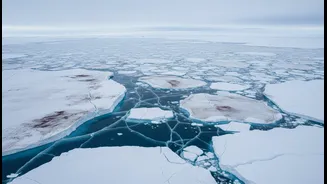
Starting around 2016, Antarctic sea ice extent plummeted to record lows, a trend that has broadly continued, with some year-to-year variability. The record low was set in February 2023, leaving a gaping hole in the planet's protective white shield—an area of missing ice larger than Greenland. Though the summer minimum in 2026 saw a rebound from the most extreme lows, it remained well below the long-term average, indicating the system has not returned to its former state.
The Scientific Puzzle: What Changed?
The sudden shift has sent researchers scrambling to understand the cause. The prevailing theory is that after years of resisting global warming's influence, a critical threshold has been crossed. For years, factors like increased freshwater from melting glaciers helped insulate the surface and promote sea ice growth. However, it appears that shifts in wind patterns and ocean warming have finally overpowered these protective mechanisms. Studies suggest that stronger winds have begun to churn the Southern Ocean, pulling warmer, saltier water up from the depths to the surface. This warmer water melts the ice from below, preventing it from forming and expanding as it once did. This creates a dangerous feedback loop: less ice means the dark ocean absorbs more of the sun's heat, which in turn warms the water further and melts even more ice.
Why This Distant Melt Matters
The loss of Antarctic sea ice is not just a remote polar issue; it has profound global consequences. The sea ice acts as a crucial protective buffer for the massive ice shelves and glaciers on the continent itself. Without this buffer, the land-based ice is more exposed to wave action and warmer ocean water, accelerating its slide into the ocean. This is the single biggest concern, as the melting of continental ice sheets—not floating sea ice—is a primary driver of global sea-level rise. The Antarctic Ice Sheet holds enough water to raise global sea levels by a catastrophic 60 metres. Even a small increase in its melt rate poses a direct threat to coastal communities worldwide.
Impact on India's Coastline and Climate
For India, with its 7,500-kilometre coastline and dozens of major coastal cities like Mumbai, Chennai, and Kolkata, the stakes are incredibly high. A United Nations report has already warned that nearly 40 million Indians will be at risk from rising sea levels by 2050. The accelerated melting in Antarctica directly contributes to this threat, jeopardising homes, infrastructure, and freshwater sources through saltwater intrusion. Beyond sea level, the changes in Antarctica could have complex, cascading effects on global weather. The Southern Ocean plays a vital role in driving ocean currents that regulate climate worldwide. While the exact links are still being researched, some scientists believe these shifts could eventually influence the stability and patterns of the Indian monsoon, a system upon which the nation's agriculture and economy depend.
A Warning Sign for the Planet
The dramatic changes in Antarctic sea ice are also a devastating blow to the unique ecosystems that depend on it. Krill, the tiny crustaceans that form the base of the Antarctic food web, rely on sea ice for food and refuge. Their decline impacts everything up the food chain, from penguins and seals to the great whales. Scientists now question whether Antarctica has entered a new, permanent state of diminished sea ice. This shift from a stable to a volatile system is one of the clearest warning signs that the impacts of climate change are accelerating, affecting even the most remote and once-resilient corners of our planet. The rapid and unexpected nature of this change underscores the urgent need for continued monitoring and global action to mitigate further warming.