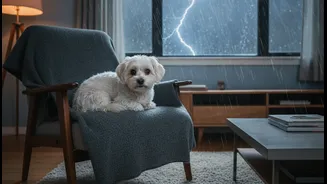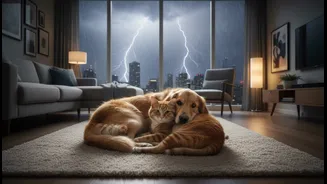






More Than Just Loud Noises
Many owners assume the crash of thunder is the sole trigger for their pet's anxiety, but it is far more complex. Pets, with their heightened senses, experience a full sensory assault. Before a storm even arrives, they can detect the drop in barometric
pressure, which can cause discomfort in their ears and sinuses. They can also smell ozone generated by lightning and hear low-frequency rumbles that are inaudible to humans. Perhaps the most overlooked factor is static electricity. The charged atmosphere can create an uncomfortable tingling sensation or even deliver small, unpleasant shocks to your pet’s fur and sensitive nose, making them desperate to find a grounded space.
The Unique Apartment Challenge
Managing a storm-phobic pet in an apartment presents specific difficulties. Sounds can be amplified through shared walls and windows, making thunder seem even more menacing. There is less space for a pet to retreat, and they may not have access to a basement, which often serves as a natural, grounded sanctuary from static electricity. Owners might also feel added pressure, worrying that a whining, barking, or pacing pet will disturb neighbours. This can create a feedback loop where the owner's stress inadvertently makes the pet even more anxious. The lack of a private yard also means there is no quick outdoor escape for distraction before or after the storm.
Create a Calming Safe Haven
The most crucial step is to establish a safe space your pet can access at all times. In an apartment, this could be an interior closet, a bathroom, or a crate covered with a heavy blanket to create a dark, den-like atmosphere. Stock this area with their favourite bedding and toys. Since some pets seek grounded locations to avoid static, a bathroom with tile floors can be an excellent choice. Never force them into the space; instead, make it an inviting retreat they choose on their own. You can use high-value treats and praise to build a positive association with this storm shelter long before the weather turns.
Manage the Sights and Sounds
You can buffer your pet from the storm’s intensity by managing their environment. Close blinds and curtains to block out the unsettling flashes of lightning. Drown out the thunder by playing calming music, turning on the television, or using a white noise machine. The consistent sound can help mask the unpredictable booms that cause the most fear. Some owners also find success with calming pheromone diffusers or sprays, such as Adaptil for dogs or Feliway for cats, which mimic the hormones released by nursing mothers to reduce stress. These can help create a more relaxed atmosphere throughout your apartment.
Your Calm Is Their Anchor
Pets are highly attuned to their owners' emotions. If you are anxious and fretful, it reinforces their belief that there is something to fear. Try to remain calm and project quiet confidence. Avoid excessive coddling or over-the-top reassurance, which can be interpreted as a reward for fearful behaviour. Instead, offer calm, steady petting or engage them in a quiet, distracting activity like playing with a food puzzle or practicing simple commands. Your steady presence can act as an anchor for your pet, showing them that the storm is not a threat.
When You Need More Help
If your pet's phobia is severe, causing destructive behaviour or extreme panic, it is time to consult a professional. A veterinarian can rule out any underlying medical issues and discuss options like anxiety-reducing wraps (such as a Thundershirt), supplements, or prescription medication for short-term use during storms. For long-term improvement, a certified animal behaviourist can guide you through desensitization and counter-conditioning. This involves playing recordings of storm sounds at a very low volume while rewarding your pet's calm behaviour, gradually increasing the volume over time to build a new, positive association.