






The Monsoon's Shifting Mood
The Indian monsoon is no longer the reliable seasonal phenomenon it once was. A growing body of evidence points to a fundamental shift in its behaviour. Instead of steady, widespread rain, recent decades have seen a rise in the frequency of extreme events.
This translates to long, parched dry spells being broken by sudden, intense downpours, a pattern that disrupts the natural balance of ecosystems. Scientists note that while overall seasonal rainfall may be weakening in some areas, the intensity of wet spells is increasing. This volatility—too little water for long periods, then too much all at once—is creating unprecedented challenges, particularly for India's forests, which have evolved over millennia in tune with a more stable water cycle. This increasing unpredictability is now a defining feature of India's changing climate.
Forests Under Unprecedented Stress
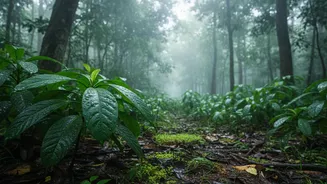
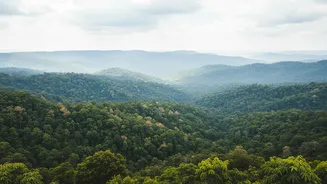
India’s diverse forests, from the moist deciduous tracts of Central India to the dense rainforests of the Western Ghats, are highly dependent on the monsoon's timing and quantity. When the rains falter or become unpredictable, the consequences are severe. Researchers have identified a rise in "ecological droughts," a long-term moisture stress that harms entire ecosystems even in moisture-rich seasons. Studies in Central India's Panchmarhi Biosphere Reserve, for example, show that shifting rainfall and rising temperatures have led to significant forest cover loss and increased the risk of forest fires. Dry teak forests, in particular, have seen a steep decline in canopy cover. This stress also disrupts phenology—the life-cycle timing of plants—affecting everything from leaf development to flowering and fruiting.
A New Impetus for Scientific Inquiry
These alarming changes are driving a fresh wave of scientific research. Institutions across India, including the Indian Institute of Science (IISc) and various IITs, are at the forefront of this effort. Scientists are using a combination of high-tech tools and on-the-ground observation to understand the impacts. Remote sensing data from satellites helps track large-scale changes in vegetation health and forest cover over decades, while machine learning algorithms can identify the drivers behind ecological droughts. At the same time, long-term field studies, like those monitoring bird communities in the Eastern Himalayas, reveal how species are shifting their habitats in response to a warming, changing climate. This research is no longer just about monitoring; it's about predicting future changes and understanding the complex feedback loops between forests and rainfall.
Why This Research Is Critical for India
The health of India's forests is inextricably linked to the nation's well-being. Forests act as crucial regulators of the water cycle. In the Western Ghats, dense vegetation contributes as much as 40-50% of the moisture for Tamil Nadu's monsoon rainfall, especially in dry years. They serve as natural buffers, absorbing water during heavy rains and releasing it slowly, which helps prevent both floods and droughts. Furthermore, these ecosystems are vital carbon sinks and hotspots of biodiversity. The new research is essential for developing adaptation strategies. By identifying which forest ecosystems are most vulnerable, scientists can help policymakers and forest managers implement targeted conservation efforts. This knowledge is critical for protecting water security, conserving unique wildlife, and safeguarding the livelihoods of millions of people who depend directly on forest resources.