

The Solar System's Reigning Moon King
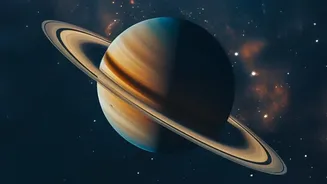
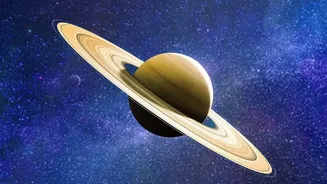
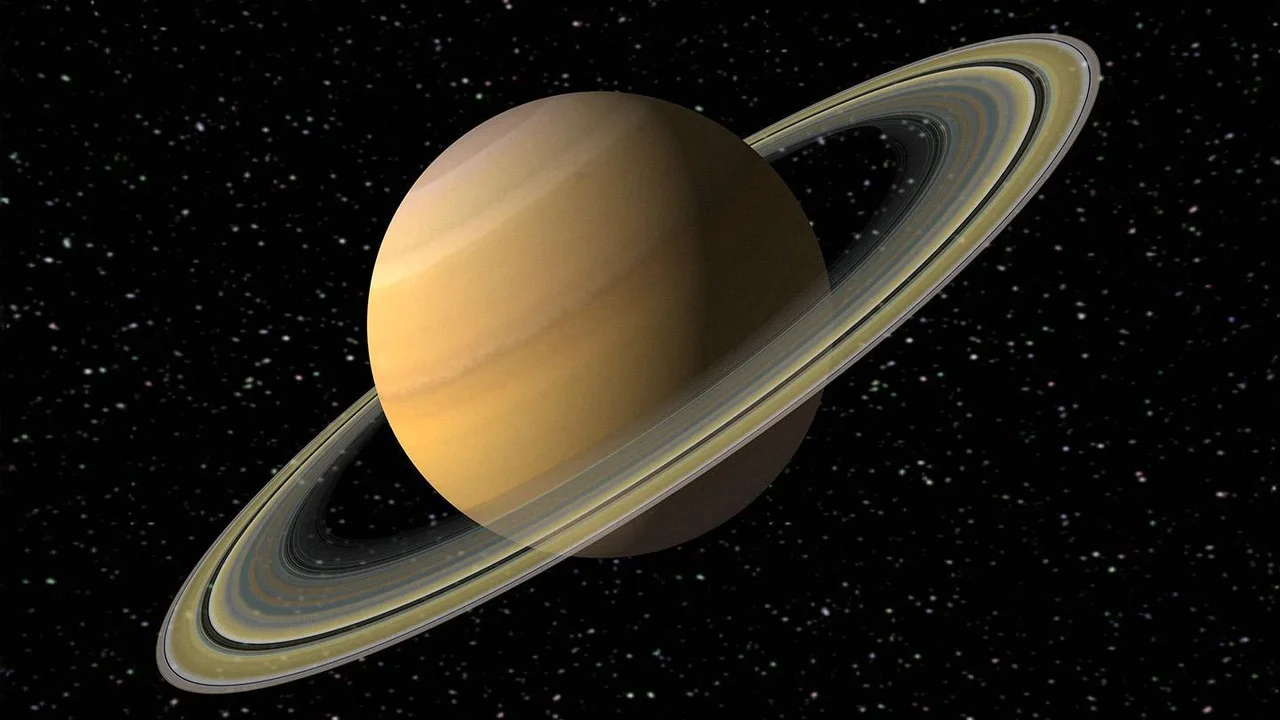
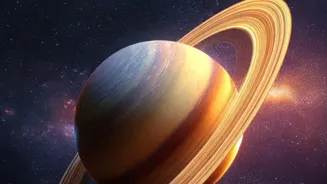
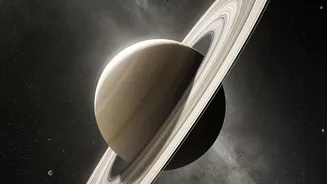
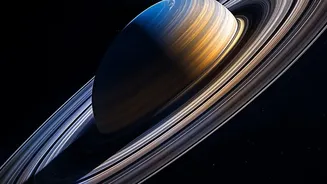
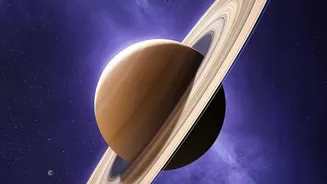
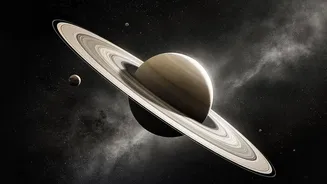
As of mid-2026, Saturn is the confirmed champion of moons in our solar system, boasting a grand total of 293 confirmed natural satellites. This figure places it far ahead of its rival, Jupiter, which has 115 confirmed moons. This cosmic contest for the 'moon
king' title has been a recent astronomical drama. For years, Jupiter held the top spot, but a flurry of discoveries around Saturn has completely changed the leaderboard. In 2019, Saturn first overtook Jupiter. Since then, thanks to powerful telescopes and new detection techniques, astronomers have found dozens, and then hundreds, more objects orbiting the gas giant, cementing its lead.
What Actually Counts as a Moon?
This ever-growing number begs a fundamental question: what exactly is a moon? The International Astronomical Union (IAU), which governs celestial naming, calls Earth's satellite 'the Moon' (with a capital M). Any other natural object orbiting a planet is informally called a 'moon' (with a lowercase 'm'). Unlike the strict definition for a 'planet', the term 'moon' is broader. Generally, it refers to a natural satellite, meaning it wasn't man-made. There is no official size cutoff that separates a 'moon' from a 'moonlet' or a large ring particle. The moons being discovered now are incredibly small, some just a few kilometres across, and extraordinarily faint. They are more like captured asteroids or fragments of past collisions than the large, spherical moons we typically imagine.
How We Find These Tiny Worlds
Discovering these faint, distant objects is a technological marvel. Astronomers use powerful ground-based observatories, like the Subaru Telescope and the Canada-France-Hawaii Telescope in Hawaii. They employ a technique often called 'shift and stack'. This involves taking multiple images of a patch of sky over time and digitally stacking them, aligning the images based on the predicted movement of a potential moon. This allows the faint light from a tiny, moving object to combine and become visible against the dark background of space. Once a candidate is found, its orbit must be tracked and confirmed over months or even years before the Minor Planet Center, part of the IAU, officially recognizes it as a newly discovered moon.
More Than Just a Number
The incredible number of moons is more than just a piece of trivia; it's a window into the history of our solar system. Most of the newly found moons are 'irregular'. They have large, tilted, and often backward (retrograde) orbits. Scientists believe these are not moons that formed alongside Saturn, but are instead objects—asteroids or comets—that were captured by the planet's immense gravity long ago. Many of them are clustered into orbital groups, suggesting they are the remnants of a few larger parent bodies that were shattered by ancient collisions. Studying these families of broken moons helps planetary scientists piece together the violent and chaotic early days of our cosmic neighbourhood.
A System of Incredible Diversity
While the small, irregular moons dominate the numbers, Saturn's system is home to some of the most fascinating worlds imaginable. There is Titan, a moon larger than the planet Mercury, with a thick nitrogen atmosphere and lakes of liquid methane. There is Enceladus, an icy world that sprays geysers of water from a subsurface ocean into space, feeding one of Saturn's rings. And there's Iapetus, with its strange two-toned surface and a mysterious ridge running along its equator. These larger, 'regular' satellites formed with Saturn and offer clues about planetary formation. The sheer quantity and variety of Saturn's moons, from planet-sized giants to tiny captured rocks, make it one of the richest scientific laboratories in the solar system.