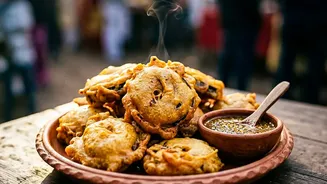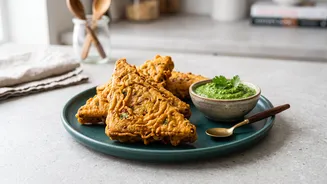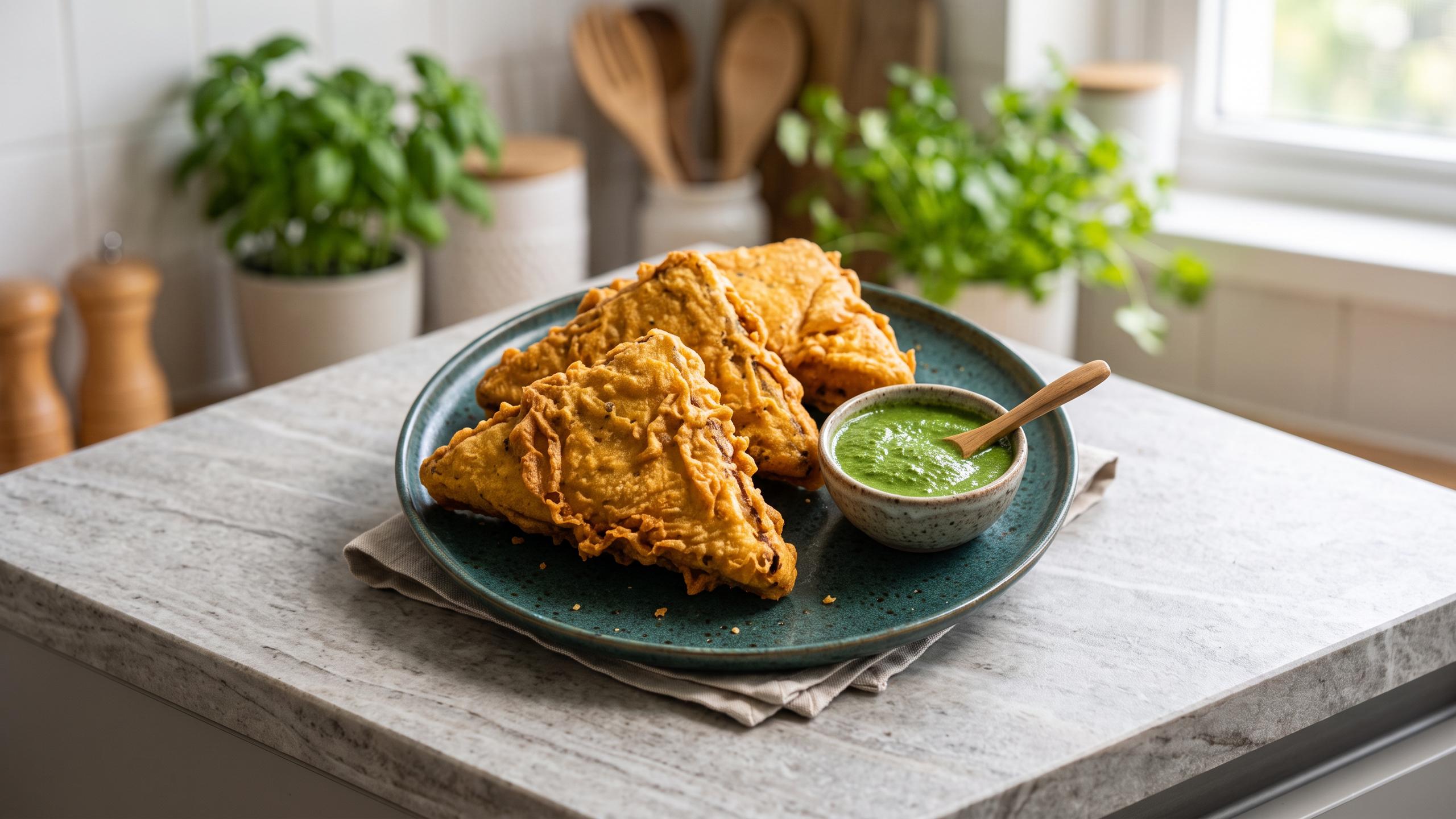


The Science of a Sizzle
When a batter-coated slice of bread hits hot oil, a rapid exchange takes place. The intense heat instantly vaporises the moisture on the surface of the batter. This creates a protective barrier of steam that pushes outwards, preventing the oil from seeping
into the bread. Simultaneously, the high temperature begins to cook the gram flour batter, triggering the Maillard reaction which is responsible for that desirable golden-brown colour and complex, savoury flavour. It’s this quick-sealing action that keeps the inside soft and fluffy while the outside becomes perfectly crisp. This entire process hinges on the oil being at the correct temperature from the very first second.
The Magic Number for Frying
For most pakoras, including the bread variety, the ideal frying temperature is between 175°C and 185°C (about 350°F to 365°F). In this range, the oil is hot enough to create that instant crust but not so hot that it burns the outside before the inside is cooked. Frying at this steady, medium-high heat ensures the batter cooks through, the potato filling gets warm, and the exterior achieves a uniform, brittle crunch without absorbing excess grease. Using a heavy-bottomed pan or kadai is also recommended as it helps in maintaining a stable oil temperature.
The 'Too Hot' Trap
It might seem like hotter oil is better for a faster cook, but this is a common mistake. If the oil is excessively hot, the outside of the bread pakora will brown and burn almost instantly, while the batter and potato filling inside remain raw and undercooked. The crust forms so aggressively that it traps steam that needs to escape. This trapped moisture eventually turns the inside of the pakora soggy and doughy, completely ruining the texture. A tell-tale sign of oil that is too hot is if it begins to smoke or if a test drop of batter darkens immediately.
The 'Too Cold' Catastrophe
Frying in oil that isn't hot enough is the primary reason for greasy, heavy pakoras. When the temperature is too low, the protective steam barrier fails to form quickly. Instead of being sealed off, the porous bread and batter act like a sponge, soaking up large amounts of oil before they even begin to cook. This results in a pakora that is unpleasantly oily, dense, and limp, no matter how long you drain it on paper towels. If a test drop of batter sinks and doesn't rise or sizzle, the oil is too cold.
Judging Heat Without a Thermometer
Street vendors don't use thermometers, and you don't have to either. A popular method is the wooden spoon test: dip the handle of a wooden spoon or a chopstick into the oil. If the oil is ready, it will immediately start to bubble steadily around the wood. Another common technique is to drop a tiny piece of batter into the pan. If it sizzles and rises to the surface within a few seconds without browning too quickly, your oil is at the perfect temperature for frying.
How to Maintain the Perfect Temperature
Maintaining the right heat is just as important as reaching it. Adding the room-temperature pakoras to the kadai will cause the oil's temperature to drop. To combat this, never overcrowd the pan. Fry the bread pakoras in small batches, with enough space so they are not touching. This allows the oil to remain hot and cook each piece evenly. After removing a batch, give the oil a minute to come back up to the ideal temperature before adding the next one. Following this discipline is key to producing a consistently crispy batch from start to finish.