





Monsoon Fury Hits the Coast
The primary cause for the turbulent conditions is the vigorous advance of the Southwest Monsoon across Western India. [4] The India Meteorological Department (IMD) has been tracking the system, which has brought strong winds and extremely rough sea conditions to
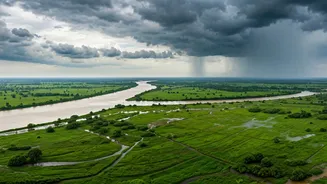
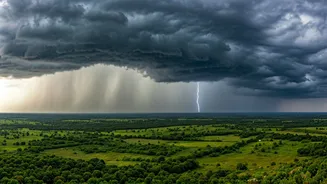
the entire Gujarat coast. [4, 5] According to an IMD release dated June 23, a steep pressure gradient is responsible for the powerful south-westerly to westerly winds, which are gusting from 40-50 kmph up to 60 kmph. [3] This has rendered the sea very rough, making any maritime activity exceptionally perilous. A red alert was issued for South Gujarat on June 25, warning of severe weather and extremely heavy rainfall in districts like Surat and Valsad. [5]
Fishermen Ordered Ashore
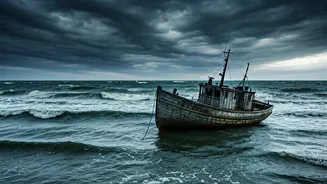
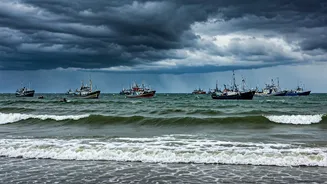
The most immediate and widespread impact is on the state's massive fishing community. The IMD has issued a stern warning, advising fishermen not to venture into the North and South Gujarat coasts. [3, 5] This advisory effectively grounds thousands of boats along key coastal districts from Kutch and Saurashtra to South Gujarat. [4, 6] For countless families who depend on the daily catch for their livelihood, this mandatory halt means a direct economic blow. The sight of entire fleets of fishing boats anchored securely at harbours like Veraval, Porbandar, and Mangrol is a testament to the storm's severity and the complete suspension of their trade. This weather-induced ban comes during the annual monsoon fishing ban period, which is observed to protect fish breeding cycles, further impacting the community. [11]
Ports on Standby, Beaches Empty
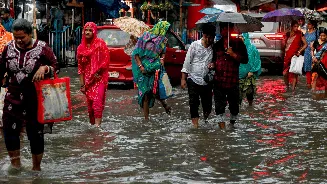
It is not just the fishermen who are ashore. The rough sea conditions have also hampered operations at some of Gujarat's major and minor ports, which are crucial hubs for national and international trade. While specific closure details vary, the high winds and turbulent waters make navigation and docking of large vessels hazardous. [5] Simultaneously, the state's popular beaches, which would typically see activity even during the monsoon, are deserted. Tourist hotspots along the coast, from Mandvi to Dumas, wear an empty look as authorities caution people to stay away from the shoreline due to the dangerous waves. The combination of heavy rain and high winds has also led to alerts for potential waterlogging and traffic disruptions in coastal cities like Surat. [4, 5]
A Coast of Extremes
This week's weather event highlights the increasing vulnerability of Gujarat's extensive 1,600-kilometre coastline to extreme weather phenomena. Recent climate reports have already identified several of Gujarat's coastal cities, including Surat, Bhavnagar, and Porbandar, as being highly susceptible to the impacts of climate change, such as rising sea levels and more intense cyclones. [19] The advance of the Southwest Monsoon, while essential for agriculture, often brings these challenging conditions. The state has previously faced significant disruptions from cyclones, with Cyclone Biparjoy in June 2023 leading to mass evacuations and widespread damage. [16] These events serve as a stark reminder of the delicate balance between life on the coast and the power of the sea.