





A Vast and Crucial Unknown
Covering more than two-thirds of our planet, the ocean acts as a gigantic buffer against the worst effects of climate change. It has absorbed the vast majority of excess heat trapped by greenhouse gases and about a third of the carbon dioxide we've emitted.
This has significantly slowed the pace of atmospheric warming. Most of this heat is stored in the upper layers, but a substantial and increasing amount is being transferred to the deep ocean, below 2,000 metres. Understanding exactly how much heat is stored there and how it circulates is vital for predicting future sea-level rise, extreme weather, and long-term climate patterns. However, the deep sea is a world of crushing pressure, total darkness, and immense logistical hurdles, making it incredibly difficult and expensive to study.
The Challenge of Immense Pressure
The primary obstacle in deep-ocean research is the colossal pressure. At depths of 4,000 to 6,000 metres, the pressure can exceed several hundred times that at the surface. For instruments to survive, they must be engineered to withstand forces that would implode conventional equipment. This requires specialised materials and designs, such as spherical glass housings that distribute pressure evenly. For decades, the workhorse of ocean monitoring has been the Argo program—a global fleet of nearly 4,000 robotic floats that measure temperature and salinity. However, standard Argo floats are designed to operate only down to 2,000 metres. Pushing deeper requires a new generation of 'Deep Argo' floats, which are more robust, complex, and significantly more expensive to build and deploy.
Darkness, Data, and Distance
Beyond pressure, the deep ocean is a hostile environment. It is completely dark, which prevents fouling by organisms like barnacles but also makes visual observation impossible without powerful lights on remotely operated vehicles (ROVs). Furthermore, saltwater is corrosive, and communication is a major problem. Radio waves, including GPS and satellite signals, cannot penetrate water. This means that instruments must surface to transmit their collected data, a process that consumes significant energy and time. Autonomous Underwater Vehicles (AUVs) and ROVs can gather high-resolution data, but they are tethered to research ships or have limited operational windows, making broad, continuous coverage of the vast deep ocean nearly impossible.
The High Cost of Deep Knowledge
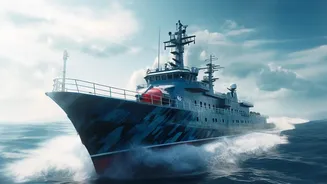
Studying the deep sea is a resource-intensive endeavour. Research vessels capable of deploying and retrieving deep-sea equipment can cost tens of thousands of dollars per day to operate. The instruments themselves—from Deep Argo floats to sophisticated ROVs—are feats of engineering with high price tags. Because of these costs, deep ocean measurements are far sparser than those for the upper ocean or the atmosphere. While the Argo network provides comprehensive data for the top 2,000 metres, data from the abyss often comes from infrequent ship-based surveys or a handful of fixed moorings. This lack of continuous, widespread data creates significant gaps in our climate models, leading to uncertainty in how fast the planet is warming and how sea levels will respond.
What We're Missing Below
These knowledge gaps have profound implications. Scientists have detected a clear warming trend even in the deepest parts of the ocean, but the data is too limited to fully understand the rate and its drivers. Tiny, invisible swirls of turbulence in the deep sea can affect heat and carbon distribution on timescales of a human lifetime, influencing everything from sea-level rise to the health of fisheries. Without a more complete picture of these deep processes, climate projections remain incomplete. The deep ocean holds the key to how much heat our climate system can continue to absorb and the long-term consequences of decades of emissions.