

A Digital Doomsday Simulation
It sounds like the plot of a science fiction thriller, but it's the subject of a serious, albeit hypothetical, research paper. Physicists from the University of Wisconsin-Madison and Princeton University have modeled what would happen if a one-megaton
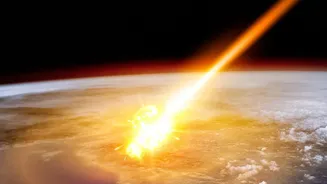
nuclear weapon was detonated 500 kilometres up, in low-Earth orbit (LEO). Their un-peer-reviewed study, posted in November 2026, presents a chilling scenario: not a fiery blast, but a silent, cascading electronic death for the thousands of satellites we depend on. The study is not a prediction, but a stark exploration of a vulnerability at the heart of our global infrastructure, examining a threat that has moved from a remote nightmare to an official concern in recent years.
The Real Killer: An Artificial Radiation Belt
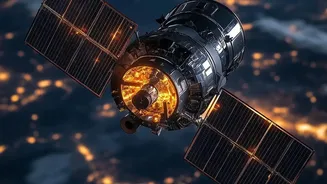
A nuclear explosion in the vacuum of space doesn’t behave like one on Earth. There is no mushroom cloud or shockwave. Instead, the primary threat comes from what the bomb leaves behind. The initial flash of X-rays would immediately disable a small percentage of satellites, around 3% in the model. The real devastation, however, comes later. The detonation releases a massive swarm of high-energy electrons from its fission products. Trapped by Earth's magnetic field, these particles form a persistent and invisible artificial radiation belt. Satellites in LEO, which circle the Earth many times a day, are forced to pass through this deadly zone repeatedly. With each pass, their sensitive electronics absorb a cumulative dose of radiation, leading to inevitable failure.
How Quickly the Lights Go Out
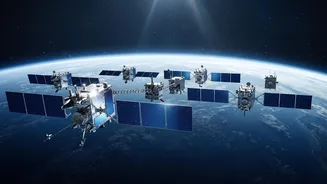
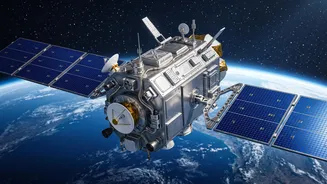
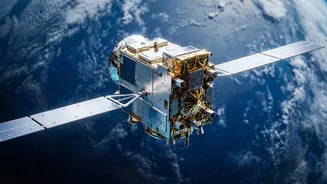
The model's timeline is alarmingly fast. Within 24 hours of the hypothetical detonation, an estimated 25% of the 13,300 active LEO satellites modelled would be disabled. After three days, that number jumps to 78%. By the end of a single week, a staggering 98% of the LEO satellite fleet would be out of commission. The study found that even hardening future satellites to be three times more resistant to radiation would only delay the inevitable, with 97% still failing within two weeks. This would affect everything from satellite internet constellations like Starlink and OneWeb to crucial Earth-observation and communication networks.
Life on Earth After the Blast
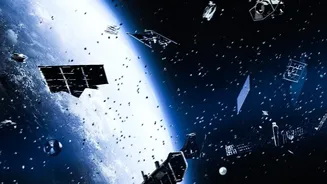
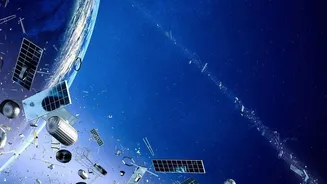
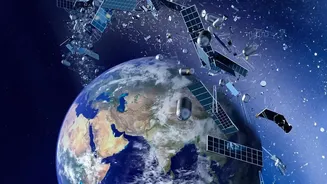
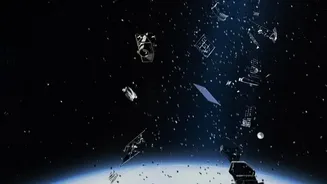
The loss of LEO satellites wouldn't cause an immediate societal collapse, but rather a 'prolonged degradation' of services we take for granted, according to one expert who reviewed the findings. In India, as elsewhere, the consequences would be immense. GPS navigation, essential for logistics, ride-sharing apps, and transportation, would fail. Global financial systems, which rely on satellite timing signals, would be disrupted. Weather forecasting would become less accurate, and remote communication services would go dark. Furthermore, the loss of maneuverability for thousands of satellites would lead to a dramatic increase in orbital collisions, creating a Kessler syndrome-like effect where space debris cascades, making LEO hazardous for decades and hampering any effort to launch replacements.
From Historical Test to Modern Threat
This isn't pure fantasy. In 1962, the United States conducted the 'Starfish Prime' test, detonating a 1.4-megaton warhead 400 kilometres over the Pacific. That single blast damaged or destroyed at least a third of the two dozen satellites in orbit at the time. Today, with over 17,000 satellites in LEO, our dependence—and vulnerability—is exponentially greater. While international treaties from the 1960s ban placing nuclear weapons in orbit, recent geopolitical tensions and reports of nations developing anti-satellite weapons have renewed concerns. This new research quantifies the devastating efficiency of such a weapon, turning a theoretical threat into a detailed and sobering blueprint for disruption.