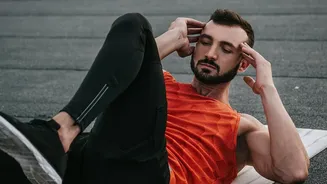







Your Muscles Are Constantly Sore
Delayed onset muscle soreness (DOMS) is that familiar ache that sets in a day or two after a tough workout. This is a normal part of the muscle-building process. However, if that soreness lasts for more than 72 hours or feels unusually intense, it's a red
flag. Persistent or nagging muscle pain suggests your tissues aren't getting the chance to repair themselves between sessions. This chronic stress can prevent healing and increase your risk of injury. Ignoring prolonged soreness and treating it as a badge of honour is a common mistake; instead, see it as your body asking for more recovery time.
You're Plagued by Persistent Fatigue
Feeling tired after a hard workout is expected. Feeling exhausted all the time is not. One of the most telling signs of inadequate recovery or overtraining is a deep, persistent fatigue that doesn't go away even with rest. You might feel a physical heaviness, a lack of energy for daily tasks, or a mental fogginess that you just can't shake. This isn't just about being sleepy; it's a state of chronic exhaustion that suggests your body's systems are overloaded and struggling to keep up with the demands you're placing on them.
Your Performance Is Declining
It’s a frustrating paradox: you’re training harder than ever, but your performance is getting worse. If workouts that used to be manageable now feel incredibly difficult, or if you notice a drop in your strength, speed, or endurance, your body is likely not recovering. This decline is often one of the first measurable signs of overtraining. Your central nervous system, which is crucial for muscle activation and coordination, becomes fatigued, making it impossible to perform at your peak. Instead of getting stronger, you're just accumulating fatigue.
Your Sleep Is Disrupted
While regular exercise typically improves sleep, overtraining can do the opposite. You might have trouble falling asleep, wake up frequently during the night, or wake up in the morning still feeling unrefreshed. This can happen because excessive physical stress can elevate stress hormones like cortisol and keep your nervous system in a state of high alert, making it difficult to relax and enter deep, restorative sleep. Since sleep is when the majority of muscle repair and recovery happens, disrupting it creates a vicious cycle of poor recovery.
You're Moody and Irritable
The mental and emotional effects of poor recovery are just as significant as the physical ones. While exercise is a known mood booster, overtraining can lead to increased irritability, anxiety, mood swings, and even feelings of depression. If you find yourself feeling short-tempered, unmotivated, or losing joy in activities you once loved (including exercise itself), it could be a sign that hormonal imbalances and mental fatigue are taking a toll. Your brain needs recovery just as much as your body does.
You're Getting Sick More Often
Are you catching every cold that goes around? Overtraining can suppress your immune system, leaving you more vulnerable to infections. The constant physical stress diverts your body's resources away from immune function, making it harder to fight off bugs. If you notice a pattern of frequent illnesses, especially upper-respiratory infections, it could be a clear signal that your body is overtaxed and needs a significant break to recover and rebuild its defenses.