




What is Black Garlic?
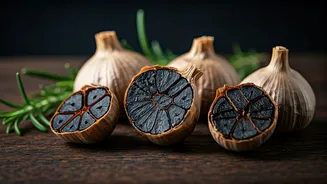
Contrary to what its name might suggest, black garlic is not a specific variety that grows in a different colour. It is, in fact, regular garlic (Allium sativum) that has undergone a remarkable transformation. Through a process of slow aging under controlled
heat and humidity for several weeks, the familiar white cloves turn a deep, inky black. This isn't fermentation in the strictest sense, but a chemical process known as the Maillard reaction—the same reaction that gives seared steak its flavour and bread its golden-brown crust. During this time, enzymes and amino acids within the garlic break down and reform, creating entirely new flavour compounds and a soft, sticky texture reminiscent of a date.
A Symphony of Sweet and Savoury
The most striking thing about black garlic is its taste, which bears little resemblance to the pungent, sharp bite of its raw counterpart. The aging process mellows the heat and replaces it with a complex flavour profile that is sweet, savoury, and packed with umami. Many describe its taste as having notes of molasses, balsamic vinegar, tamarind, and licorice. The texture becomes soft, chewy, and easily spreadable, making it incredibly versatile. Best of all, it achieves this deep flavour without the aggressive aroma of fresh garlic, meaning no lingering garlic breath.
Effortless Ways to Unlock Its Flavour
The beauty of black garlic lies in its user-friendliness. You don't need to be a professional chef to harness its power. Its soft texture means it can be easily mashed into other ingredients. One of the simplest and most effective uses is to create black garlic butter; just mash a few cloves into softened butter and spread it on steak, bread, or roasted vegetables. You can also whisk it into vinaigrettes and mayonnaise for a complex, umami-rich dressing or dip. Stirring a mashed clove or two into pan sauces, soups, or stews just before serving can add an incredible depth of flavour that seems to come from hours of slow cooking.
Beyond the Basics: Getting Creative
Once you're comfortable with the basics, black garlic invites experimentation. Its sweet and savoury notes make it a surprising but effective addition to a wide range of dishes. Add finely chopped cloves to your next pasta sauce or risotto for a new layer of complexity. Try replacing regular garlic with it in your next batch of hummus for a sweeter, more exotic flavour. It can be blended into marinades for chicken or fish, or even simply smeared on a pizza base before adding toppings. Some adventurous cooks even incorporate its molasses-like notes into desserts and chocolates.
More Than Just Flavour
While the flavour is the main draw, it's worth noting that the aging process also concentrates some of the health benefits associated with garlic. Black garlic contains significantly more antioxidants than its raw counterpart. Studies have suggested it may offer benefits for heart health by helping to manage cholesterol levels, as well as supporting immune function and regulating blood sugar. While it's a flavour enhancer first and foremost, these potential health perks are a welcome bonus.
Finding and Storing Your New Secret Weapon
Once a niche product found only in high-end restaurants, black garlic is now more accessible than ever. In India, you can find it at specialty food stores and, increasingly, online from various gourmet retailers and marketplaces that deliver across the country. It is sold as whole bulbs, separated cloves, or sometimes as a ready-to-use paste. Due to the aging process, black garlic has a long shelf life and should be stored in a cool, dry place. Once opened, it’s best kept in an airtight container in the refrigerator to maintain its texture and flavour.