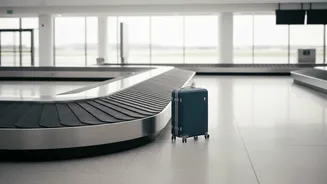







A Landmark Ruling for Passengers
In a significant decision dated July 22, 2026, a district consumer commission in Kerala ordered a private airline to pay a passenger a total of ₹53,923. This was not for lost luggage, but for a delay of just three days. The case revolved around a passenger who,
upon arriving at his destination without his checked bag, was forced to purchase ₹8,923 worth of essential clothing. The airline failed to provide any compensation, prompting the passenger to file a complaint. The commission found this failure to be a clear “deficiency in service,” reinforcing the rules laid out in the Ministry of Civil Aviation's Passenger Charter. This ruling sets a strong precedent, affirming that airlines have a clear duty to compensate travelers not just for the inconvenience, but for the actual, documented costs of a baggage delay.
The Old Way vs. The New Reality
Previously, while passengers were technically entitled to compensation, the process was often opaque. Airlines might offer a small, arbitrary amount for interim expenses or require extensive follow-ups. Many travelers were simply unaware of their rights or gave up in the face of corporate bureaucracy. The DGCA's guidelines set a liability cap for domestic flights at ₹20,000 per passenger for delayed, lost, or damaged baggage, but securing reimbursement for immediate needs was not always straightforward. This new ruling clarifies the situation. It shifts the dynamic by establishing that a failure to reimburse documented, essential purchases is a punishable deficiency in service. It moves the process from a negotiation to a clear obligation, provided the passenger does their part.
What Counts as an 'Essential' Cost?
The key to a successful claim is understanding what is considered a reasonable and essential replacement cost. While there's no exhaustive list, the focus is on necessities you cannot do without while your bag is missing. Think of items like basic toiletries (toothbrush, deodorant), a simple change of clothes appropriate for your destination, underwear, and any crucial items like specific medications or baby supplies that were in the checked bag. In the Kerala case, the claim for ₹8,923 in clothing was deemed legitimate. The principle is not to replace your entire wardrobe with luxury goods, but to allow you to continue your trip without undue hardship. A claim for a basic t-shirt and trousers will be approved; a designer suit will likely be rejected. The more reasonable and necessary your purchases are, the stronger your claim will be.
Your New Toolkit: The Power of Paperwork
This ruling makes meticulous documentation non-negotiable. Your claim is only as strong as the proof you can provide. The moment you realise your bag hasn't arrived, your first step should be to file a Property Irregularity Report (PIR) at the airline's desk before leaving the airport. This is the official record of the incident. Next, as you purchase essential items, keep every single receipt. Digital receipts are fine, but ensure they are clear and itemised. It’s also wise to take photos of your receipts and the items you buy. When communicating with the airline, do so via email to create a written trail of your correspondence. This combination of a PIR, receipts for all expenses, and a log of your communication builds an undeniable case that the airline will find difficult to ignore.
How to File a Successful Claim
With your documentation in hand, the process is straightforward. First, contact the airline through its official channels to submit your claim for reimbursement. You will need your PIR reference number, flight details, and copies of all your receipts. For delayed baggage, you have 21 days from the date you receive your luggage to file a written claim. If the airline does not respond or refuses to provide adequate compensation as per the DGCA Passenger Charter, you can escalate the issue. Filing a grievance on the government's INGRAM consumer portal is a good next step, as was done in the Kerala case. If that fails, you can approach a consumer disputes redressal commission. This recent judgment shows that these commissions are prepared to rule in favour of consumers who have clear evidence of both the delay and their essential expenses.