




The Hidden Connection
Most office workers are familiar with the neck tension, shoulder stiffness, and lower back pain that can accompany long hours in a chair. We stretch, adjust, and complain, but we rarely think to check in on our knees. Yet, these complex joints are profoundly
affected by our seated posture. Prolonged sitting, especially with poor ergonomics, can disrupt the delicate balance of muscles, ligaments, and cartilage, setting the stage for discomfort, stiffness, and even long-term damage. The link isn't always obvious because the strain is often gradual and cumulative, manifesting not as a sharp injury, but as a slow, creeping deterioration.
The Biomechanics of a Bad Sit
Your body is a kinetic chain, meaning one part's misalignment affects the others. When you slouch or sit in a chair that’s the wrong height, it starts a cascade of postural problems. A poorly adjusted chair can cause your pelvis to tilt backward, flattening the natural curve of your lower spine. This, in turn, can cause your hip flexors and hamstrings to tighten. These tight muscles pull on the pelvis and alter the alignment of your entire leg, placing unnatural stress on the knee joint. Over time, this constant, improper load can lead to irritation of the cartilage under the kneecap, a condition known as patellofemoral pain syndrome, sometimes called 'runner's knee' or 'moviegoer's knee'.
Starving Your Cartilage
Knee cartilage is a smooth, durable tissue that cushions the bones, but it has a crucial vulnerability: it lacks a direct blood supply. It relies on the circulation of synovial fluid within the joint for nourishment and waste removal. This fluid circulation is driven by movement. When you sit for extended periods, this process grinds to a halt. The static pressure from being in a flexed position, combined with the lack of fluid circulation, can essentially 'starve' the cartilage. This environment of 'underloading' can make the cartilage thinner and more vulnerable to damage and degeneration over time, increasing the risk for developing osteoarthritis.
The Ergonomic Counter-Attack
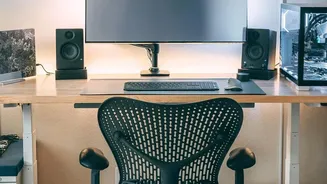
The good news is that you can actively protect your knees with conscious ergonomic adjustments. The goal is to create a neutral, supportive posture. Start with your chair. Adjust the height so your feet rest flat on the floor with your knees bent at a 90-degree angle. Your hips should be level with or slightly higher than your knees. There should be a small gap, about two fingers wide, between the front edge of the chair and the back of your knees to avoid cutting off circulation. A footrest can be a valuable tool if your feet don't reach the floor comfortably. This setup aligns your pelvis correctly and reduces strain on your hips and knees.
Movement Is The Best Medicine
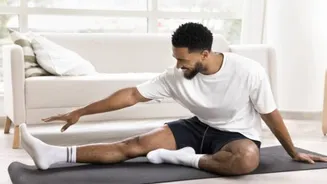
Even the most perfect ergonomic setup can't negate the negative effects of being stationary for hours on end. The real key to joint longevity is regular movement. Set a timer to get up, walk around, and stretch for a few minutes every hour, or even every 30 minutes if possible. Simple stretches like standing hamstring and quadriceps stretches can counteract the muscle shortening that occurs from sitting. Even just standing up and shifting your weight can help to re-engage muscles and get your synovial fluid flowing again. Think of these breaks not as interruptions, but as essential maintenance for your body's machinery.