



Beyond the Static Question Paper
For decades, exam preparation has followed a predictable pattern: study a chapter, then solve a fixed set of questions from a book or a pre-made mock test. Every student, regardless of their proficiency, attempts the same paper. While useful, this one-size-fits-all
approach is inefficient. A student struggling with thermodynamics gets the same number of questions on the topic as someone who has already mastered it. This means time is often wasted on revising strong areas or, worse, not getting enough practice on the weak ones. Traditional mock tests tell you *what* you got wrong, but they don't immediately help you fix it with targeted practice. They offer a snapshot of your performance, but the path to improvement is left for you to figure out on your own.
How Do These AI Bots Work?
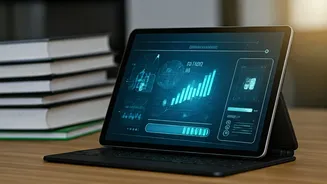
Enter dynamic AI reading bots. The term 'reading bot' can be a bit misleading. These AI systems don't typically 'read' a physical textbook in front of you. Instead, they operate on a massive, pre-existing database of questions, concepts, and learning materials. When you take a test on one of these platforms, the AI does more than just score your answers. It analyses your performance in real time, tracking metrics like accuracy, speed, and the specific concepts behind the questions you get wrong. If you consistently fail questions related to, say, 'Galvanic Cells' in Chemistry, the AI flags it as a weak spot. It then dynamically generates a new, personalized mock test or practice drill by pulling relevant questions from its vast library to specifically target that weakness. The 'real-time' aspect means this happens instantly, creating a continuous feedback loop where practice is always focused on what matters most for you.
The Power of Hyper-Personalization
The core benefit is efficiency. By tailoring practice sessions to individual needs, these AI platforms ensure that every minute of study time is spent productively. There's no more guessing which topics need more work. The AI provides a data-driven roadmap, helping students fill their knowledge gaps with surgical precision. This adaptive learning model also helps build confidence. As a student improves on a weak topic, the AI can gradually increase the difficulty of the questions, creating a challenging yet achievable learning curve. This prevents the frustration of being stuck on impossible problems or the boredom of coasting through easy ones. For high-stakes exams like JEE, NEET, or UPSC where every mark counts, this level of targeted practice can be a significant competitive advantage.
Where Can You Find This Technology?
This technology is no longer a futuristic concept; it's a core feature of several leading ed-tech platforms in India. Companies like Embibe have been pioneers in this space, using their AI-powered engines to offer personalized feedback and adaptive practice for a wide range of competitive exams. Other major players in the Indian ed-tech market, including Byju's and Toppr, have also integrated similar AI-driven features into their learning modules. These platforms use their vast user data to refine their algorithms, making the personalization more accurate over time. As a student uses the platform more, the AI gets 'smarter' about their specific learning patterns, offering ever more tailored support and custom-built tests.
Is the Human Tutor Obsolete?
While AI offers incredible tools for targeted practice, it doesn't make human teachers obsolete. An AI can identify that you are weak in a particular concept, but it can't always understand *why*. It cannot replicate the empathy, motivation, and intuitive guidance of an experienced mentor. A human teacher can notice signs of burnout, offer encouragement, or explain a complex idea in a completely novel way that an algorithm might not consider. AI is brilliant at handling the 'what'—what to study next. But the 'how' and 'why'—how to approach studying with the right mindset, and why a particular concept is beautiful or important—often still requires a human touch. The most effective approach, therefore, is a hybrid one: using these powerful AI tools to handle the heavy lifting of personalized practice, while relying on human educators for mentorship, strategy, and deeper conceptual understanding.