



The Sun's Restless Cycle
Our Sun isn't a constant, unchanging star. It operates on an approximately 11-year cycle, swinging between a quiet phase, known as solar minimum, and a turbulent peak called solar maximum. We are currently in Solar Cycle 25. During solar maximum, the
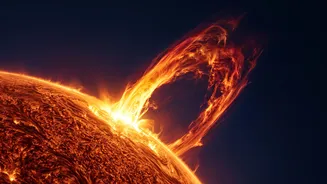
Sun's magnetic field becomes chaotic, leading to a dramatic increase in sunspots—dark, cooler areas on the solar surface that are hotspots of intense magnetic activity. It's from these regions that the Sun unleashes its most powerful outbursts: solar flares and coronal mass ejections (CMEs). Initial predictions placed the peak of this cycle in 2025 or 2026, but recent observations show the Sun's activity has ramped up faster than expected, suggesting the maximum may occur earlier. This period of heightened activity isn't a single event but a phase that can last for several years.
Cosmic Storms and Their Earthly Reach
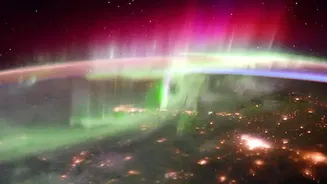
When a sunspot's magnetic field lines snap and reconnect, they can release enormous bursts of energy. A solar flare is a flash of intense radiation that travels at the speed of light, reaching Earth in about eight minutes. Sometimes, these flares are accompanied by CMEs, which are massive clouds of magnetised plasma and charged particles hurled into space. These slower-moving clouds take one to three days to reach Earth, but their impact can be far more significant. When a CME collides with Earth's protective magnetic field (the magnetosphere), it triggers a geomagnetic storm. This is the phenomenon that creates beautiful auroras but also poses a serious threat to our technological infrastructure.
Satellites in the Firing Line
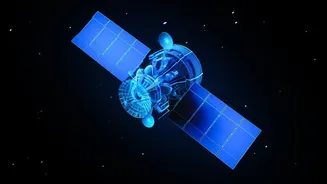
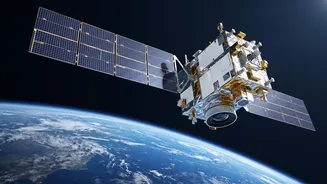
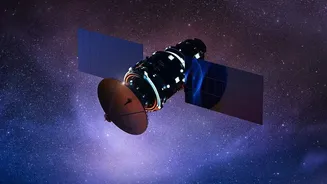
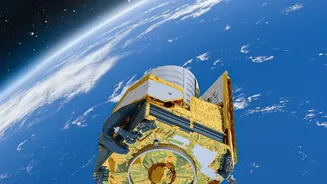
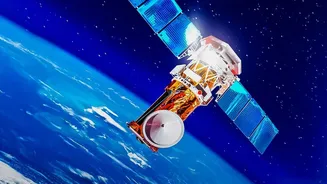
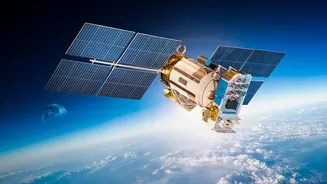
Satellites orbiting outside Earth’s protective atmosphere are highly vulnerable to these solar outbursts in several ways. Firstly, high-energy particles from a solar radiation storm can bombard a satellite, damaging its sensitive electronics and solar panels. This is known as radiation damage and can degrade a satellite’s performance or cause outright failure. Secondly, the storm can cause the satellite's surface to build up an electrical charge, potentially leading to short circuits and phantom commands that can send a spacecraft tumbling. Finally, for satellites in Low Earth Orbit (LEO), there's the problem of atmospheric drag. A geomagnetic storm heats and expands Earth's upper atmosphere, increasing the density of the air where LEO satellites orbit. This increased friction slows the satellites down, causing their orbits to decay faster and potentially leading them to re-enter the atmosphere prematurely, as seen in the loss of dozens of Starlink satellites in 2022.
The Impact on Daily Life in India
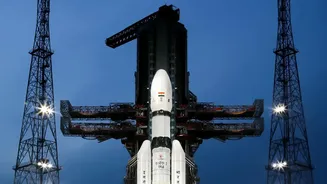
The challenges to satellite functionality are not just an abstract problem for space agencies; they have tangible consequences on the ground. Much of our modern infrastructure in India relies on the flawless operation of satellites. Disruption could affect GPS and navigation services, impacting everything from ride-hailing apps like Ola and Uber to the logistics that power our economy. Satellite television services could experience interference, and financial transactions that rely on satellite links for connectivity could be interrupted. Even more critically, disaster management and national security operations depend on reliable satellite communication and observation. ISRO, India's space agency, actively monitors its fleet of over 50 satellites, including the NavIC constellation, and has developed procedures to protect these vital national assets during solar storms.
Building Resilience Against the Storm
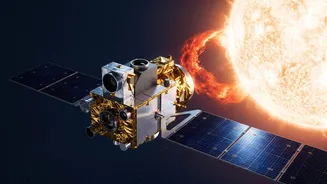
Fortunately, satellite operators are not helpless. Space agencies like ISRO and NASA have developed strategies to mitigate the risks. This includes building more robust satellites with hardened electronics and better shielding. During a severe space weather event, operators can put satellites into a protective 'safe mode', shutting down non-essential systems to ride out the storm. The most crucial tool, however, is forecasting. By monitoring the Sun, scientists can provide advance warning of an incoming solar storm. India's Aditya-L1 mission, for example, is providing invaluable data from a vantage point 1.5 million kilometres from Earth, helping scientists understand and predict solar flares with greater accuracy. These early warnings give operators the crucial time needed to take protective measures, safeguarding the orbital infrastructure we all depend on.