





A Cosmic Tryst Explained
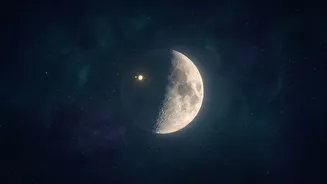
Late October brings a treat for skywatchers as the Moon and Saturn appear to draw close to one another in the night sky. This event, known as a conjunction, is an illusion of perspective. Although the two celestial bodies look like neighbours from our vantage
point on Earth, Saturn is, of course, hundreds of millions of kilometres farther away than the Moon. This particular event is easy and rewarding to watch, as Saturn has been a bright fixture in the night sky since its opposition in early October, when it was at its closest and brightest for the year. The pairing offers a great chance to easily identify the famous ringed planet.
The Viewing Schedule for India
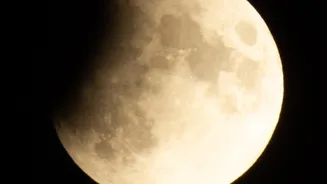
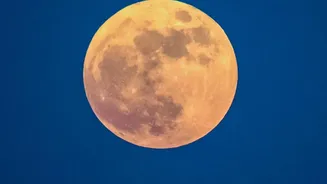
Mark your calendars for the nights of October 24th and 25th, 2026. On these evenings, the nearly full Moon will pass by Saturn, creating a striking visual spectacle. The show begins right after dusk. You won't have to stay up late, as the pair will be visible for most of the night before setting. For viewers in India, the best time to start looking will be shortly after sunset, once the sky darkens enough to reveal Saturn’s steady light next to the bright Moon. On the evening of October 24th, you can watch the waxing gibbous Moon approach the planet, and by October 25th, it will have moved to the other side, a clear demonstration of the Moon's rapid movement across our sky.
How to Find the Celestial Pair
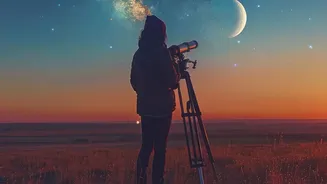
Finding the duo is straightforward. Just locate the Moon, which will be in its bright, nearly full phase, and look for a bright, steady, star-like point of light nearby. That 'star' will be Saturn. Unlike stars, which twinkle, planets shine with a more constant light. Saturn will appear as a yellowish dot. The pair will be visible in the eastern sky after sunset and will track across the sky throughout the night. For the best experience, find a location with an unobstructed view of the sky, preferably away from the glare of city lights. A park, a terrace, or any spot with a clear horizon will do.
What You Can Expect to See
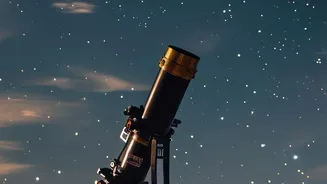
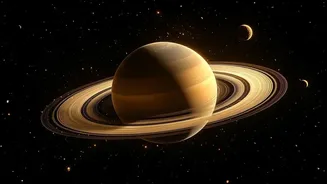
With the naked eye, the conjunction is a beautiful sight, showcasing the Moon's brilliance alongside the golden-hued Saturn. No equipment is necessary to enjoy the view. However, if you have a pair of binoculars, you can get a more detailed look at the Moon's surface and Saturn will appear as a more distinct, non-twinkling disc. A small telescope will elevate the experience significantly, potentially revealing Saturn's magnificent rings. The rings are currently tilted favourably toward Earth, and the planet's brightness this month makes it a prime target for amateur astronomers. Even without a telescope, this event is a perfect introduction to stargazing.
Tips for an Unforgettable Night
To make the most of this celestial event, give your eyes about 20-30 minutes to adjust to the darkness, away from bright screens or lights. Consider using a stargazing app on your phone, like Stellarium or SkyView, to help identify constellations and other objects in the vicinity. Because nights can get cool, even in warmer regions, it's wise to bring a light jacket. Most importantly, make it a shared experience. It’s a wonderful opportunity for families and friends to step outside, look up, and connect with the grander cosmos together. Enjoy the simple, profound pleasure of watching the solar system in motion.