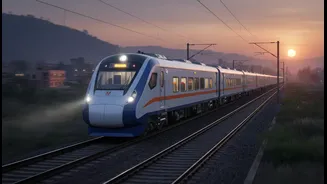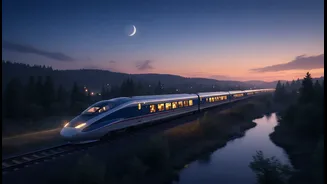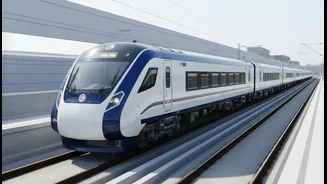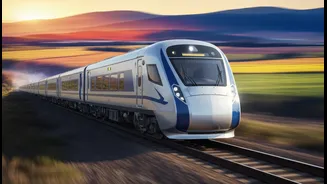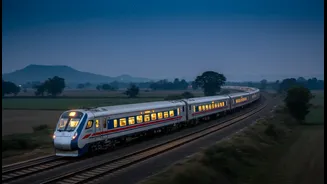








A New Chapter in Overnight Journeys
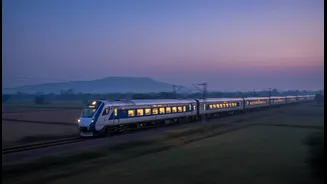
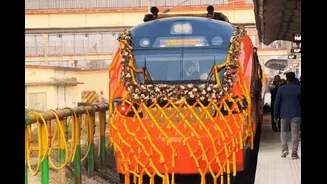
On July 17, 2026, a new chapter for long-distance travel in India begins with the inauguration of the country's second Vande Bharat sleeper service. Dubbed the 'Sant Ravidas Express', this train will connect the spiritual city of Varanasi in Uttar Pradesh
with Chheharta in Amritsar, Punjab. Following the debut of the first sleeper on the Howrah-Kamakhya route in early 2026, this new service signals a determined push to redefine the overnight travel experience. Unlike the chair-car Vande Bharat trains that have become familiar sights, this is a fully-sleeper train designed from the ground up for comfort over long distances. It consists of 16 air-conditioned coaches, offering a mix of AC First, Two-Tier, and Three-Tier classes, with a total capacity for 823 passengers.
More Than Just Speed
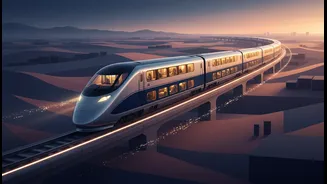
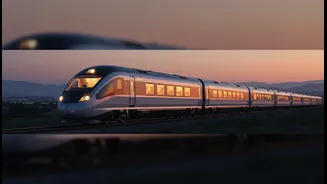
While Vande Bharat trains are known for their speed—capable of hitting 160 km/h—the sleeper variant is focused on providing a premium passenger experience that rivals flights and surpasses road travel. The coaches feature ergonomically designed berths with better cushioning, jerk-free couplers for a smoother ride, and superior noise reduction to ensure a good night's sleep. Amenities like automatic doors, sensor-based taps in bio-vacuum toilets, and enhanced safety features, including the indigenous Kavach anti-collision system, are standard. This isn't simply an upgrade; it's a fundamental reimagining of what an overnight train journey can be, shifting the focus from basic transit to a comfortable, reliable, and dignified travel experience. The aim is to make the journey itself a restful part of the trip, not an endurance test.
Connecting the Economic and Cultural Heartland
The choice of the Varanasi-Amritsar corridor is highly strategic. It links two of North India's most significant cultural and religious hubs, catering to pilgrims and tourists. More importantly, it forges a high-speed artery through the densely populated and economically vital regions of Uttar Pradesh and Punjab. The train will make crucial stops at cities like Lucknow, Bareilly, Saharanpur, and Ludhiana, connecting major commercial, industrial, and agricultural centres. For decades, this route has been served by trains that are often overcrowded and subject to delays. The introduction of a premium, punctual, and comfortable service like the Vande Bharat sleeper addresses a massive unmet demand from professionals, families, and migrant workers who depend on this corridor for their livelihoods. It promises to boost regional economic integration by making business and personal travel more efficient.
A Modern Answer to an Old Fleet
For over fifty years, the Rajdhani and Duronto expresses have been the gold standard for premium long-distance train travel in India. However, with time, this fleet has aged. The Vande Bharat sleeper is Indian Railways' definitive answer to this challenge. It is not just a new train but the intended successor to the Rajdhani-era of travel, built for the aspirations of a 21st-century India. The self-propelled trainsets allow for faster acceleration and deceleration, cutting down journey times significantly. The Varanasi-Chheharta service, for instance, offers a modern alternative on a route where time-saving and comfort are paramount. By providing a superior product, Indian Railways is also positioning itself to compete more effectively with the growing network of expressways and budget airlines that have been chipping away at its share of long-distance travellers.
The Bigger Picture: A National Rail Mission
This second sleeper train is not an isolated launch. It is a key milestone in one of the most ambitious modernisation projects undertaken by Indian Railways. The national transporter plans to roll out a fleet of 800 Vande Bharat trains by 2030, with a long-term vision of operating 4,500 by 2047. This expansion includes chair cars for medium-distance routes and sleepers for overnight journeys, creating a nationwide network of semi-high-speed connectivity. While the Varanasi-Amritsar and Delhi-Patna corridors are the immediate focus in the north, plans are already in motion for similar services connecting other major hubs like Bengaluru and Mumbai. This massive undertaking represents a strategic shift towards state-led modernisation, ensuring that the backbone of India's transport network is ready for the future.