

The Promise of TRAPPIST-1
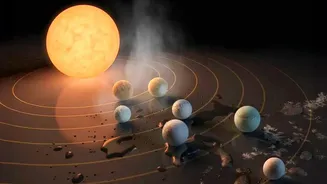
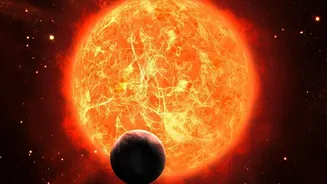
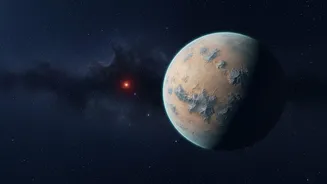
Located about 40 light-years from Earth, the TRAPPIST-1 system is an astronomical treasure. It features seven rocky planets, all roughly the size of Earth, orbiting a small, cool red dwarf star. This compact system is a perfect natural laboratory for
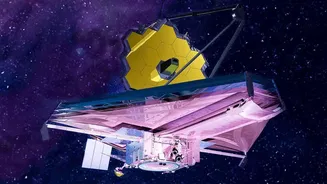
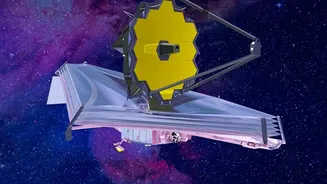
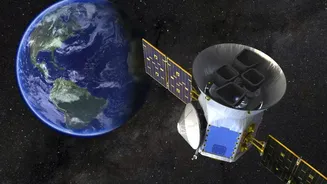
studying worlds that are both similar to and different from our own. What makes TRAPPIST-1 so compelling is that several of its planets, including 'e', 'f', and 'g', orbit within the star's habitable zone. This is the 'Goldilocks' region where temperatures could theoretically be just right for liquid water to exist on a planet's surface—a key ingredient for life. However, for water to pool, a planet needs an atmosphere to provide sufficient pressure and regulate temperature. For years, scientists have used advanced tools, most recently the James Webb Space Telescope (JWST), to peer into this system, hoping to find just that.
A Glimpse of Carbon
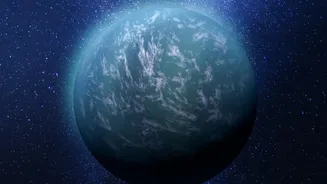
Recent observations of the TRAPPIST-1 planets have been a mix of revelation and mystery. While the innermost worlds, TRAPPIST-1b and c, appear to be bare rocks with little to no atmosphere, hopes have remained for the outer planets. The latest studies, focused on TRAPPIST-1e, have yielded tantalising hints. Though still not definitive, data from the JWST suggests the possibility of an atmosphere containing methane, a carbon-based molecule. Researchers have been able to rule out a thick, hydrogen-dominated atmosphere like Neptune's, and a dense carbon dioxide atmosphere like that of Venus. Instead, the findings point towards a potential secondary atmosphere, possibly rich in nitrogen with traces of methane, similar to Saturn's moon Titan. It must be stressed that these are initial findings; the data is also consistent with the planet being a bare rock with no atmosphere at all. More observations are needed to be certain.
Why Carbon is a Game-Changer
So, why the excitement over carbon? On Earth, carbon is the backbone of all known life. It forms the complex molecular chains that create proteins, DNA, and cells. Finding carbon-bearing molecules like methane (CH4) or carbon dioxide (CO2) in an exoplanet's atmosphere is a monumental first step in assessing its potential for life. It tells astronomers that the basic chemical ingredients for life are present. Methane, in particular, is intriguing because it can be produced by both geological processes (like volcanic activity) and biological ones (like microbes). The presence of methane alongside other gases—or a notable absence of others, like carbon monoxide—could be a strong biosignature, a chemical fingerprint suggesting life's influence on its environment. This discovery transforms the planet from a point of light into a world with tangible chemistry we can begin to understand.
Slowing Down the Hype
Finding carbon does not mean we've found alien life. It's crucial to separate possibility from proof. A carbon-rich atmosphere could be generated by entirely non-biological processes. Red dwarf stars like TRAPPIST-1 are notoriously active, unleashing powerful flares that can strip atmospheres away or create complex chemistry without life's involvement. Furthermore, the current data for TRAPPIST-1e is not yet conclusive. Scientists are still working to distinguish the faint signal of a potential atmosphere from the 'noise' created by the star itself. Confirming the atmosphere's existence, let alone its exact composition, will require many more hours of observation with the JWST. This finding is a signpost, not the destination. It tells astronomers where to look next and what questions to ask, guiding the future of exoplanet research.
The Next Frontier in Astronomy
This discovery, even in its preliminary stages, has profound implications for the field of astronomy. It validates the incredible power of the James Webb Space Telescope to probe the atmospheres of small, rocky worlds, a feat that was impossible just a few years ago. The TRAPPIST-1 system will remain a primary target for years to come, with astronomers planning to observe more transits to build a clearer picture of these planets. Each new observation will add another piece to the puzzle, helping to confirm or rule out the presence of an atmosphere and pin down its composition. This research also shapes the development of future missions, like the European Space Agency's Ariel telescope, which is specifically designed to study exoplanet atmospheres. The search is no longer just about finding planets; it's about characterising them and understanding which ones might truly be other Earths.