







From Simple Transcription to True Intelligence
For years, transcription services have offered a simple promise: turn spoken words into text. This was useful for record-keeping but still left teams with a dense wall of text to sift through. The real revolution isn’t just in transcription accuracy,
but in what happens *after* the text is generated. Modern AI assistants don’t just hear; they understand. Using Natural Language Processing (NLP), these tools can analyse the content and context of a conversation. They can distinguish between casual chatter and critical decisions, identify speakers, and pinpoint key commitments. This leap moves the technology from a passive stenographer to an active participant in your workflow, capable of extracting value from conversations that was previously lost.
How Conversation Becomes a Plan
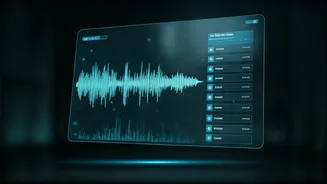
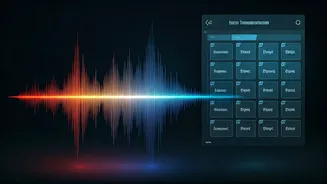
The process sounds like magic, but it’s a logical, multi-step workflow happening in the background. First, the AI assistant joins your virtual (or in-person) meeting and records the audio. As it records, it generates a real-time transcript. The crucial part happens next. The AI engine parses this transcript to identify key elements. It looks for 'trigger phrases' like “I will handle that,” “The deadline is Friday,” or “Priya, can you take the lead on…” It automatically flags these as action items, assigns them to the correct person, and often pulls out a deadline. It then compiles these into a structured summary, complete with a high-level overview, a list of decisions made, and a clear, actionable task list. This summary can then be automatically emailed to attendees or, even better, synced directly with your project management tools.
The Tangible Benefits for Your Team
The most immediate benefit is a massive time-saving. No one needs to spend an hour after the meeting trying to decipher their notes and manually create tasks in Jira or Asana. This administrative burden is lifted, freeing up project managers and team leads to focus on strategic work. Accountability gets a major boost. When action items are automatically captured, assigned, and circulated, it’s much harder for tasks to fall through the cracks. Everyone has a clear, shared record of who is responsible for what. Over time, this creates a searchable knowledge base. Can’t remember why a certain decision was made three months ago? Instead of digging through old emails, you can search the meeting transcript and its AI-generated summary to find the exact context in seconds. This turns transient conversations into a permanent, valuable company asset.
Key Features to Look For
As you explore these tools, not all are created equal. Look for a few key features that separate the truly useful assistants from the basic ones. Robust speaker identification is crucial; the tool must be able to accurately tell who said what. Next, look for sophisticated action item and decision detection—the core of the value proposition. The best tools are remarkably accurate at this. Critically, check for integrations. An AI assistant is most powerful when it connects seamlessly with the tools your team already uses, such as Slack, Microsoft Teams, Asana, Trello, Jira, or Salesforce. Finally, consider customisation. The ability to add custom vocabulary (like company-specific acronyms) or create custom rules for summarisation can make the tool even more effective for your specific needs.
Implementing AI Assistants Responsibly
While the productivity gains are tempting, rolling out an AI recording tool requires a thoughtful approach. Transparency is key. Always inform all meeting attendees, both internal and external, that the meeting is being recorded and transcribed by an AI. Most tools have an automated notification system for this purpose. Data security is another major consideration. Ensure the service you choose has strong security protocols and a clear privacy policy, especially if you discuss sensitive client or company information. Gaining team buy-in is also essential. Frame the tool not as a form of surveillance, but as a digital assistant designed to reduce administrative work and make everyone’s job easier. Start with a pilot group or a specific project to demonstrate its value before implementing it company-wide.