
A New Window on the Universe
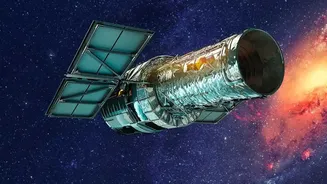
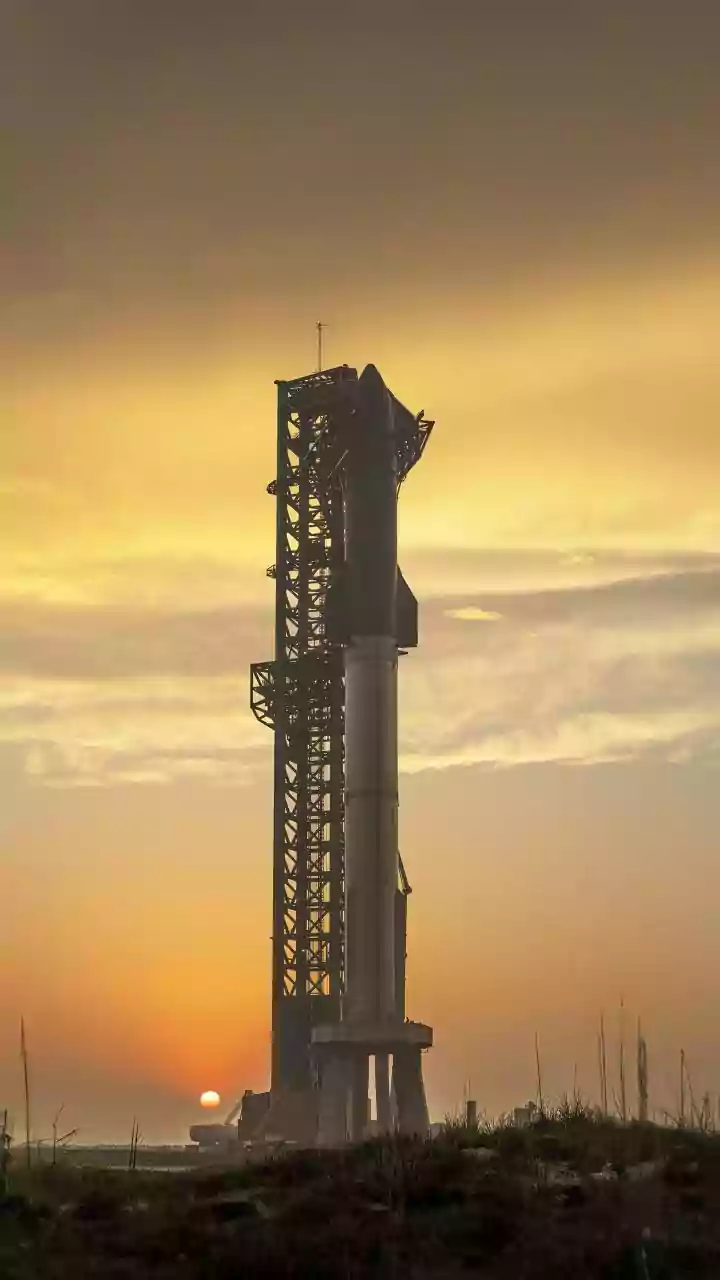
Set to launch aboard a SpaceX Falcon Heavy rocket on August 30, 2026, the Nancy Grace Roman Space Telescope represents a new era in astrophysics. Named after NASA's first chief of astronomy, who was instrumental in bringing the Hubble Space Telescope to life,
Roman is designed to do something its predecessors could not: survey enormous patches of the sky with the same sharpness as Hubble but with a field of view at least 100 times greater. Its primary tool is the Wide Field Instrument (WFI), a 300-megapixel infrared camera that will capture cosmic panoramas, transforming our understanding of the universe’s scale and structure. This incredible survey power means that in its five-year primary mission, Roman will image over 50 times the area of sky that Hubble has in over 30 years.
The Power of a Panoramic View
The key difference between Roman and other great observatories like Hubble and the James Webb Space Telescope (JWST) is its sheer field of view. Imagine looking at the night sky through a narrow drinking straw; that’s akin to Hubble's deep, focused gaze. Roman, by contrast, is like looking through a panoramic window. Where it took Hubble hundreds of individual pointings to create its famous Ultra Deep Field image showing thousands of galaxies, a similar effort by Roman could reveal millions in a fraction of the time. Each snapshot from Roman will cover an area larger than the apparent size of the full Moon. This capability will allow it to create vast cosmic maps that will serve as a foundational resource for astronomers for decades to come, enabling statistical studies of the cosmos on a scale never before possible.
Hunting for Cosmic Phantoms
Roman’s primary mission is built around two of the most profound questions in science: the nature of dark energy and the census of planets beyond our solar system. Dark energy is the mysterious force causing the universe's expansion to accelerate, and Roman will study it by mapping the distribution of billions of galaxies and observing thousands of supernovae. By measuring how cosmic structures have grown and spread over time, scientists can gain clues about this enigmatic force. Simultaneously, Roman will conduct a massive survey of the central bulge of our Milky Way galaxy, searching for the tell-tale flickering of stars that indicates a planet is passing in front of them. This technique, called gravitational microlensing, is so sensitive that Roman is expected to find thousands of new exoplanets, including hundreds of 'rogue' planets that wander through space without a host star.
A Galactic Census Taker
Beyond its two main objectives, Roman’s wide-angle view makes it an unparalleled tool for a wide range of astronomical studies. It will conduct a Galactic Plane Survey, peering through the dusty heart of the Milky Way to map an estimated 20 billion stars. This will provide a far more complete 3D model of our own galaxy's structure and how stars form within it. The telescope will also be a powerful instrument for time-domain astronomy, which studies how the cosmos changes over time. It will be able to spot transient events like tidal disruption events, where a star gets shredded by a supermassive black hole, helping astronomers understand how these behemoths grow. From discovering small, icy bodies in the outer solar system to studying stellar populations in neighboring galaxies, Roman’s data will be a treasure trove for all fields of astrophysics.