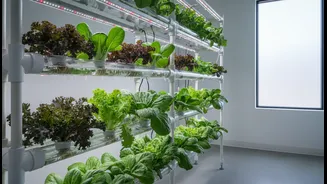







What is Liquid Hydroponics?
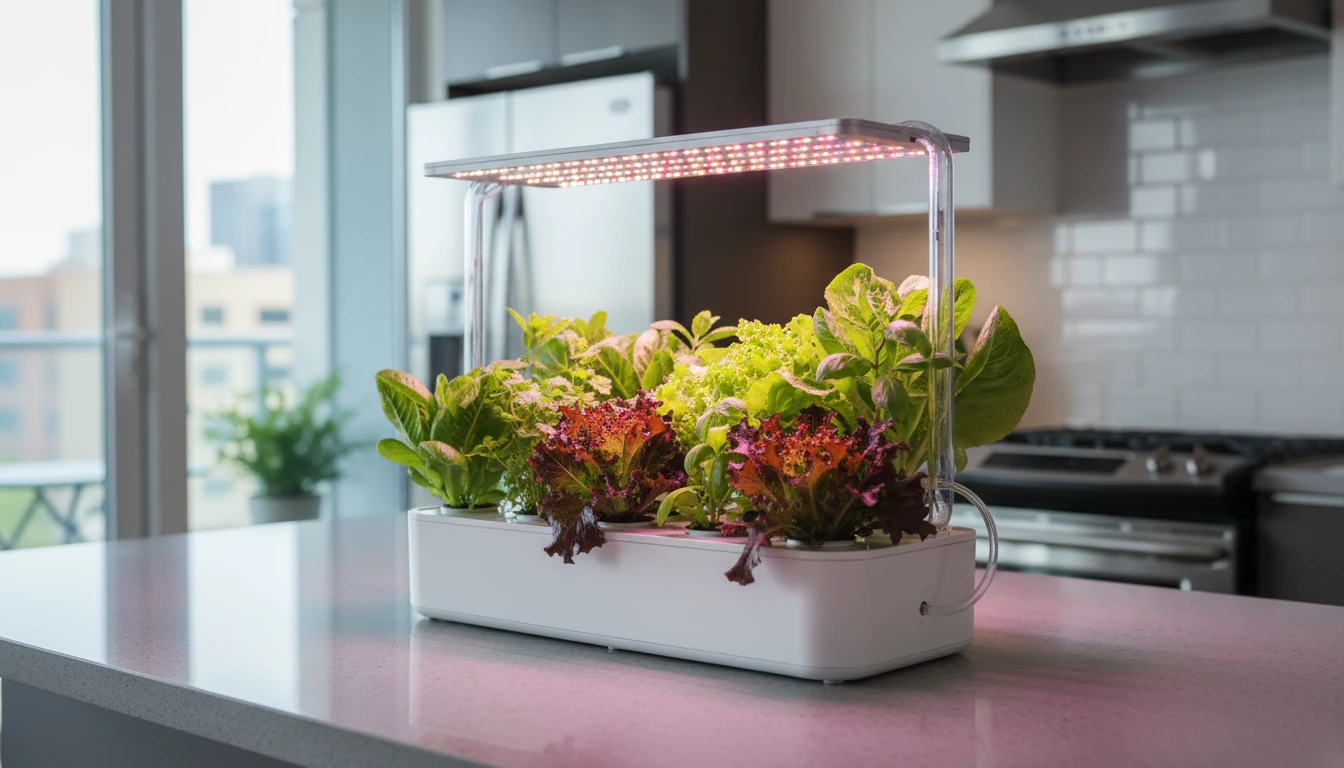
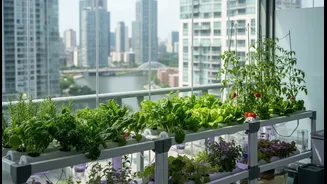
Hydroponics is the art of growing plants without soil. Instead of getting nutrients from the ground, plants get them from a nutrient-rich water solution. Liquid hydroponics is one of the simplest methods, perfect for beginners and city dwellers. Two popular
techniques are Deep Water Culture (DWC) and the Kratky method. In DWC, plant roots are suspended in an oxygenated nutrient solution. An air pump keeps the water rich with oxygen, preventing root rot and promoting fast growth. The Kratky method is even simpler, using a static container of water and nutrients without any pumps, making it a great, low-maintenance starting point.
Choosing Your Exotic Greens
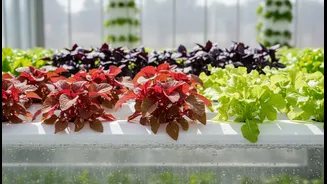
The best part of a home hydroponics setup is growing vegetables that are either expensive or hard to find fresh. For Indian homes, several exotic greens thrive in hydroponic systems. Consider starting with varieties like kale, Swiss chard, arugula, and different types of lettuce like romaine. These are not only packed with nutrients but also grow relatively quickly. Bok choy is another excellent choice that flourishes in controlled hydroponic environments. Since these are leafy greens, their nutrient requirements are straightforward, mainly needing nitrogen to promote lush foliage.
Gathering Your Essential Gear
Setting up a basic DWC system is an easy weekend project. You'll need a few key items, most of which are available online or at local hardware and aquarium stores. First, get an opaque container or bucket with a lid; a 20-litre size is a great start. It must be opaque to block light, which prevents algae from growing and competing with your plants for nutrients. You will also need net pots to hold the plants, a growing medium like clay pebbles (leca) or rockwool to support the seedlings, and a pre-mixed hydroponic nutrient solution formulated for leafy greens. Finally, for a DWC system, you'll require a small aquarium air pump, an air stone, and some tubing to oxygenate the water.
A Simple Step-by-Step Setup
First, prepare your container lid. Using a drill or a sharp knife, carefully cut holes in the lid that are just large enough for your net pots to sit snugly without falling through. Next, place the air stone at the bottom of the container and connect it to the air pump (kept outside the container) with the tubing. Fill the container with water, stopping just below the bottom of the net pots. Now, add the hydroponic nutrients, following the instructions on the package carefully. Use a pH testing kit to ensure the water's pH is between 5.5 and 6.5, as this range allows plants to absorb nutrients effectively. Once your seedlings have sprouted and developed small roots, gently place them in the net pots, using clay pebbles to hold them steady. Place the pots in the lid, turn on the air pump, and your system is ready.
Caring for Your Hydroponic Garden
Hydroponic systems are surprisingly low-maintenance. Your main tasks will be monitoring the water level and nutrient solution. Check the pH and nutrient strength every few days. Yellowing leaves can often be a sign of a nutrient deficiency or an incorrect pH level, which blocks nutrient uptake. You may need to top up the water weekly. Every two to three weeks, it's a good practice to completely change the nutrient solution to ensure your plants are getting a balanced diet and to keep the system clean. Also, keep an eye out for algae, a slimy growth that can appear if light gets into your reservoir. Keeping your container covered and clean is the best prevention.
Harvesting Your Homegrown Greens
One of the most rewarding moments is the harvest. Most leafy greens are ready for their first harvest in just 25 to 45 days. With many greens like lettuce, kale, and Swiss chard, you can use the 'cut-and-come-again' method. Simply snip the outer, larger leaves, leaving the smaller, inner leaves to continue growing. This allows you to have a continuous supply of fresh greens from the same plants. For head-forming lettuces, you can harvest the entire plant at once. For a steady supply, try staggered planting, where you start a new batch of seeds every couple of weeks. This ensures you always have something fresh ready to be picked.